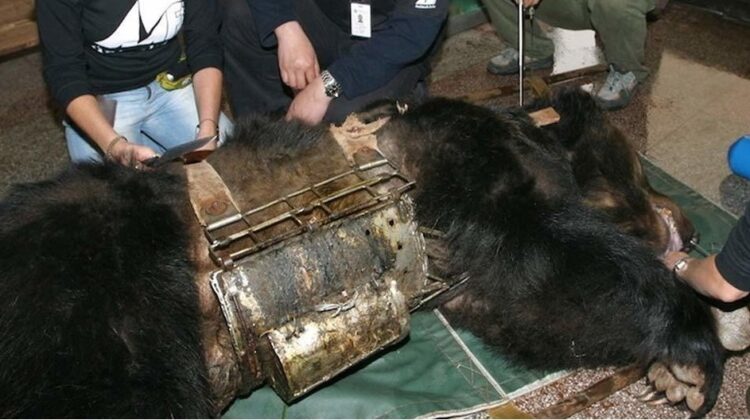
For nine years, a brown bear named Caesar lived through one of the cruelest practices still legal in parts of the world today — trapped in a farm that extracted bile from her gallbladder for use in traditional medicine, her body confined in what rescuers would later call a “torture vest.” Her eventual rescue, and the years of freedom that followed, became one of the most widely shared stories to come out of the global fight against bear bile farming.
Nine Years In A Metal Cage
Caesar spent nearly a decade caged on a bile farm in Tianjin, in northern China, one of thousands of bears kept for this purpose across the country. Rather than her bile being extracted periodically, farmers fitted her with a rigid metal jacket holding a crude latex catheter that ran directly into her gallbladder through an open wound that was never allowed to heal, allowing continuous extraction.
The device, which animal welfare workers have compared to a medieval torture instrument, crushed her body inside its frame while a spike positioned near her throat prevented her from biting at it or attempting to remove it herself. Her cage was so small she could barely move.
A Rescue Years In The Making
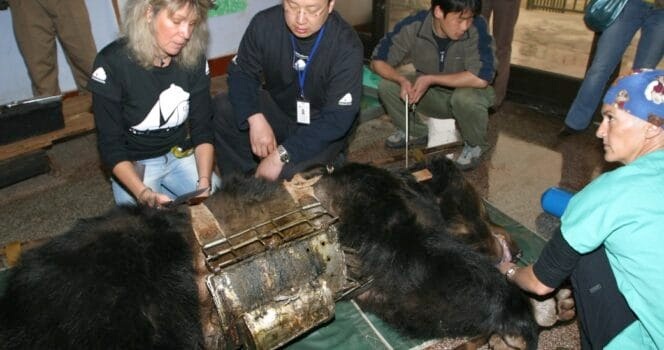
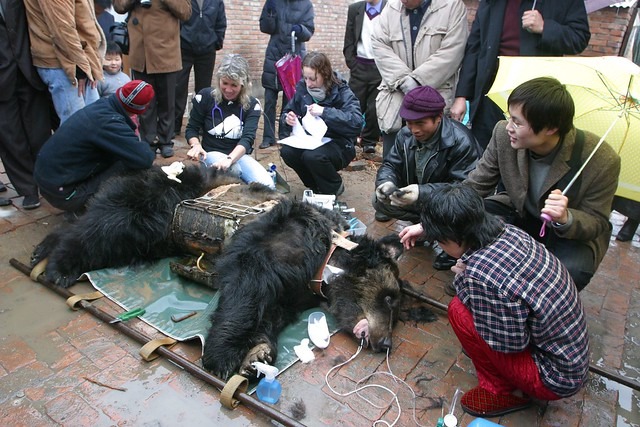
In February 2004, a team from Animals Asia — a Hong Kong-based animal welfare organization that runs bear rescue sanctuaries in China and Vietnam — arrived at the farm and found Caesar shivering inside a bitterly cold brick outhouse. Jill Robinson, the organization’s founder, later recalled the moment vividly, describing how violently Caesar bounced inside her rusting cage during the rescue, clearly a deeply distressed animal.
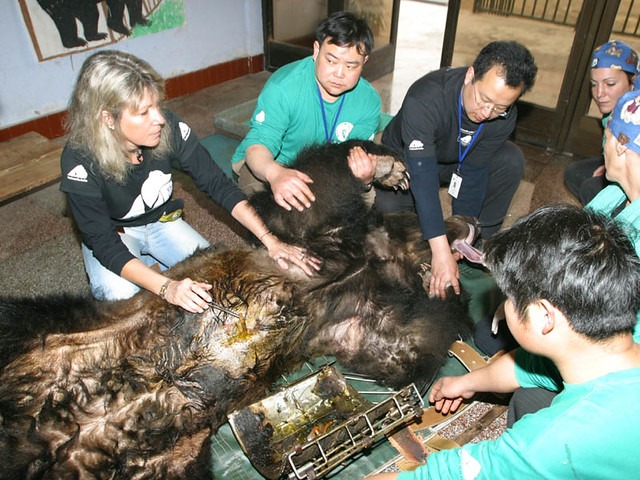
Once the team cut through her cage, what horrified them further was the metal jacket itself — a device weighing up to 10 kilograms, which had already been banned under Chinese regulations for being too extreme, even though bile farming itself remained legal.
After a health check, Caesar was loaded onto a truck for a grueling three-day journey through heavy rain and snow-covered mountain passes to reach Animals Asia’s sanctuary in Chengdu, finally leaving the farm behind for good.
A Complete Transformation
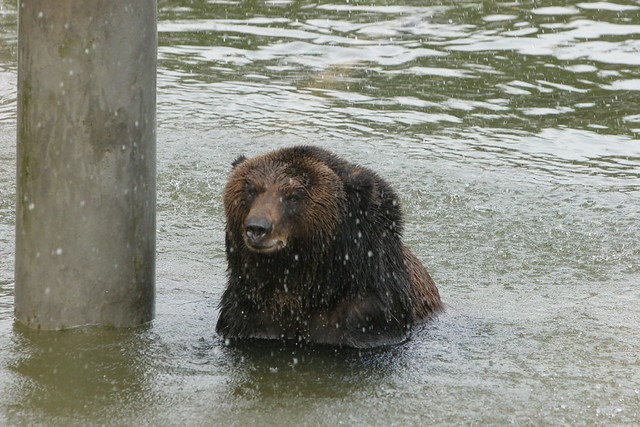
Freed from the vest and given proper medical care, Caesar’s physical transformation was dramatic. Her open wounds healed, her scars gradually faded, and she grew into what staff described as an astonishingly powerful animal, eventually reaching close to 300 kilograms — among the largest bears at the sanctuary.
She also revealed a sharp, curious personality. Staff noted she had one of the finest noses at the facility, capable of sniffing out food hidden under leaves, tucked inside logs, wrapped in newspaper, or even sunk at the bottom of her swimming pool. As one of only two Eurasian brown bears at the China sanctuary — most rescued bile bears are Asiatic black bears, commonly known as moon bears — Caesar behaved differently from her sanctuary companions, preferring a more solitary lifestyle typical of wild brown bears, and became known for digging elaborate tunnels large enough to fit a car.
“Caesar was kept in some of the worst conditions imaginable,” said Nic Field, director of Animals Asia’s China bear and vet team. “Once her metal torture vest was removed, she blossomed into a majestic bear.”
For over a decade afterward, Caesar spent her days swimming, sunbathing, and digging, particularly once the weather cooled in autumn. “To see her out in the sunshine — a dozen years on from her rescue — it’s hard to imagine her existence back then,” Field said in 2016.
A Bittersweet Ending
Caesar lived 13 years in freedom following her rescue. In late 2017, she was diagnosed with an aggressive tumor, a complication her caretakers linked to the years of repeated, unhealed gallbladder wounds she endured on the bile farm — a common long-term consequence for bears subjected to this kind of extraction. She passed away shortly afterward, leaving her caretakers at Animals Asia heartbroken.
A Practice That Still Continues
Caesar’s story remains one small piece of a much larger, ongoing crisis. Animals Asia estimates that roughly 10,000 bears remain confined on bile farms in China today, with bile farming also persisting in Vietnam. While metal jacket restraints like the one Caesar wore have since been outlawed and grown less common, organization staff have noted that some may still be in use.
Bear bile has been used in traditional Chinese medicine for centuries, believed by practitioners to treat ailments ranging from liver disease to fever, despite the existence of synthetic and herbal alternatives that don’t require harming a living animal.
Frequently Asked Questions
What is bear bile farming, and why is it done? It’s the practice of extracting bile from a bear’s gallbladder, typically through a permanent wound or catheter, for use in traditional Chinese medicine. The practice remains legal in China, though animal welfare organizations widely condemn it as inhumane.
How long was Caesar held captive before her rescue? She spent approximately nine years caged on a bile farm in Tianjin, China, before being rescued by Animals Asia in February 2004.
What eventually happened to Caesar? After 13 years of freedom at Animals Asia’s sanctuary in Chengdu, Caesar developed an aggressive tumor linked to the long-term damage from her years on the bile farm and passed away in late 2017.
Are the metal “torture vests” like the one Caesar wore still used today? These particular metal jacket restraints have since been prohibited under Chinese regulations for being excessively extreme, and are now less common, though animal welfare workers say some may still exist.
How many bears are still on bile farms today? Animals Asia estimates roughly 10,000 bears remain confined on bile farms in China, with the practice also continuing in Vietnam.
Sources: Animals Asia and Lady Freethinker, cited above.
This will haunt me for the rest of my life, How could this barbaric practice still be legal ? Obviously the bear was seen as a commodity and not a sentient animal.Hope you are enjoying your freedom beautiful bear x