Nobody knew she was pregnant when rescuers cut her cage open. Months later, a mountain sanctuary in Armenia had a surprise.
Ten Years Behind Bars by a River
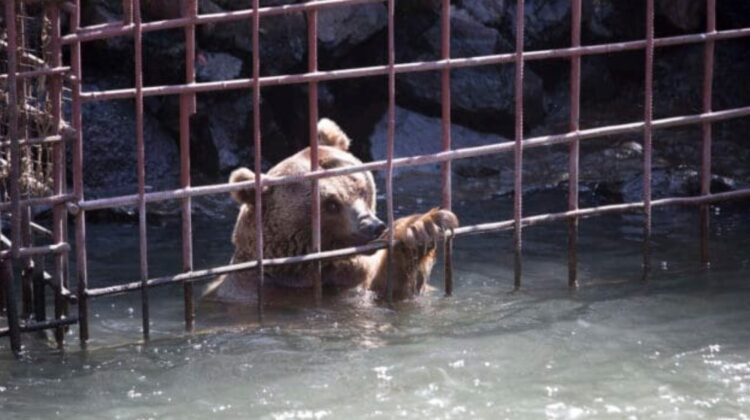
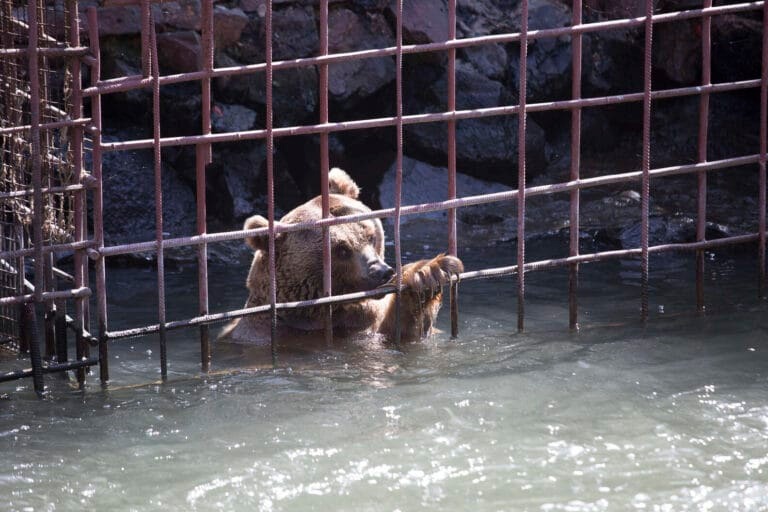
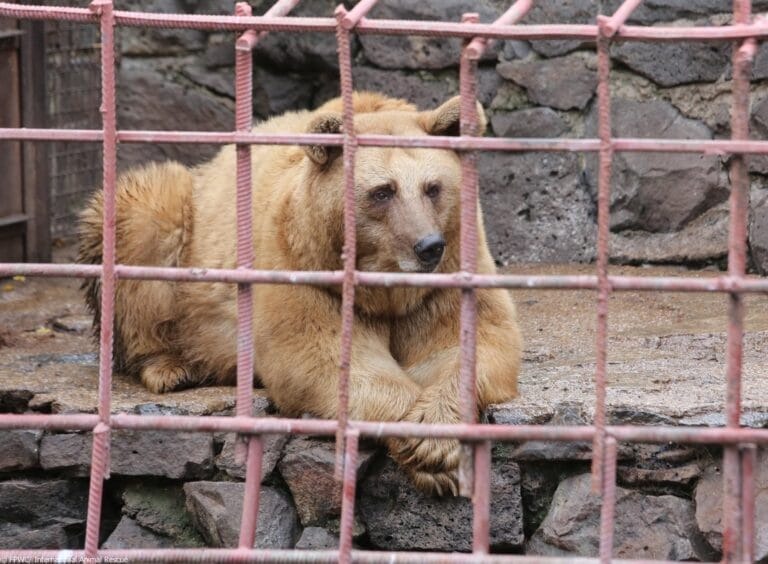
For more than ten years, two brown bears named Dasha and Misha lived in a small metal cage beside a restaurant in Yerevan, Armenia. The cage sat half-submerged in water by the Hrazdan River gorge, and the bears served as an attraction for diners, who tossed them scraps. Rescuers said the bears spent their days pacing, climbing the bars and trying to escape.
The Rescue
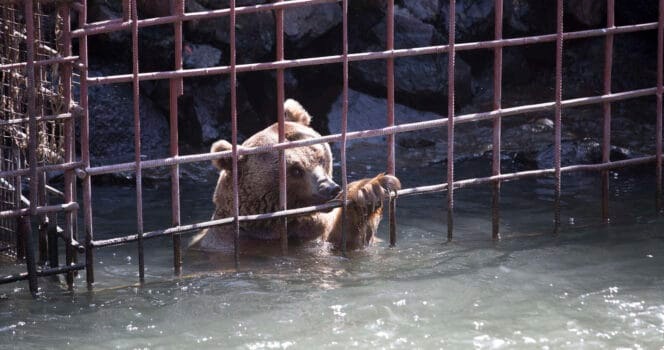
The British charity International Animal Rescue (IAR) worked with Armenian group FPWC, the Foundation for the Preservation of Wildlife and Cultural Assets, and with the support of the Armenian government, to free the bears. The restaurant that owned them also cooperated. On October 31, 2017, firefighters and emergency crews used cutting tools to open the cage, and the bears were sedated and driven to a new sanctuary in the mountains. Their coats were matted and their bodies thin.
Dasha and Misha were the first bears freed through IAR’s “Great Bear Rescue,” a campaign to free up to 80 caged bears in Armenia. “These are only the first,” said IAR CEO Alan Knight.
A Surprise No One Expected
In their new home, Dasha ate heartily and put on weight. Her keepers first thought she might be ill, but by spring they discovered she was pregnant. She gave birth to two healthy cubs, a female named Coco and a male named Luka, around six months after her rescue. Rescuers called the birth proof that the campaign works. A bear who had spent her whole life in a cage was now raising cubs in the safety of a sanctuary.
A Bittersweet Chapter
The story is not entirely happy. Reports from the Daily Mirror and the Daily Mail say that Misha, the male bear, died from medical complications soon after the rescue.
Back to the Mountains
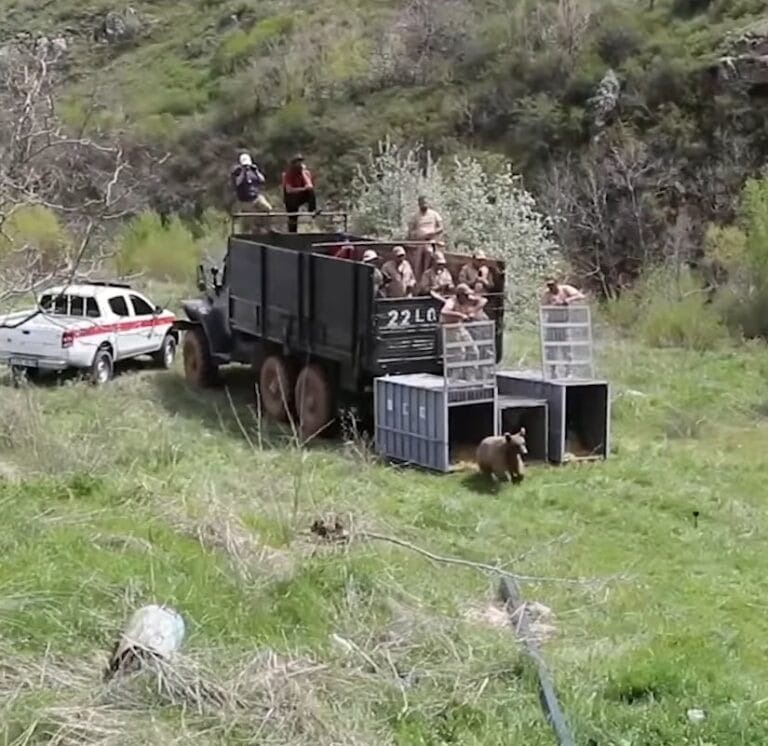
In 2019, IAR and FPWC released Dasha and her cubs onto protected land owned by FPWC and patrolled by its rangers, high in Armenia’s mountains. The team lined up the transport crates side by side and raised all the doors at the same time so that the mother and her cubs could walk out together. The young male cub, Luka, raced out first, followed by Dasha, who stepped into a mountain meadow.
How You Can Help Captive Wildlife
- Avoid attractions that keep bears or other wild animals in cages. Roadside zoos and restaurant “mascots” depend on paying visitors.
- Support reputable rescue groups. Donations help fund veterinary care, transport and sanctuaries.
- Speak up. Report suspected cases of wildlife cruelty to local authorities.
Planning Wildlife-Friendly Travel?
Travelers who want to see wildlife responsibly can look at:
- Ethical wildlife tours. Compare ethical wildlife tours, eco-lodges and Armenia travel packages.
- Travel protection. Review international travel insurance and medical evacuation coverage.
- Support rescue. Consider wildlife conservation donations, adopt-an-animal programs and volunteer abroad programs.
- Gear. Look at binoculars and telephoto camera lenses for watching animals from a distance.
Frequently Asked Questions
Where were Dasha and Misha kept? In a cramped cage beside a riverside restaurant in Yerevan, Armenia, where they were used to attract diners.
Who rescued them? International Animal Rescue, together with Armenian partner FPWC and with the support of the Armenian government.
When were they rescued? On October 31, 2017, after more than ten years in the cage.
Did Dasha have cubs? Yes. She gave birth to two cubs, Coco and Luka, about six months after the rescue.
What happened to Misha? Reports say he died from medical complications soon after the rescue, while Dasha and her cubs were later released into the mountains.
Sources: International Animal Rescue, the Daily Mirror, the Daily Mail, the Armenian National Committee of America, LADbible, and One Green Planet, all covering the October 2017 rescue of brown bears Dasha and Misha from a restaurant cage in Armenia, and Dasha’s cubs and 2019 release.
Leave a Reply