
The Namib Desert, with its vast expanse of grasslands, is home to a puzzling phenomenon that has perplexed scientists for years—the enigmatic fairy circles. These circular patches of barren land surrounded by vegetation have sparked intense debates and numerous theories, but the mystery surrounding them has finally been unraveled.
Scattered across the extraordinary landscape of the Namib Desert in southern Africa, the fairy circles form a surreal sight. Ranging in diameter from 10 to 65 feet, these otherworldly circles stretch for hundreds of miles, leaving scientists and locals alike wondering about their origin. According to local legends, these circles were formed by the gods who left their footprints on the red earth. However, the truth behind this phenomenon lies in the realms of mathematics and biology, rather than folklore. The seemingly random arrangement of these circles may not be so random after all.

Mathematician Corina Tarnita, who has dedicated considerable time to studying the Namibian fairy circles, describes the landscape as resembling a polka dot dress. The circular dots, like islands amidst the sea of short grass, exhibit remarkably regular spacing.
For decades, researchers have grappled with the mystery of the fairy circles in Namibia and similar phenomena observed in Pilbara, Western Australia. Various theories have been proposed to explain these peculiar patterns, but two major hypotheses have gained significant traction:
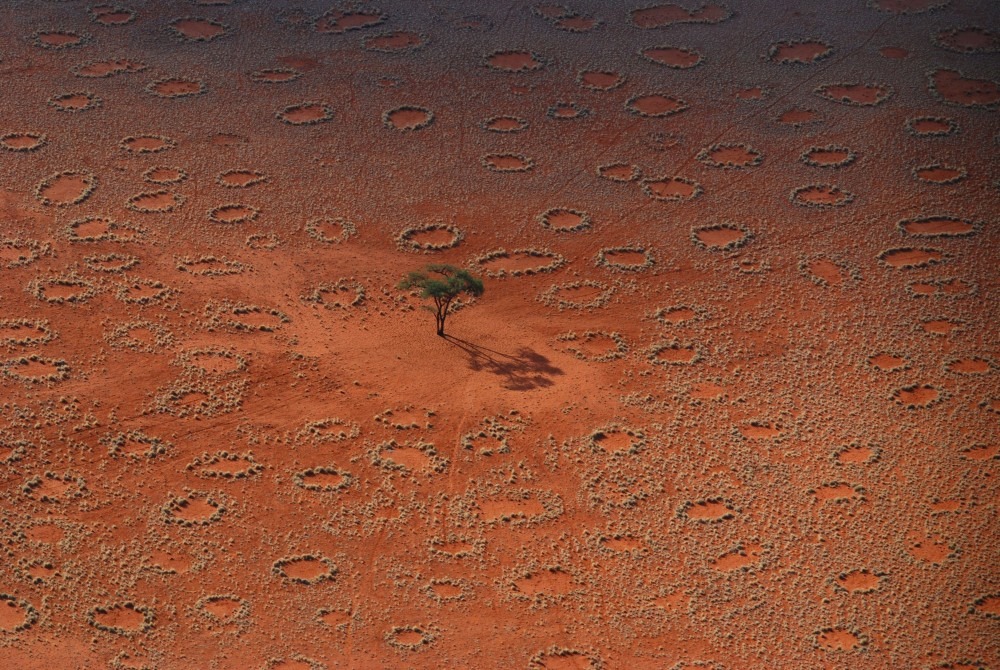
The first hypothesis revolves around the intense competition for resources among plants in the arid Namib Desert. As plants vie for survival, they create shade and retain water near their immediate neighbors. However, they hinder those further away by developing long roots that extract water from the soil. This leads to thinning or complete absence of vegetation at the edges of the patches, forming the regularly spaced gaps observed in the landscape.
Yet, beneath the surface of each fairy circle lies another fascinating theory related to termites. Supporters of this theory assert that the barren patches are a result of termite colonies underground, which wipe out vegetation surrounding their nests. The presence of these termite colonies creates porous soil that establishes permanent rainwater reservoirs about 50 centimeters below the surface. This water sustains the colonies and the surrounding ecosystem.

While scientific observations of termites within the fairy circles have supported the termite theory, the regularity of the patterns remained unexplained.
To unravel the mystery, Tarnita collaborated with ecologist Rob Ringle of Princeton University, who highlighted how eusocial insects (insects that display specialized castes to support the overall success of the colony) create extensive networks of underground tunnels while foraging for food. These tunnels decimate the vegetation above them. When one termite colony invades the territory of another, a fight ensues until one colony is completely destroyed. The aftermath of this battle results in a series of similarly sized colonies with “no-termite’s land” separating them.
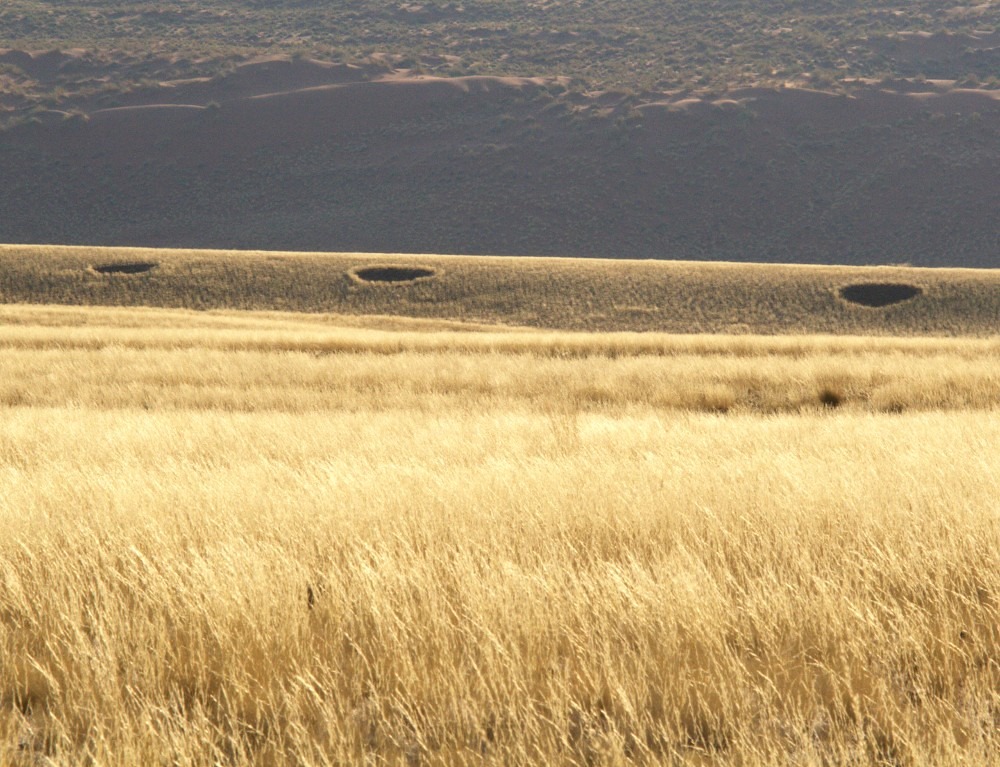
To investigate further, Tarnita and her team developed a computer model incorporating both plant competition and termite colonies. They discovered that each hypothesis could independently account for the fairy circles, but it was the combination of the two that accurately recreated the entire landscape. Their findings were published in Nature in January 2017. The team is now exploring ways to test the hypotheses further, including conducting small-scale manipulation studies in the field to compare the presence and absence of termite colonies.
However, the fairy circles in Namibia are not merely a result of a singular cause. Tarnita explains that this complex ecosystem involves multiple factors such as various species interactions with vegetation, precipitation levels, and soil microbes. By altering the availability of variables and creating mathematical models that consider these biological and ecological processes, researchers can gain a deeper understanding of ecosystem conditions and even predict potential collapses.
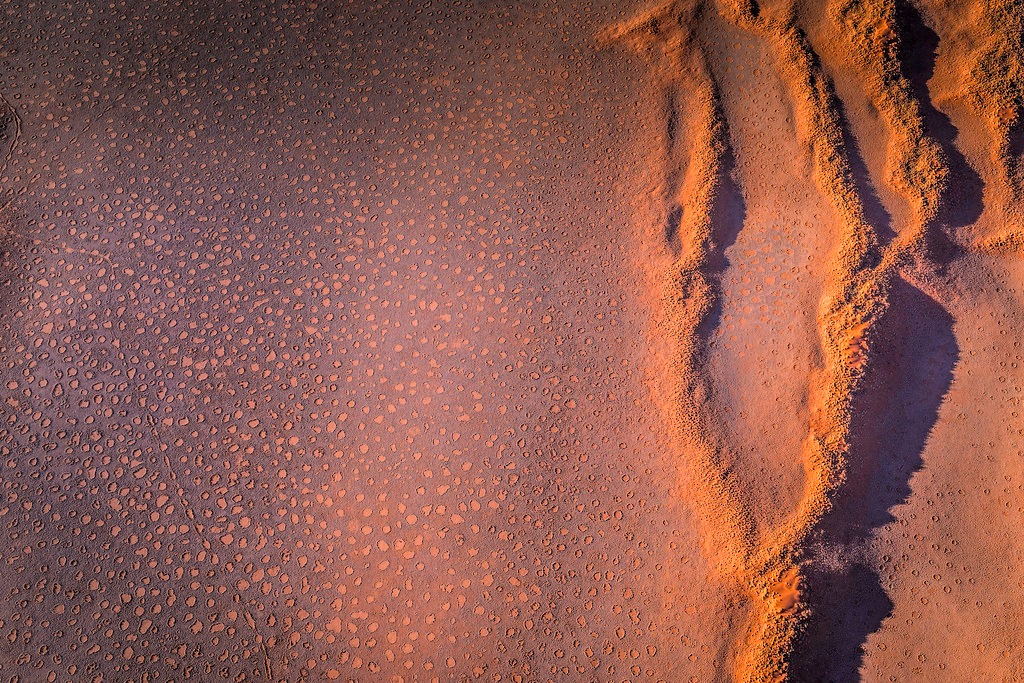
Tarnita concludes by highlighting that these patterns may hold significant meaning beyond their aesthetic appeal. They could serve as indicators of an ecosystem’s health and functioning, offering insights into its overall well-being. The fairy circles of Namibia, once shrouded in mystery, now shed light on the intricate dynamics of a fascinating ecosystem.
Leave a Reply