• Skip to main content
  • Skip to primary sidebar
  • Skip to footer
  • Home
  • About Us
  • Copyright Report
  • Submit Content
  • Terms
  • Privacy Policy
  • Legal Disclaimer

Hasan Jasim

Hasan Jasim is a place where you may get entertainment, viral videos, trending material, and breaking news. For a social generation, we are the largest community on the planet.

Due to Climate Change, a Sister Species of Zazu From “The Lion King” is on The Verge Of Extinction

by Hasan Jasim Editorial Team Leave a Comment

ShareTweet

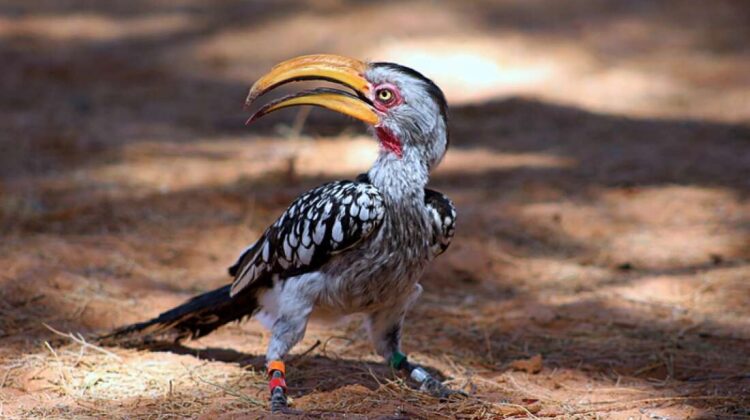
Due to the climatic issue, the yellow-billed hornbill, a close cousin of the bird that inspired Zazu from The Lion King, is facing local extinction.

Between 2008 and 2019, the population of the southern yellow-billed hornbill (Tockus leucomelas) in its native Kalahari Desert, Southern Africa, steadily declined, according to a new study published in the journal Frontiers in Ecology and Evolution. According to the researchers, its extinction is very certainly connected to rising temperatures across much of its native habitat.

The yellow-billed hornbill is a relative of the red-billed hornbill, which was portrayed by Rowan Atkinson in the 1994 Disney film The Lion King and by John Oliver in the 2019 remake. Birds are also thought to play an important role in the mythology and spirituality of various Southern African tribes.

The species is well-known for its peculiar breeding habits. The socially monogamous southern yellow-billed hornbill prefers long-term relationships with a single individual. The male southern yellow-billed hornbill will stay with his mate and help to defend the nest once they have formed a relationship and mated.

As the temperature continues to rise, this breeding approach is becoming increasingly difficult.

The researchers discovered that the average percentage of occupied nest boxes decreased from 52 percent to 12 percent between the first three seasons of 2008 and 2011 and the last three seasons of 2016 and 2019.

The average number of chicks produced per breeding effort dropped from 1.1 to 0.4, while the number of successful breeding attempts dropped from 58 percent to 17 percent.

According to the experts, this is significantly linked to rising temperatures in the area as a result of climate change. There were no successful breeding efforts when temperatures reached 35.7°C (96.26°F). It was also obvious that failed breeding attempts were proportional to the number of days when air temperatures exceeded a certain threshold.

If this trend continues, southern yellow-billed hornbills will be rare in many parts of Southern Africa by the end of the decade.

In a statement, Dr Nicholas Pattinson, principal author of the study from the University of Cape Town, said, “Much of the public impression of the effects of the climate problem is tied to scenarios projected for 2050 and beyond.” “However, the impacts of the climate problem exist now, and they can materialize not only within our lifetimes, but even within a decade.”

“Despite no large-scale die-offs, we project that southern yellow-billed hornbills will be extirpated from the hottest portions of their range by 2027,” says the study.

Filed Under: Trends Worldwide Tagged With: “the, change, climate, extinction, from, king”, lion, sister, species, trends, verge, worldwide, zazu

Reader Interactions

Leave a Reply Cancel reply

Your email address will not be published. Required fields are marked *

Primary Sidebar

More to See

Have Archaeologists Discovered Noah’s Ark?

By Hasan Jasim Editorial Team

Pick a flower and discover who loves you

By Hasan Jasim Editorial Team

The Tragic Death Of An Albino Chimp, Seen For The First Time In The Wild

By Hasan Jasim Editorial Team

Evidence Of A Native American King’s House, As Seen By Spanish Conquistadors, Has Been Discovered In Florida

By Hasan Jasim Editorial Team

Without any people in sight, one photographer captures the beauty of Holland’s Tulip Gardens

By Hasan Jasim Editorial Team

At a Safari Park, Extremely Rare White Lion Quadruplets are Born Healthy

By Hasan Jasim Editorial Team

US bans TikTok. Here’s what could come next

By Hasan Jasim Editorial Team

Footer

ABOUT HASANJASIM.ONLINE

Hasanjasim.online is a digital platform dedicated to publishing well-researched articles about the animal kingdom, nature, and the environment. Our editorial team works to source stories from credible outlets, scientific research, and verified reports, aiming to inform as much as we entertain. From wildlife conservation and animal behavior to natural wonders and environmental science, we cover the topics that help readers better understand and appreciate the natural world. Whether you're a lifelong nature lover or simply curious about the planet we share, Hasanjasim.online aims to be a trustworthy destination for stories worth reading — and worth citing.

Recent

  • Euphorbia Hirta (“Asthma-Plant”): What Traditional Use and Real Research Actually Show
  • A Mystery Animal Has Been Randomly Attacking People in New Hampshire — Here’s What We Know
  • A Woman Was Filmed Sharing Her Ice Cream With Her Dog — Here’s What Vets Actually Say About It
  • Dolphin Calf Incident in Ceuta Sparks Outrage After Disturbing Beach Footage Emerges
  • Lactuca Serriola Root: Traditional Uses of Prickly Lettuce (Wild Lettuce) Root
  • The Puppy a Firefighter Couldn’t Leave Behind — and the Story Didn’t End There
  • A Mother Dog Dove Into Floodwater Again and Again — Until All 7 of Her Puppies Were Safe

Search