• Skip to main content
  • Skip to primary sidebar
  • Skip to footer
  • Home
  • About Us
  • Copyright Report
  • Submit Content
  • Terms
  • Privacy Policy
  • Legal Disclaimer

Hasan Jasim

Hasan Jasim is a place where you may get entertainment, viral videos, trending material, and breaking news. For a social generation, we are the largest community on the planet.

Golden Mole “Lost” Since 1936 Found Swimming Through Sand Dunes In South Africa

by Hasan Jasim Editorial Team Leave a Comment

ShareTweet

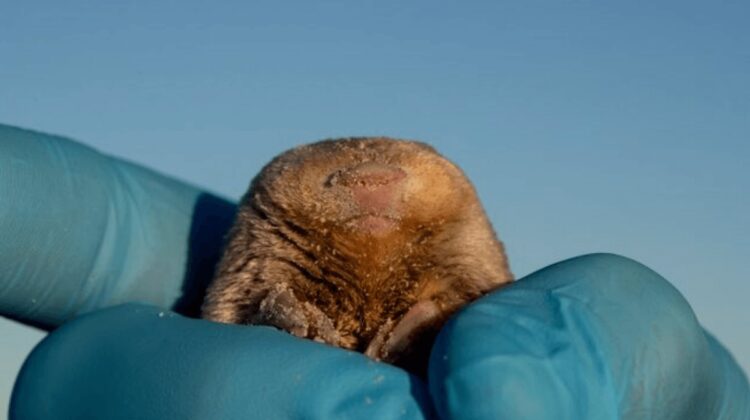
In the realm of scientific discoveries, the revival of a species long thought to be lost is a cause for celebration. The De Winton’s golden mole, a creature that vanished from sight in 1936, has recently emerged from the sands of South Africa, marking the 11th success on Re:wild’s “most wanted lost species list” since the initiation of the Search For Lost Species in 2017.
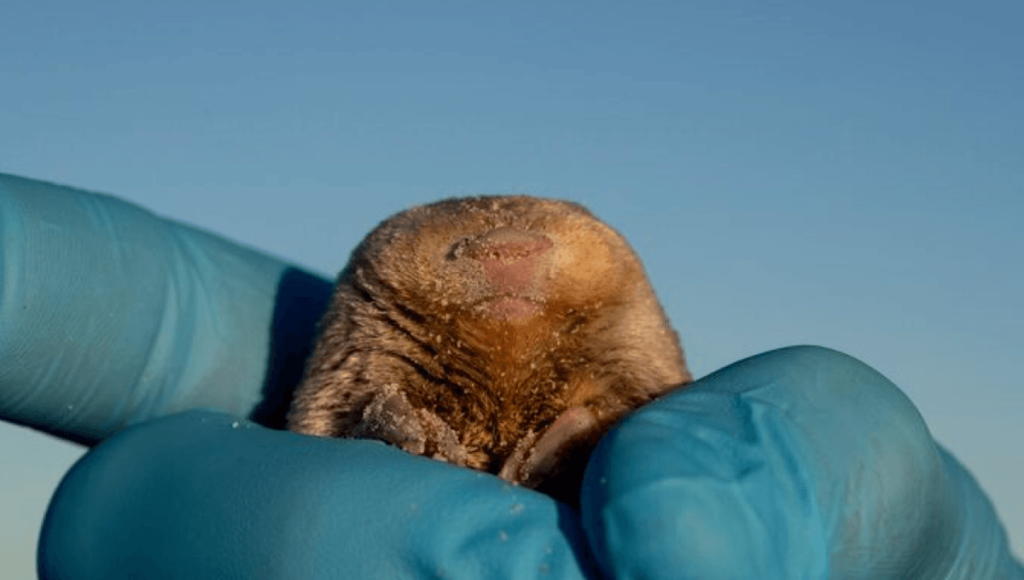
Resembling a nugget come to life, the De Winton’s golden mole, scientifically known as Cryptochloris wintoni, finds its habitat in sandy shores and arid shrublands. Locating this elusive creature was no stroll in the park; it “swims” through golden sands, rendering traditional tracking methods ineffective. The rediscovery was a testament to the dedication of the researchers, who embarked on the challenging task of surveying up to 18 kilometers (11.2 miles) of dune habitat daily.

Employing environmental DNA (eDNA) proved to be a key strategy in the search. This technique involves detecting DNA shed by animals as they move through their environment, which may include skin cells, hair, and bodily fluids. While it might seem akin to finding a tiny molecule in a massive stack of slightly larger molecules, the eDNA approach offered advantages over traditional methods. De Winton’s moles possess heightened senses, making it nearly impossible for scientists to approach them physically without triggering their escape instincts.
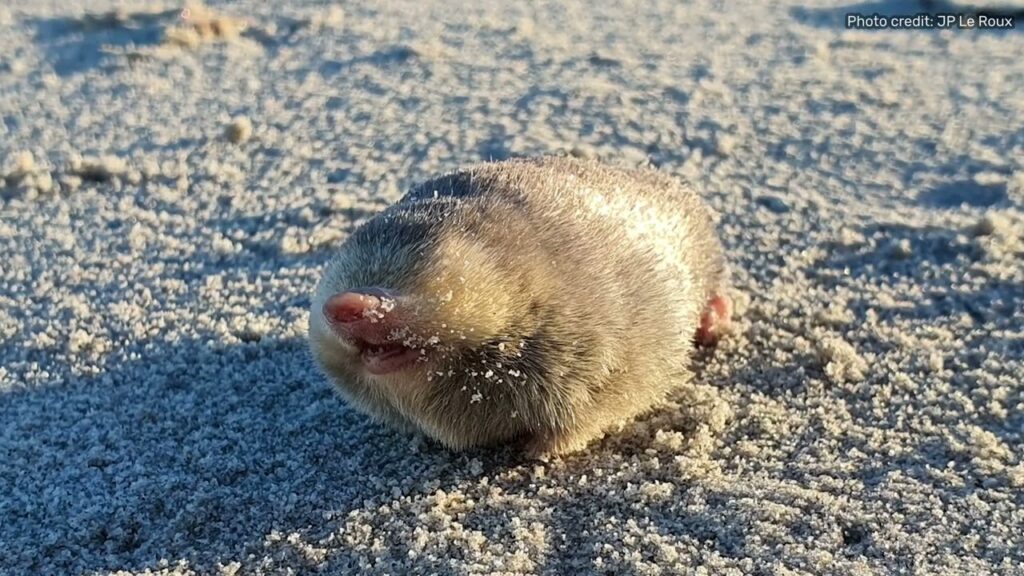
Samantha Mynhardt, a conservation geneticist with the Endangered Wildlife Trust (EWT) and Stellenbosch University, emphasized the challenges of extracting DNA from soil. Nevertheless, the team’s expertise and perseverance paid off, with 100 soil samples revealing the presence of several golden mole species along the northwest coast of South Africa. Among the more common Cape golden mole and Grant’s golden mole, the endangered Van Zyl’s golden mole was also identified. The most thrilling revelation, however, was the resurrection of the long-lost De Winton’s golden mole.

Cobus Theron, senior conservation manager for EWT and a member of the search team, expressed his unwavering belief in the species’ persistence: “Though many people doubted that De Winton’s golden mole was still out there, I had good faith that the species had not yet gone extinct. I was convinced it would just take the right detection method, the proper timing, and a team passionate about finding it.”

The success of this rediscovery extends beyond the realm of De Winton’s golden mole. The use of eDNA presents a promising frontier for exploring and conserving other lost or imperiled species. The triumph over skepticism and the unraveling of the mystery surrounding this elusive creature signify a poignant reminder of the resilience of nature and the untapped possibilities within the world of scientific exploration.

Filed Under: Trends Worldwide Tagged With: 1936, Africa, dunes, found,, Golden, lost, mole, sand, since, south, swimming, through, trends, worldwide

Reader Interactions

Leave a Reply Cancel reply

Your email address will not be published. Required fields are marked *

Primary Sidebar

More to See

The mystery of the “squnk”: Ohio residents can’t tell if this creature is a squirrel or a skunk

By Hasan Jasim Editorial Team

Residents of a Chinese City are Terrified When the Sky turns Blood Red

By Hasan Jasim Editorial Team

The kangaroo who was rescued is unable to stop embracing the people who saved her life

By Hasan Jasim Editorial Team

Veterinarian Explains What Pets Want Before They Pass & It’s Devastating

By Hasan Jasim Editorial Team

People are Surprised to Learn That Capybaras Can Swim Majestically Under Water

By Hasan Jasim Editorial Team

Record Ocean Heat In 400 Years Means Great Barrier Reef Should Be Officially “In Danger”

By Hasan Jasim Editorial Team

China Discovers a New Moon Mineral That Might Eventually Power Fusion Reactors

By Hasan Jasim Editorial Team

Footer

ABOUT HASANJASIM.ONLINE

Hasanjasim.online is a digital platform dedicated to publishing well-researched articles about the animal kingdom, nature, and the environment. Our editorial team works to source stories from credible outlets, scientific research, and verified reports, aiming to inform as much as we entertain. From wildlife conservation and animal behavior to natural wonders and environmental science, we cover the topics that help readers better understand and appreciate the natural world. Whether you're a lifelong nature lover or simply curious about the planet we share, Hasanjasim.online aims to be a trustworthy destination for stories worth reading — and worth citing.

Recent

  • Scientists Found Ancient Americans Living Where No Humans Should Have Been
  • This African Bird Wears Sunflowers Around Its Eyes — Meet the White-Crested Helmetshrike
  • 25 Animals You’ve Probably Never Heard Of — From a Cuban Land Snail to a Marsupial That Mates Itself to Death
  • Woman finds cow’s tooth in takeout taco. The chain says it can happen
  • Healthy Senior Dog Spared After Family Asked Veterinarians to Euthanize Her, Georgia Rescue Says
  • How People Around the World Write Laughter Online
  • The Disturbing Story Behind This Award-Winning Photojournalism Image

Search