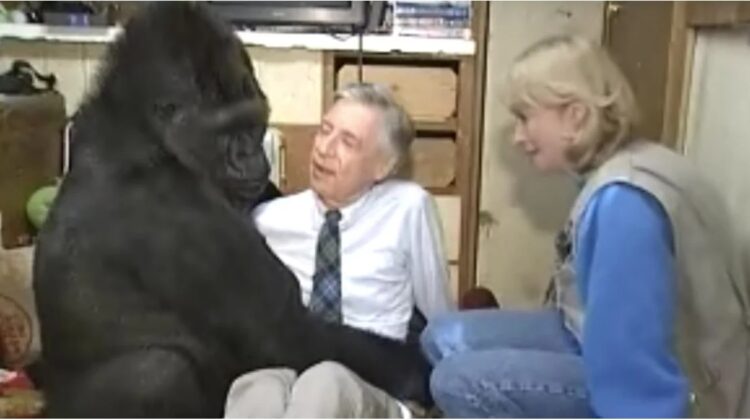
Koko, the western lowland gorilla who became world-famous for her use of sign language, died in her sleep on June 19, 2018, at the Gorilla Foundation’s preserve in California’s Santa Cruz Mountains. She was 46.
A Linguistic Prodigy
Born Hanabi-ko — Japanese for “fireworks child,” a nod to her July 4, 1971 birthdate — Koko was born at the San Francisco Zoo and cross-fostered by psychologist Francine “Penny” Patterson starting the following year. According to the Gorilla Foundation’s own statement, Koko developed an active vocabulary of over 1,000 signs in what Patterson called “Gorilla Sign Language,” and reportedly understood roughly 2,000 words of spoken English — a level Patterson compared to a human toddler’s.
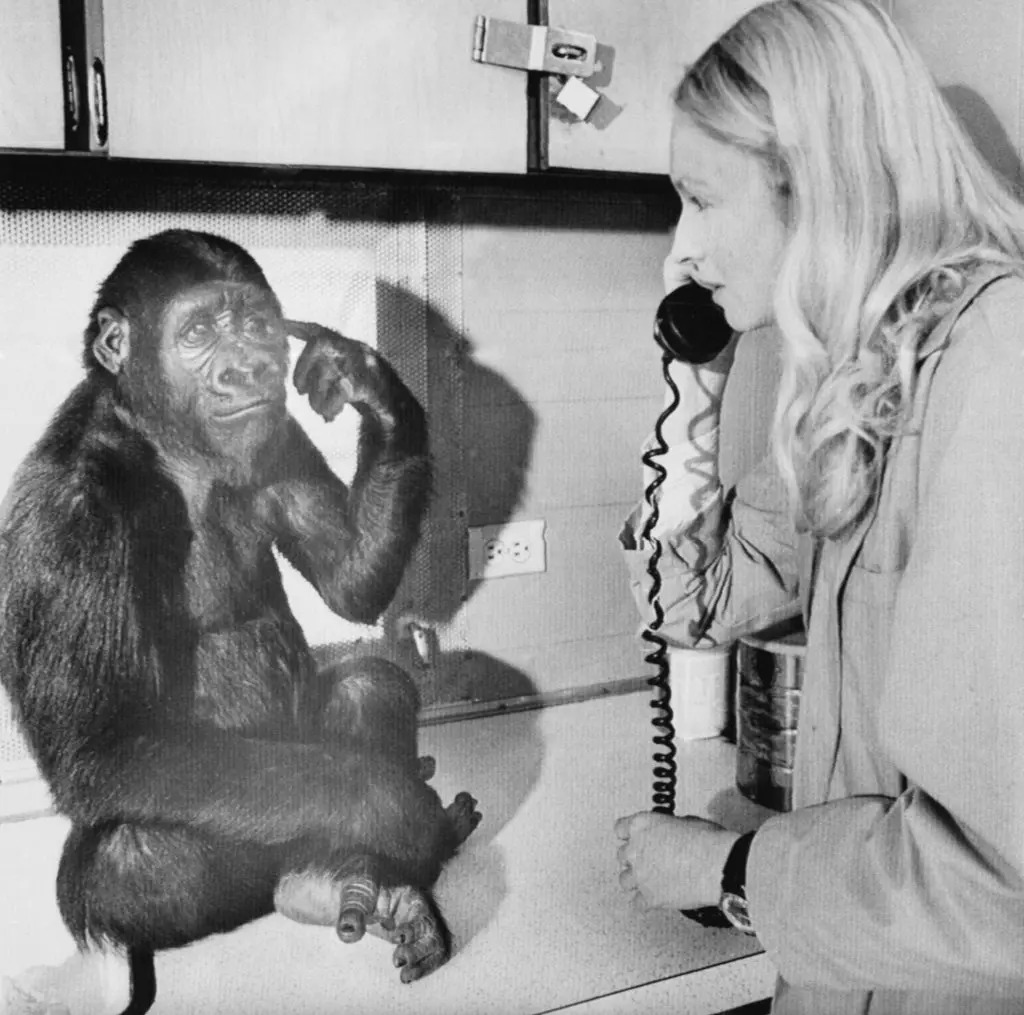
A Symbol of Empathy and Understanding
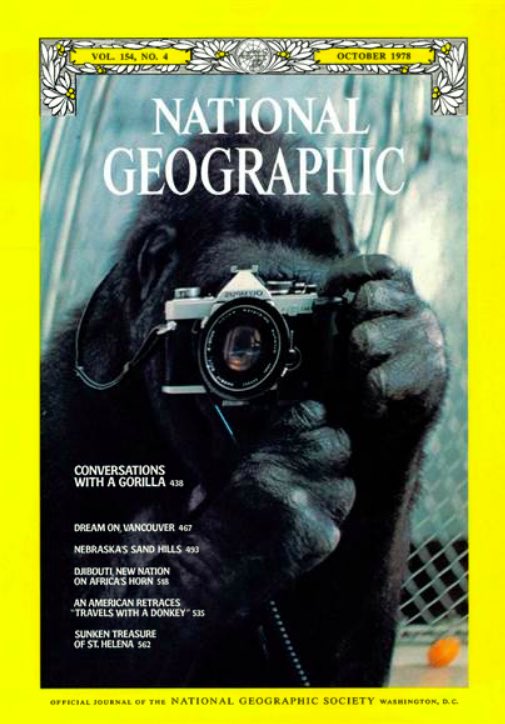
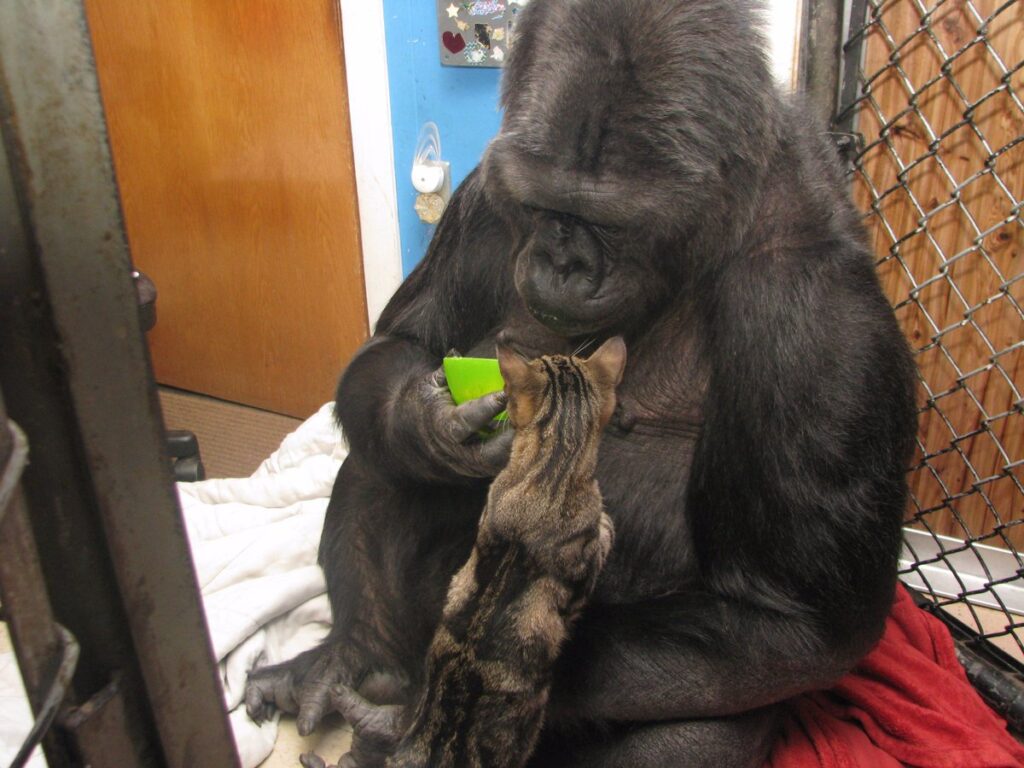
Koko formed bonds with several public figures, including Fred Rogers and Robin Williams, and appeared twice on the cover of National Geographic — including a 1978 cover featuring a photo Koko had taken of herself in a mirror. One of her most widely told stories involves a pet kitten she named All Ball; when the kitten died after being hit by a car, Koko reportedly signed “Cat, cry, have-sorry, Koko-love” — an incident later turned into the children’s book Koko’s Kitten, written by Patterson.
The Scientific Debate
Koko’s story is genuinely significant, but it’s also genuinely disputed — and leaving that out would be misleading. Some researchers, most notably Columbia University psychologist Herb Terrace (who ran a comparable sign-language project with a chimpanzee named Nim Chimpsky), argued that Patterson overstated Koko’s linguistic abilities, and that much of what looked like grammar or intentional communication may have reflected cueing from her trainers rather than genuine language use. The broader scientific consensus today is that Koko did not demonstrate the syntax or grammar that would qualify as true language in the way linguists define it — even as most researchers agree she showed real problem-solving intelligence and emotional depth.
Patterson herself has also faced criticism over the decades regarding how the Gorilla Foundation was run, including disputes over living conditions for Koko and her companion gorillas.

None of this erases what made Koko significant. As Science magazine noted in an obituary after her death, she helped transform how the public understood animal emotion and intelligence — a shift in perception that mattered regardless of exactly how her communication is scientifically classified.
A Fair Question: What About Her Species?
One thing worth sitting with, raised repeatedly by readers and some scientists over the years: western lowland gorillas are critically endangered in the wild, largely due to poaching and habitat loss from logging. Koko spent her four decades as a research and public-outreach subject rather than as part of a breeding program — a tradeoff the Gorilla Foundation has defended as advancing public understanding of gorillas broadly, but one that reasonable people, including some conservationists, have questioned given how few of her species remain.
A Loss Felt by Many
Koko’s death was covered by outlets including CBS News, Al Jazeera, and National Geographic, and the Gorilla Foundation said her “capacity for language and empathy opened the minds and hearts of millions.” Whatever the final scientific verdict on how much of it was “language” in the strict sense, Koko’s story did something harder to dispute: it changed how a lot of people thought about what gorillas — and animal minds generally — might be capable of.
Frequently Asked Questions
Did Koko really understand and use language? This remains genuinely disputed. Patterson and the Gorilla Foundation maintained she used sign language meaningfully; the broader scientific consensus is that her communication, while impressive, likely didn’t meet the technical definition of language with true grammar and syntax.
How did Koko die? The Gorilla Foundation reported she died peacefully in her sleep at their California preserve; no specific cause of death was publicly disclosed at the time.
Is Koko’s species endangered? Yes — western lowland gorillas are listed as critically endangered, primarily due to poaching, disease, and habitat loss from logging in Central Africa.
Sources: The Gorilla Foundation, CBS News, Al Jazeera, and Wikipedia’s summary of the scientific reception of the “Gorilla Sign Language” project.
Mind and heart broken.
Aww… Koko is Legendary 😔🫶
It sounds like she has gone to be reunited with her soulmate now. Soul to Soul ♥️
Koko was a beautiful example. I understand she even taught her children sign language.
So heartwarming a living being. .
If this animal was part of an extremely rare species, wouldn`t it have made more sense to let it breed, rather than spend 40 years virtually in solitary confinement out of its natural habitat.