• Skip to main content
  • Skip to primary sidebar
  • Skip to footer
  • Home
  • About Us
  • Copyright Report
  • Submit Content
  • Terms
  • Privacy Policy
  • Legal Disclaimer

Hasan Jasim

Hasan Jasim is a place where you may get entertainment, viral videos, trending material, and breaking news. For a social generation, we are the largest community on the planet.

Korean Fusion Reactor Breaks Record, Staying 7 Times Hotter Than The Sun’s Core

by Hasan Jasim Editorial Team Leave a Comment

ShareTweet

In a groundbreaking achievement, the Korea Superconducting Tokamak Advanced Research (KSTAR) has pushed the boundaries of fusion technology. Termed the “Korean artificial sun,” KSTAR has sustained a temperature of 100 million degrees Celsius, seven times hotter than the Sun’s core, for an impressive 48 seconds. This milestone marks a significant leap forward in our quest for harnessing fusion energy.

Fusion, the process that powers stars, demands exceptionally high temperatures, far beyond what we experience on Earth. Unlike stars, where gravity facilitates fusion, replicating this process requires extreme conditions. Tokamak systems like KSTAR, characterized by their donut-shaped reactors, aim to recreate these conditions. The recent achievement of sustaining fusion temperatures for nearly a minute underscores the progress in fusion research.
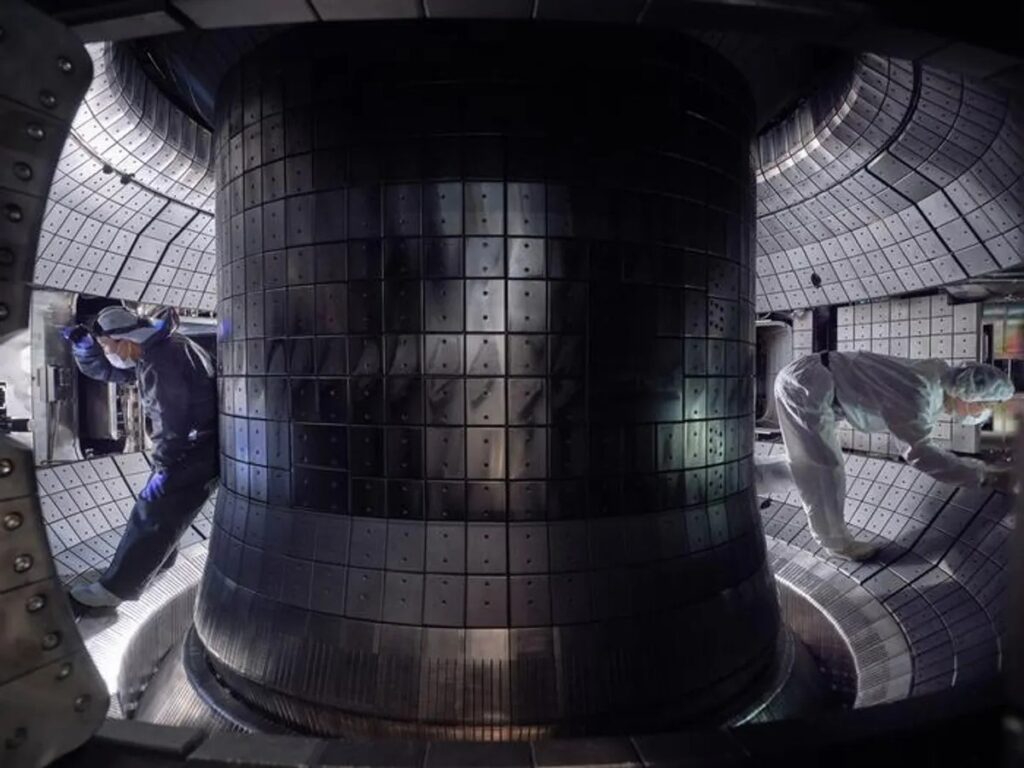
KSTAR’s Tokamak is not huge but it is still mighty.  Image Credit: Korea Institute of Fusion Energy (KFE)

KSTAR’s journey to this milestone has been marked by incremental advancements. Starting from a brief 1.5-second burst in 2018, subsequent years saw remarkable progress. The team achieved 8 seconds in 2019, followed by 20 seconds in 2020, and half a minute in 2021. Now, with sustained fusion temperatures for 48 seconds and plasma containment for 102 seconds in high-confinement mode (H-mode), KSTAR stands at the forefront of fusion research.

Dr. Si-Woo Yoon, Director of the KSTAR Research Center, attributes this success to meticulous preparation and technological upgrades. The introduction of a new tungsten divertor environment has significantly enhanced the reactor’s performance, paving the way for future breakthroughs.
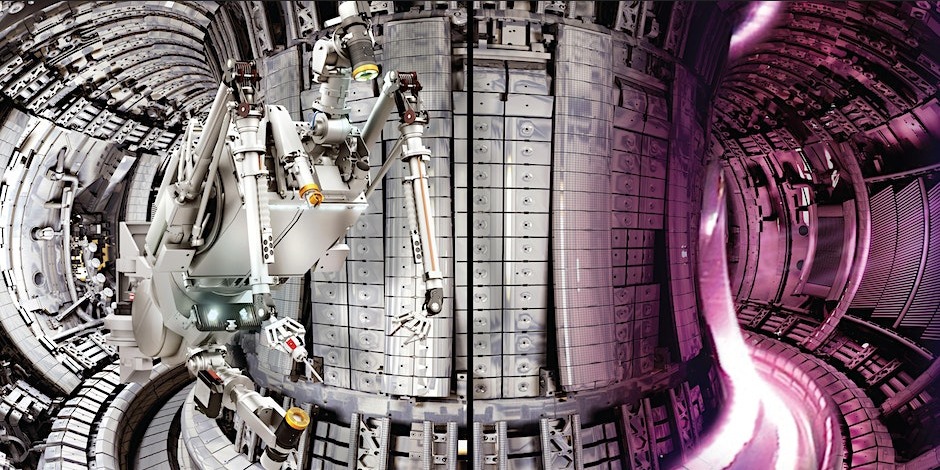
Looking ahead, the goal is to achieve 300 seconds of burning plasma by 2026. This ambitious target reflects the relentless pursuit of advancing fusion technology. KSTAR, alongside projects like the Joint European Torus (JET), serves as a crucial testbed for fusion research, laying the groundwork for prototypes like ITER and DEMO.

ITER, set to commence operations next year, promises to produce ten times more energy than it consumes. Its successor, DEMO, aims to generate electricity and deliver a staggering 25-fold energy output. These milestones herald a promising future for fusion energy, offering a clean, sustainable alternative to traditional power sources.
Dr. Suk Jae Yoo, President of the Korea Institute of Fusion Energy (KFE), emphasizes the significance of these achievements in shaping the future of fusion technology. As plans for DEMO’s construction take shape, the focus remains on securing core technologies essential for ITER’s operation and the realization of future fusion reactors.

With DEMO’s construction on the horizon, fueled by the insights gleaned from projects like KSTAR, we stand on the brink of a new era in energy production—one powered by the boundless potential of fusion.

Filed Under: Trends Worldwide Tagged With: breaks, core, fusion, hotter, korean, reactor, record, staying, sun’s, than, times, trends, worldwide

Reader Interactions

Leave a Reply Cancel reply

Your email address will not be published. Required fields are marked *

Primary Sidebar

More to See

A Compassionate UPS Driver Poses With Adorable Dogs on His New Orleans Route

By Hasan Jasim Editorial Team

“Walking” Tree That Looks Like An Ent Just Won New Zealand Tree Of The Year

By Hasan Jasim Editorial Team

Dramatic Wildlife Photo Captures Life-or-Death Battle Between Crab and Fish

By Hasan Jasim Editorial Team

Vet Tech Urges Owners To Stay With Dogs During Euthanasia

By Hasan Jasim Editorial Team

If Conditions are Right You Can See Chicago’s Skyline from the Indiana Dunes 50 Miles Away

By Hasan Jasim Editorial Team

After 24,000 Years Frozen In Siberian Permafrost, a Microscopic Animal Has Been Brought Back To Life

By Hasan Jasim Editorial Team

Heartbreaking: Kruger National Park Lion Suffers Severe Snake Bite

By Hasan Jasim Editorial Team

Footer

ABOUT HASANJASIM.ONLINE

Hasanjasim.online is a digital platform dedicated to publishing well-researched articles about the animal kingdom, nature, and the environment. Our editorial team works to source stories from credible outlets, scientific research, and verified reports, aiming to inform as much as we entertain. From wildlife conservation and animal behavior to natural wonders and environmental science, we cover the topics that help readers better understand and appreciate the natural world. Whether you're a lifelong nature lover or simply curious about the planet we share, Hasanjasim.online aims to be a trustworthy destination for stories worth reading — and worth citing.

Recent

  • Scientists Found Ancient Americans Living Where No Humans Should Have Been
  • This African Bird Wears Sunflowers Around Its Eyes — Meet the White-Crested Helmetshrike
  • 25 Animals You’ve Probably Never Heard Of — From a Cuban Land Snail to a Marsupial That Mates Itself to Death
  • Woman finds cow’s tooth in takeout taco. The chain says it can happen
  • Healthy Senior Dog Spared After Family Asked Veterinarians to Euthanize Her, Georgia Rescue Says
  • How People Around the World Write Laughter Online
  • The Disturbing Story Behind This Award-Winning Photojournalism Image

Search