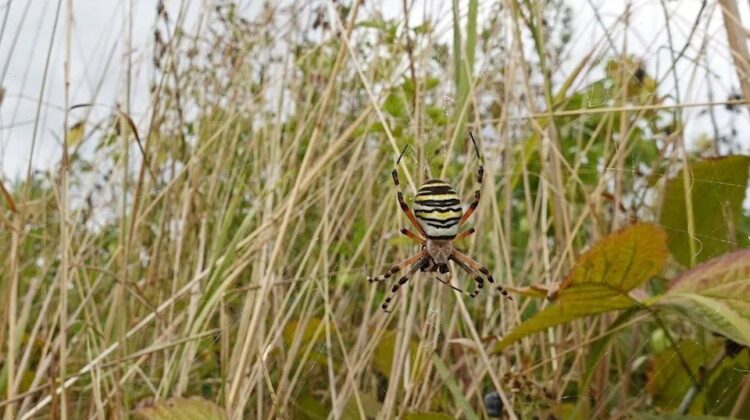
One of Britain’s biggest and most striking spiders has just been spotted more than 100 miles outside its usual territory — and wildlife experts say it’s a sign of things to come.
A Southern Spider Heading North
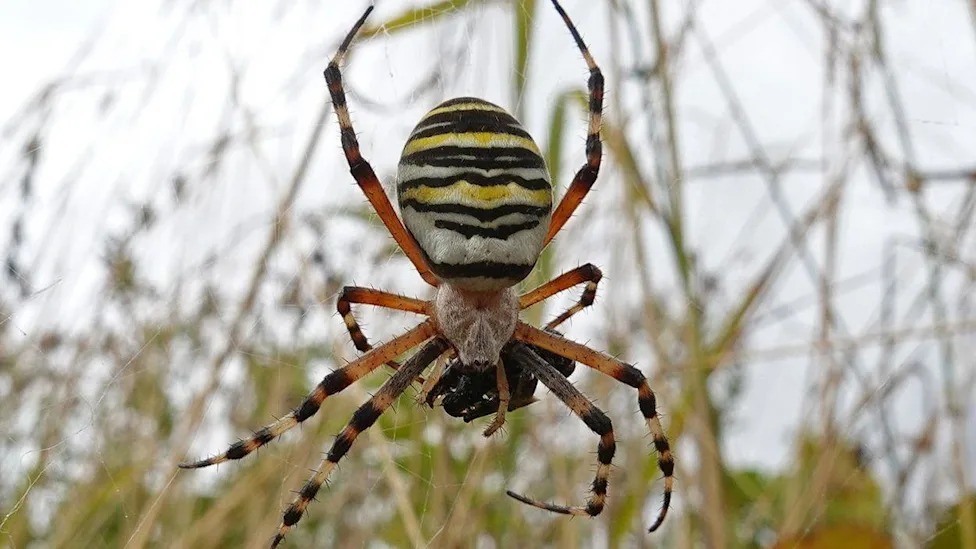
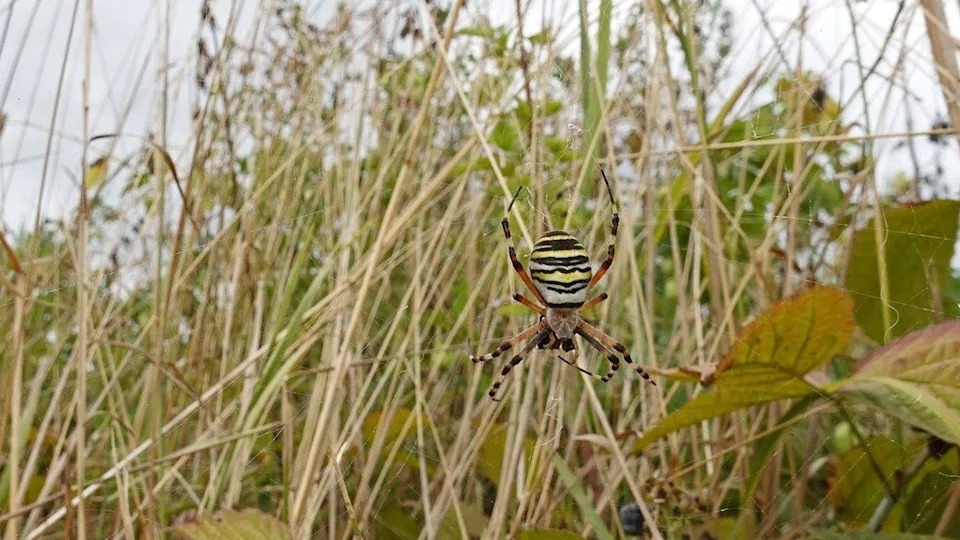
The wasp spider (Argiope bruennichi) is hard to mistake for anything else: females grow a plump, boldly striped abdomen in yellow, black and white, closely mimicking a common wasp. According to The Wildlife Trusts, the species is a relatively recent arrival to the UK, first recorded in England in the 1920s after spreading from continental Europe, and for decades it stayed confined almost entirely to the warmer counties of southern England.
That’s been changing. The wasp spider has been gradually expanding its range northward for years, and its latest confirmed sightings — in Worcestershire, Herefordshire and Warwickshire — place it firmly in the West Midlands, well beyond where it was traditionally found.
Spotted Along The River Avon
Wendy Carter of Worcestershire Wildlife Trust has been tracking the spider’s spread through the county and recorded a sighting herself near Eckington. She said the species shouldn’t cause alarm despite its size and wasp-like appearance.
“I know they’re quite scary because they’re quite big, but they’re phenomenal creatures and they’re not going to do us any harm,” Carter said.
Reports have also come in from Evesham, Broadway and Worcester, with the most recent sighting logged in Feckenham. Carter explained that after a single record the previous year and a handful of sightings near the county border, roughly nine or ten reports followed in quick succession — nearly all clustered along the River Avon in the south-east of Worcestershire, prompting her to search the riverbank herself and find another specimen.
Not Dangerous — Just Big
Despite the intimidating wasp-mimic coloring, the species poses no real threat to people. Like all spiders, wasp spiders are venomous — it’s how they subdue prey such as grasshoppers and crickets caught in their webs — but Carter noted that only a small number of spider species worldwide can even pierce human skin, and none found in Britain carry venom capable of causing harm to a person.
According to the British Arachnological Society, female wasp spiders reach roughly 2cm in body length, dwarfing the males, which typically measure closer to 0.5cm. The spiders favor long grass, thistles and other tall vegetation, where females spin distinctive orb webs.
Riding The Wind To New Territory
Adult wasp spiders can’t fly, but that hasn’t stopped them from covering serious ground. Spiderlings disperse through a behavior called “ballooning,” releasing fine silk threads that catch the breeze and carry them — sometimes remarkably long distances — to new locations.
Carter said milder winters and longer stretches of warm weather are likely major drivers behind the species establishing itself further north than before, since wasp spiders need at least three months of consistently warm conditions to complete their breeding cycle.
“It’s also pushing our wildlife further north, so we’re losing species that are unable to cope with the warmth and the mildness,” she said. “This is a natural progression. Wasp spiders are one of a long line of species that we’re starting to see move into the county from the south of England.”
What Happens Next
Female wasp spiders are currently laying their egg sacs as the current season winds down, with adults dying off as temperatures drop later in the year — their offspring will be the ones to test the boundaries of the species’ range even further next spring.
Worcestershire Wildlife Trust is encouraging anyone who spots a wasp spider in the county to photograph it and report the sighting, helping researchers continue tracking how far — and how fast — the species continues to move.
Frequently Asked Questions
Is the wasp spider dangerous or venomous to humans? No. While all spiders use venom to subdue prey, wasp spiders are not among the small number of species capable of piercing human skin, and no spider species found in the UK has venom that poses a danger to people.
Why is the wasp spider spreading further north in the UK? Experts point to milder winters and longer periods of warm weather, which the species needs to complete its breeding cycle. Warmer conditions linked to climate change are widely cited as the driving factor behind many southern species expanding their UK range.
Where can you typically find wasp spiders? They’re most commonly found in long grass, thistles, and other tall vegetation, where females build distinctive orb webs to catch grasshoppers and other insects.
How do wasp spiders travel such long distances if they can’t fly? Spiderlings disperse through a process called “ballooning,” releasing silk threads that catch the wind and carry them, sometimes over very long distances, to new areas.
Sources: The Wildlife Trusts (national species database), Kent Wildlife Trust, British Arachnological Society, regional wildlife trust and biological records sources cited above.
Leave a Reply