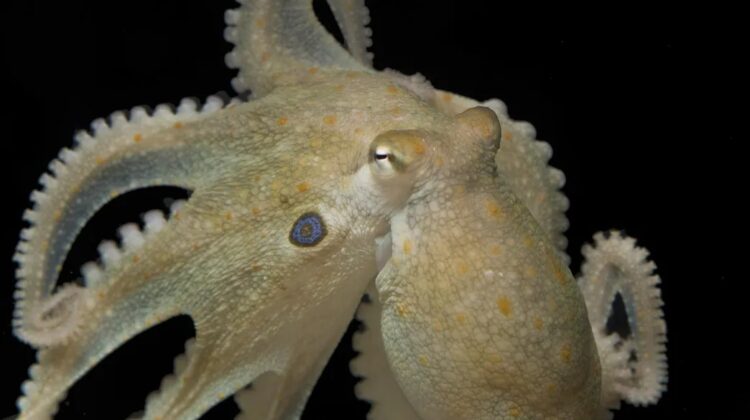
Some people may feel like an octopus after taking MDMA, but does an octopus roll like a human? The answer, according to new research published today in Current Biology, is yes. A relatively antisocial, solitary species of octopus became more social, engaged, and generally interested in its surroundings after being given the party drug.
Why would you want to medicate an octopus? Of course, to better understand the evolutionary history of social behaviors throughout the animal kingdom. (As a side note, how do we get into that research lab?)
“[A] major argument for studying octopuses is exactly how evolutionary distant they are from us,” lead researcher Gul Dolen told IFLScience. “Thus, it’s similar to studying alien intelligence in that it has the potential to teach us a lot about the ‘rules’ for building a nervous system that supports complex cognitive behaviors without getting bogged down in the incidental (necessary but contingent) organization of brains.”
To accomplish this, researchers divided an aquarium into three equal-sized partitions: the first contained a new object (dubbed the “toy room”), the second contained nothing, and the third contained another octopus restrained in a plastic container that the other octopus could see, touch, and pick up on chemosensory cues, but not enter the same space. The researchers then placed the experimental octopus in the center and timed how long the octopus spent in each of the chambers over the course of a 30-minute test session.
When the octopuses were rolling, they displayed some unusual behavior. They not only spent more time with other octopuses, but they also engaged in “extensive ventral surface contact,” or touching the underside of the other animal in an exploratory, nonaggressive manner. It’s no surprise when you have eight arms with thousands of highly sensitive suction cups.
Despite being more than 500 million years apart in evolutionary time, octopuses are thought to be among the most behaviorally complex and advanced invertebrates. Octopus bimaculoides appears to have the same serotonin transporter gene as humans, which is known to serve as the “principle binding site of MDMA.”
MDMA, also known as ecstasy and Molly on the street, is a synthetic hallucinogenic drug that alters a person’s perception to produce euphoria. It accomplishes this by allowing a flood of “happy” chemicals – serotonin, dopamine, and oxytocin – into the brain. In the case of the octopuses, the drug causes the release of serotonin, which is already present in the brain but is normally suppressed. The authors do note, however, that some of these behaviors may reflect a “adaptation of laboratory-raised animals” that differs from those found in the wild.
Despite evolutionary differences, the research shows that the gene that transmits serotonin has enough molecular similarities that both humans and octopuses have a similar experience with MDMA. Taking it a step further, octopuses may use similar brain pathways to be social at certain times, such as mating.
This octopus species is also the first to have its entire genome sequenced, and researchers say they are now in the process of sequencing two others that are closely related but exhibit different types of behaviors. The comparison of the genomes should help them understand how social behaviors evolved.
Leave a Reply