• Skip to main content
  • Skip to primary sidebar
  • Skip to footer
  • Home
  • About Us
  • Copyright Report
  • Submit Content
  • Terms
  • Privacy Policy
  • Legal Disclaimer

Hasan Jasim

Hasan Jasim is a place where you may get entertainment, viral videos, trending material, and breaking news. For a social generation, we are the largest community on the planet.

Scientists Express Concerns as ‘ZOMBIE’ Deer Disease Detected in Yellowstone Raises Fears of Human Transmission

by Hasan Jasim Editorial Team Leave a Comment

ShareTweet

Scientists have issued warnings about the potential spread of a fatal brain virus known as “Zombie deer disease” to humans after the discovery of the first-ever case in Yellowstone National Park last month.
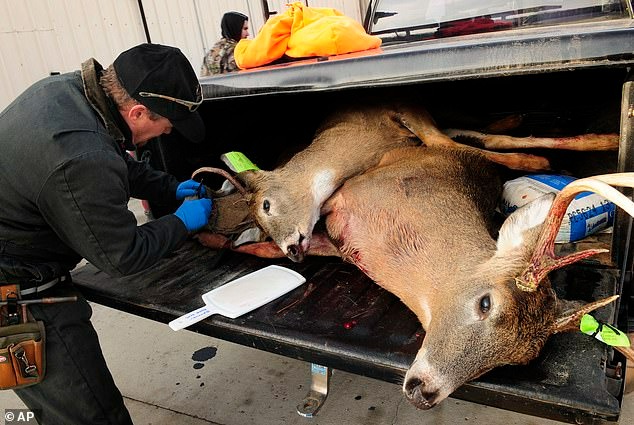
Scientists have warned that the virus, dubbed ‘Zombie deer disease,’ could potentially spread to humans. A biologist is pictured removing the lymph nodes from deer to test them for chronic wasting disease

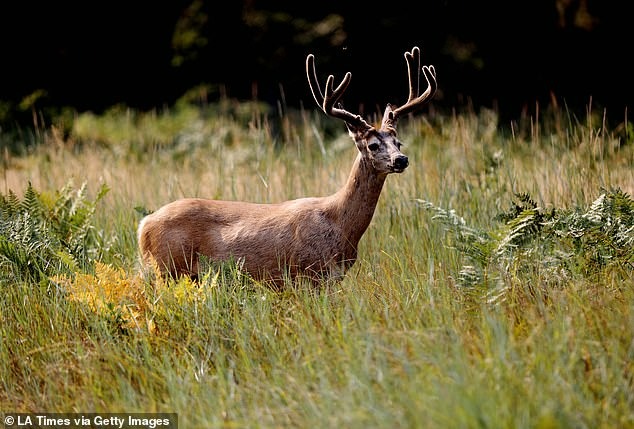
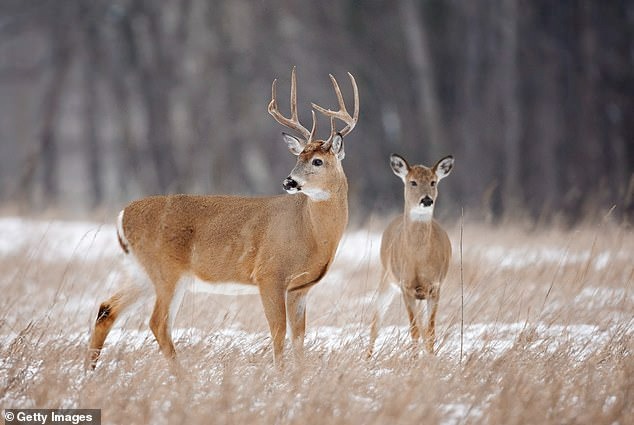
The chronic wasting disease (CWD), also called “Zombie deer disease,” has garnered attention due to its effects on animals, leaving them confused, drooling, and unafraid of humans. The recent detection of the virus in a deer carcass in Yellowstone National Park has raised alarms among experts, who caution that it may someday infect humans.

Dr. Cory Anderson, the program co-director at the Center for Infectious Disease Research and Policy, emphasized the importance of preparedness, drawing parallels with past outbreaks. Anderson highlighted the unpredictability of spillover events, citing the BSE (mad cow) outbreak in Britain as an example of how chaotic situations can arise suddenly.

The alarm was raised after a deer carcass tested positive for chronic wasting disease (CWD) in Yellowstone National Park in northwest Wyoming in November

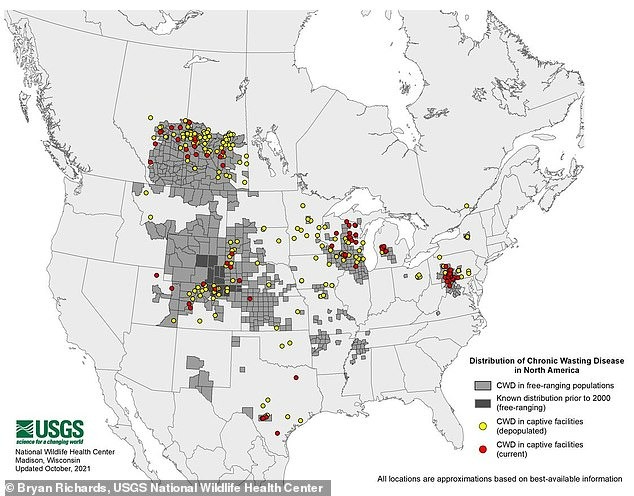
The CWD virus has already spread to more than 31 US states, two Canadian provinces, and South Korea, according to the US Geological Survey. Anderson expressed concerns about a similar scenario unfolding, emphasizing the need for readiness.

Describing CWD as “invariably fatal, incurable, and highly contagious,” Anderson’s study focused on the pathways of CWD transmission, revealing the lack of effective methods to eradicate it from both infected animals and contaminated environments.
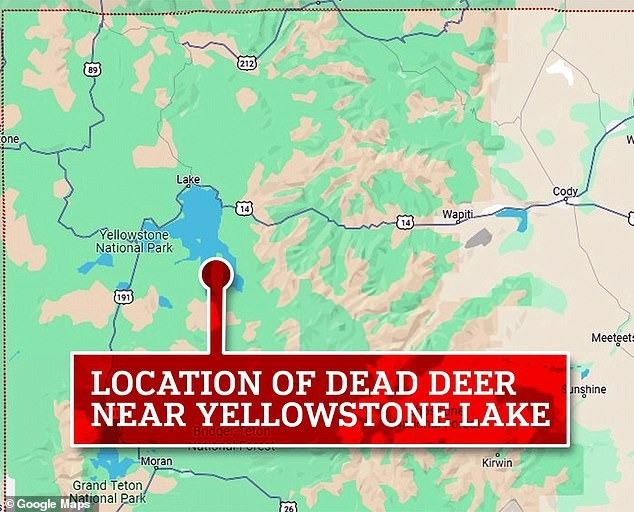
The infected buck’s corpse was tracked down to a peninsula along Yellowstone Lake’s southern edge, via a GPS collar outfitted last March for a population dynamics study

CWD, a prion-transmitted disease similar to ‘Mad Cow,’ causes weight loss, loss of coordination, and eventually fatal neurological symptoms in deer and related species. While the US National Park Service states that there is currently no evidence of CWD infecting humans or domestic animals, it cautions game hunters to avoid consuming tissues from infected animals.

Samples from the infected mule deer in Yellowstone tested positive for CWD, prompting concerns about the disease’s potential impact on non-human primates, including monkeys, as noted by the Centers for Disease Control and Prevention. Since 1997, the World Health Organization has recommended preventing agents of known prion diseases from entering the human food chain.
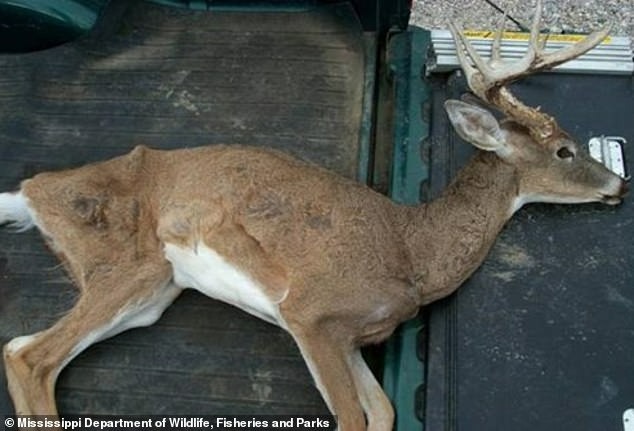
Chronic wasting disease (CWD) is a prion-transmitted disease, similar to ‘Mad Cow,’ which can cause weight loss, loss of coordination and other eventually fatal neurological symptoms in deer. Above, a deer killed by CWD as identified by Mississippi wildlife officials
CWD has spread to over 31 US states, two Canadian provinces and South Korea, according to the US Geological Survey 

Yellowstone National Park officials are collaborating with the Wyoming Game and Fish Department to monitor the spread of CWD among deer and other hooved species in the park. The discovery has led to revisions in the park’s 2021 CWD surveillance plan, with an updated protocol expected next year.

Park spokesperson Morgan Warthin revealed plans to intensify collaborative efforts to identify areas at increased risk from the disease. CWD was initially detected in mule deer in Wyoming in 1985 and has since spread across the state, reaching Yellowstone National Park in Wyoming’s northwest corner.
CWD was first detected in mule deer in Wyoming in 1985 along the state’s southeastern region 
The disease’s arrival in Yellowstone marks the end of a decades-long spread westward across the state, reaching the national park’s location in Wyoming’s northwest corner 
Researchers in Illinois believe that the amount of clay found in soil affects the spread of ‘zombie deer disease.’ The disease, formally called chronic wasting disease (CWD), causes holes in the brain. According to the Illinois group’s study, a high amount of clay in the soil can help stop the illness.

As efforts to monitor and manage CWD continue, both Wyoming and Montana state wildlife regulators are working together to address the potential risks. While the news is described as a ‘data point of interest’ in Montana, officials emphasize the importance of ongoing monitoring and communication with the park and hunters as primary tools for CWD management in the state.

Filed Under: Trends Worldwide Tagged With: “zombie, concerns, Deer, detected, disease, express, fears, human, raises, Scientists, transmission, trends, worldwide, yellowstone

Reader Interactions

Leave a Reply Cancel reply

Your email address will not be published. Required fields are marked *

Primary Sidebar

More to See

Casper, dog who fought off coyotes to protect his flock of sheep, wins “Farm Dog of the Year” award — congratulations

By Hasan Jasim Editorial Team

Exotic animals found in Iraq, their species between a lion and a dog is not known

By Hasan Jasim Editorial Team

Accidentally Separated from Mother, Baby Dolphin Rescued

By Hasan Jasim Editorial Team

A Dog Swims in a Lake While Carrying a Small Chihuahua Companion who Manages to Keep His Balance.

By Hasan Jasim Editorial Team

The Great Salt Lake in Utah Is Divided Into a Blue and a Red Body of Water – Here’s Why

By Hasan Jasim Editorial Team

The Majestic Sebright Chicken: Nature’s Living Coloring Book

By Hasan Jasim Editorial Team

Embroidered Brooches Look Like Real Bird Portraits

By Hasan Jasim Editorial Team

Footer

ABOUT HASANJASIM.ONLINE

Hasanjasim.online is a digital platform dedicated to publishing well-researched articles about the animal kingdom, nature, and the environment. Our editorial team works to source stories from credible outlets, scientific research, and verified reports, aiming to inform as much as we entertain. From wildlife conservation and animal behavior to natural wonders and environmental science, we cover the topics that help readers better understand and appreciate the natural world. Whether you're a lifelong nature lover or simply curious about the planet we share, Hasanjasim.online aims to be a trustworthy destination for stories worth reading — and worth citing.

Recent

  • Euphorbia Hirta (“Asthma-Plant”): What Traditional Use and Real Research Actually Show
  • A Mystery Animal Has Been Randomly Attacking People in New Hampshire — Here’s What We Know
  • A Woman Was Filmed Sharing Her Ice Cream With Her Dog — Here’s What Vets Actually Say About It
  • Dolphin Calf Incident in Ceuta Sparks Outrage After Disturbing Beach Footage Emerges
  • Lactuca Serriola Root: Traditional Uses of Prickly Lettuce (Wild Lettuce) Root
  • The Puppy a Firefighter Couldn’t Leave Behind — and the Story Didn’t End There
  • A Mother Dog Dove Into Floodwater Again and Again — Until All 7 of Her Puppies Were Safe

Search