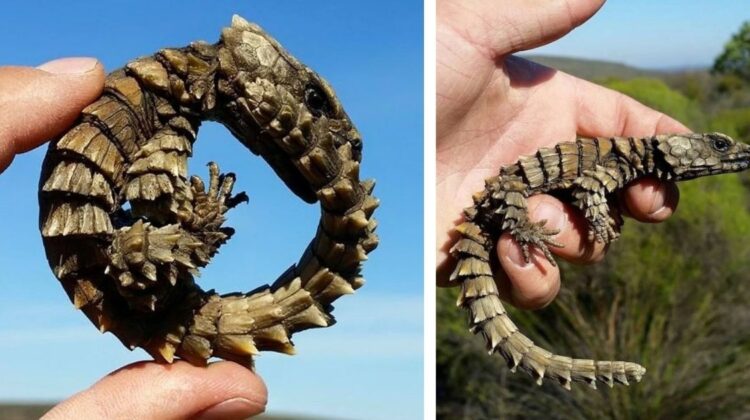
Its scientific name is Ouroborus cataphractus for good reason.
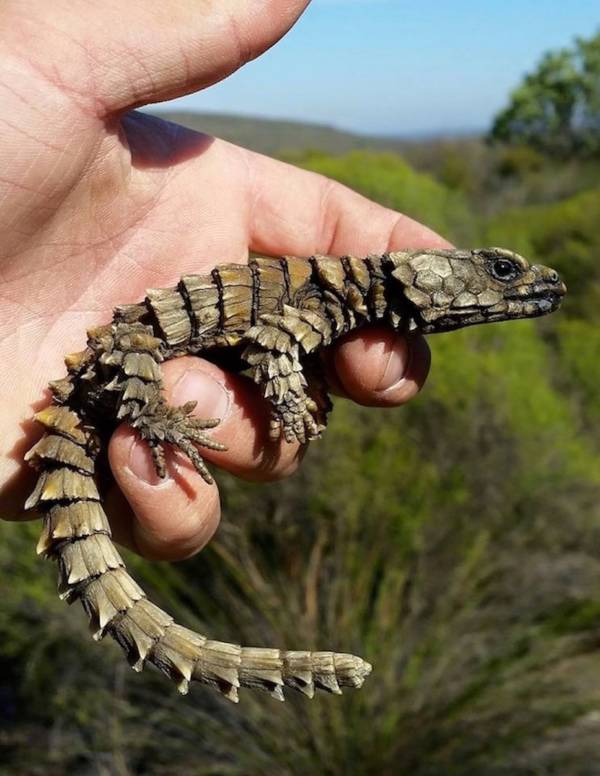
In the arid landscapes of South Africa’s western coast, a creature that looks like a baby dragon from Game of Thrones or perhaps a desert-dwelling Pokémon roams. Known scientifically as Ouroborus cataphractus, the armadillo lizard is a real animal with a name that reflects its mythical appearance and unique characteristics.
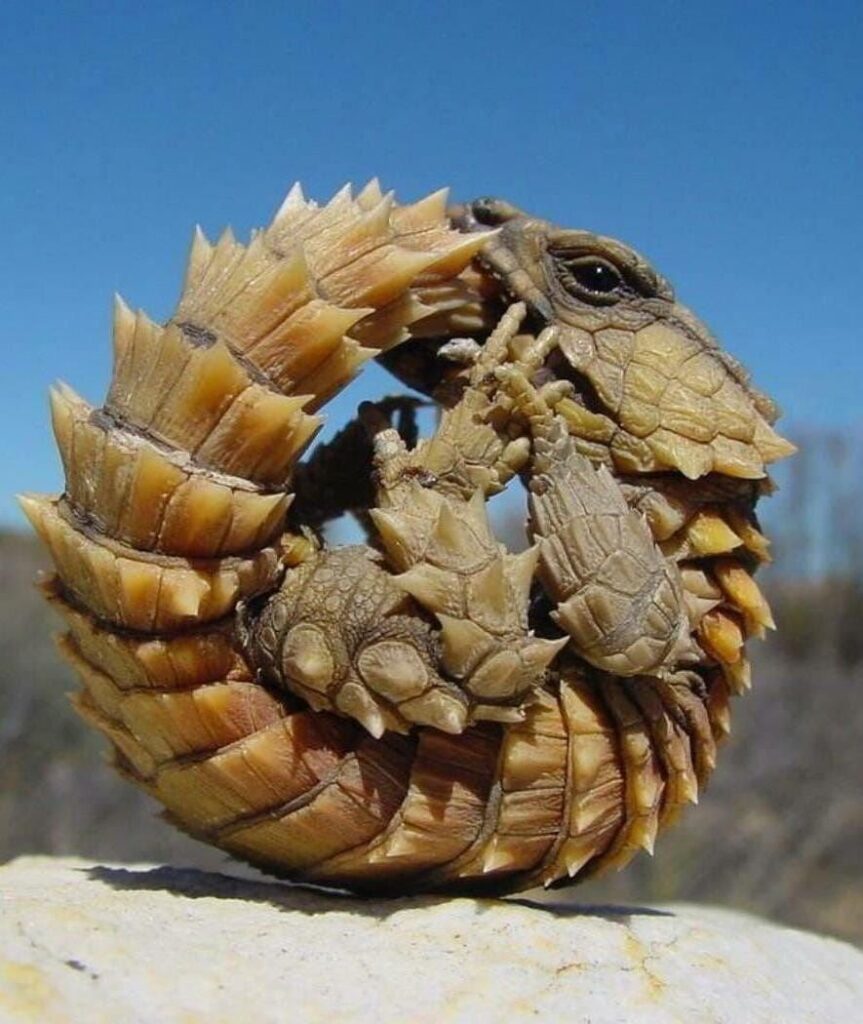
The armadillo lizard is known by several names, including the armadillo lizard, the armadillo spiny-tailed lizard, and the golden-armadillo lizard. The genus name Ouroborus is derived from the ancient symbol “ouroboros,” which depicts a serpent or dragon eating its own tail, symbolizing eternity, the cyclical nature of life, and endless renewal. The species name “cataphractus” comes from the Greek word “κατάφρακτος” (kataphraktos), meaning “armored” or “covered,” perfectly capturing the essence of this fascinating lizard.
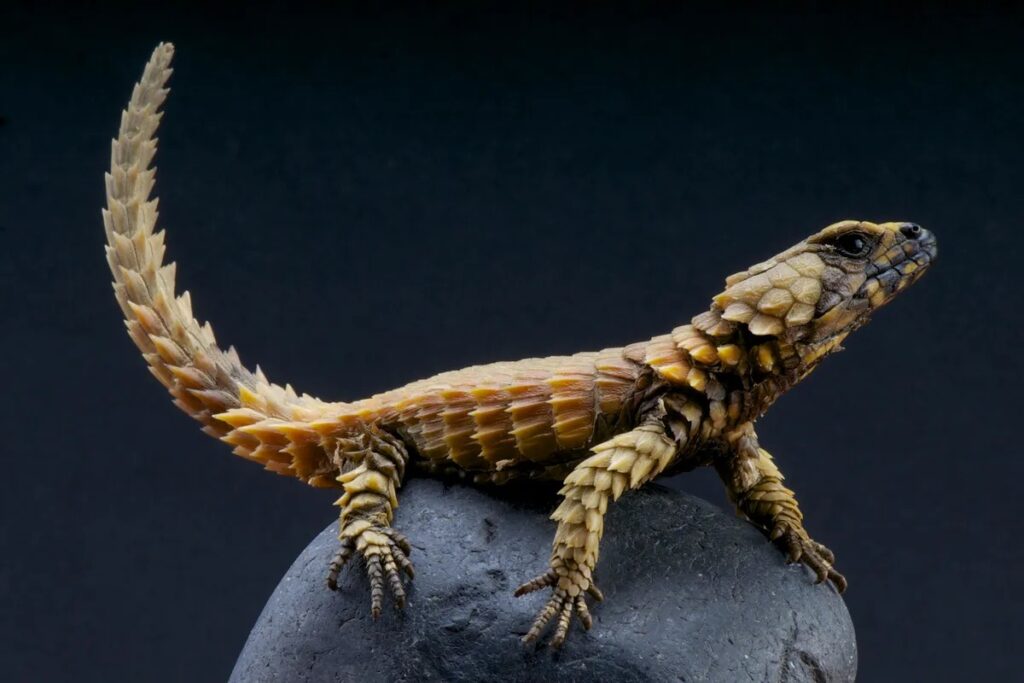
The armadillo lizard’s armor-like scales are its most striking feature. These protective scales help the lizard defend itself against predators in its harsh desert habitat. The lizard typically hides in rock crevices in groups of 30 to 60 individuals, emerging only to hunt insects or bask in the sun. When danger strikes, these lizards retreat quickly into their rocky refuges. If a predator catches them, the armadillo lizard will bite its own tail to shield its vulnerable underbelly, mimicking the ouroboros symbol’s self-defense.
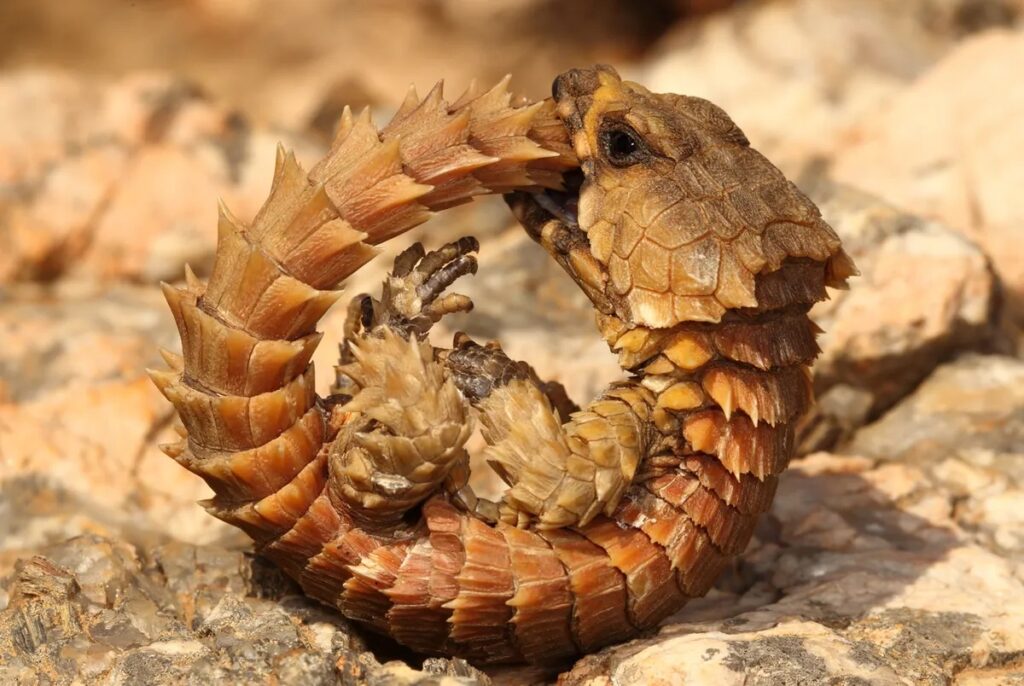
Belonging to the family Cordylidae, the armadillo lizard is part of a group of small- to medium-sized lizards native to southern and eastern Africa. Its appearance is not the only thing that sets it apart. Unlike most lizards, armadillo lizards give birth to live young, a form of reproduction known as viviparity. This method of reproduction is demanding for the mothers but offers advantages in harsh environments by protecting the offspring from extreme conditions and predators. Remarkably, female armadillo lizards may even nurse their young after birth, a trait typically seen in mammals and birds rather than reptiles.
Despite its captivating traits, the armadillo lizard faces threats from both natural predators and human activities. Over-exploitation and poaching for the pet trade have led to its listing as “near threatened” on the IUCN Red List. Although South African regulations prohibit the export of these lizards without proper documentation, illegal trafficking persists, with armadillo lizards often ending up as pets in the US.
The armadillo lizard’s dragon-like appearance and its unique behaviors make it a fascinating subject of study and a reminder of the delicate balance between human activity and wildlife conservation.
Leave a Reply