Four years ago, my journey into the aftermath of the Norman Conquest of 1066 began with the inception of a novel. It was a tale set against the backdrop of a pivotal moment in British history. To properly capture the essence of the era, I delved into countless tomes and manuscripts during six months spent at the Bodleian library. What emerged from this exploration was not just a story, but a realization of the enduring legacy of the Norman conquest on modern England.
A disquieting truth gradually dawned on me: we are, in many ways, still governed by the descendants of the Normans.
Consider the exorbitant prices of real estate in Britain. Kevin Cahill’s research elucidates a stark reality: a minuscule elite controls the lion’s share of the nation’s land, with just 0.3% of the population – approximately 160,000 families – laying claim to two-thirds of the country. This disparity is further accentuated by the fact that less than 1% of the populace owns a staggering 70% of the land, placing Britain in close contention with Brazil for the dubious honor of the most unequal land distribution globally.
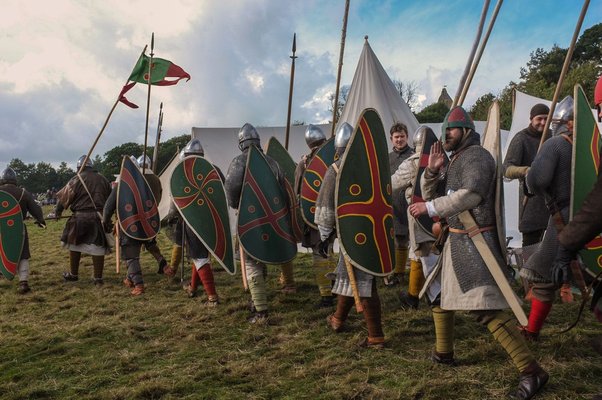
The roots of this inequality stretch back to 1066. William the Conqueror’s first decree following his victory at Hastings was to assert royal ownership over every acre of English land—a radical departure from the mosaic of Anglo-Saxon landowners. Thus began a system of feudalism, perpetuating a culture of landownership that continues to shape England to this day.
The dukes and earls who dominate the nation’s landholdings owe their status to this historic land grab. Remarkably, William’s 22nd great-granddaughter, the current monarch, retains legal ownership over the entirety of England. Even the humble abode of a homeowner, if they’re fortunate enough to afford one, falls under her dominion. Every occupant is, in essence, a tenant, with loyalty to the crown serving as the rent. This feudal inheritance extends to the heir apparent, Duke of Cornwall, who inherits lands granted to Brian of Brittany for his role in the Battle of Hastings.
The injustices of the Norman conquest reverberate through the centuries. William’s construction of castles using English slave labor solidified his control over the populace—a strategy later replicated in England’s colonizing efforts across Ireland, Scotland, and Wales. The impoverished were heavily taxed, exacerbating rural poverty to fund royal endeavors, earning Norman rule the label of “medieval apartheid.”
Contemplating an alternate history where William’s conquest failed leads to tantalizing what-ifs. Would England have been spared the dominance of aristocratic estates and hereditary monarchs? Could the industrial revolution and the empire have unfolded differently without such concentrated power? These questions, though unanswerable, prompt reflection on England’s trajectory.
In both 1066 and 2012, stark disparities persisted: the ruling class savored wine while the common folk drank beer; vast swathes of land remained in the hands of elite families; and the descendants of the Normans maintained their economic advantage. Yet, amidst this disparity, echoes of resistance endure. The “silvatici,” or wild men of the woods, waged a clandestine campaign against Norman rule—a spirit embodied in later English rebellions from the Peasants’ Revolt to the legend of Robin Hood.
The lessons of history resonate with contemporary relevance. As today’s elites luxuriate in their privilege, they would do well to heed the indomitable spirit of those who resisted tyranny centuries ago. The Norman conquest may have left an indelible mark on England, but the legacy of defiance endures—a testament to the enduring spirit of the common folk against entrenched power.
Leave a Reply