• Skip to main content
  • Skip to primary sidebar
  • Skip to footer
  • Home
  • About Us
  • Copyright Report
  • Submit Content
  • Terms
  • Privacy Policy
  • Legal Disclaimer

Hasan Jasim

Hasan Jasim is a place where you may get entertainment, viral videos, trending material, and breaking news. For a social generation, we are the largest community on the planet.

The Widowmaker Pine Cone Is the World’s Largest: It’s So Big It Can Actually Kill You

by Hasan Jasim Editorial Team Leave a Comment

ShareTweet

Definitely mind your head when walking by one of these!
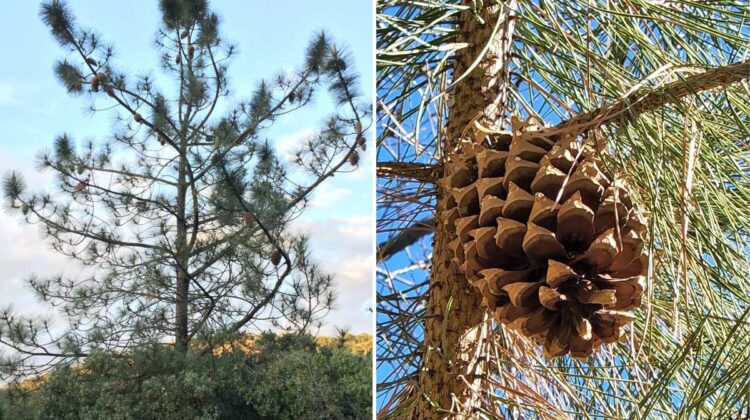
The largest pine cone in the world. Photo: TheRealDeJureTour

Ever wondered how big a pine cone can grow? Well, ponder no further. The Coulter pine (Pinus coulteri), an evergreen conifer native to the coastal mountains of southern California and northern Baja California, is known for producing the heaviest and largest cones of any pine species, which can weigh up to 5 kg (11 lb) and measure up to 51 cm (20 in) long. Yes, that big!

The Coulter pine, also known as the big-cone pine, nut pine, California Coulter pine, or pitch pine, is a medium-sized tree that can reach up to 79 feet (24 meters) in height and 3.3 feet (1 meter) in trunk diameter. Well, the tree can be medium-sized, but it’s cones certainly aren’t. Just look at this!
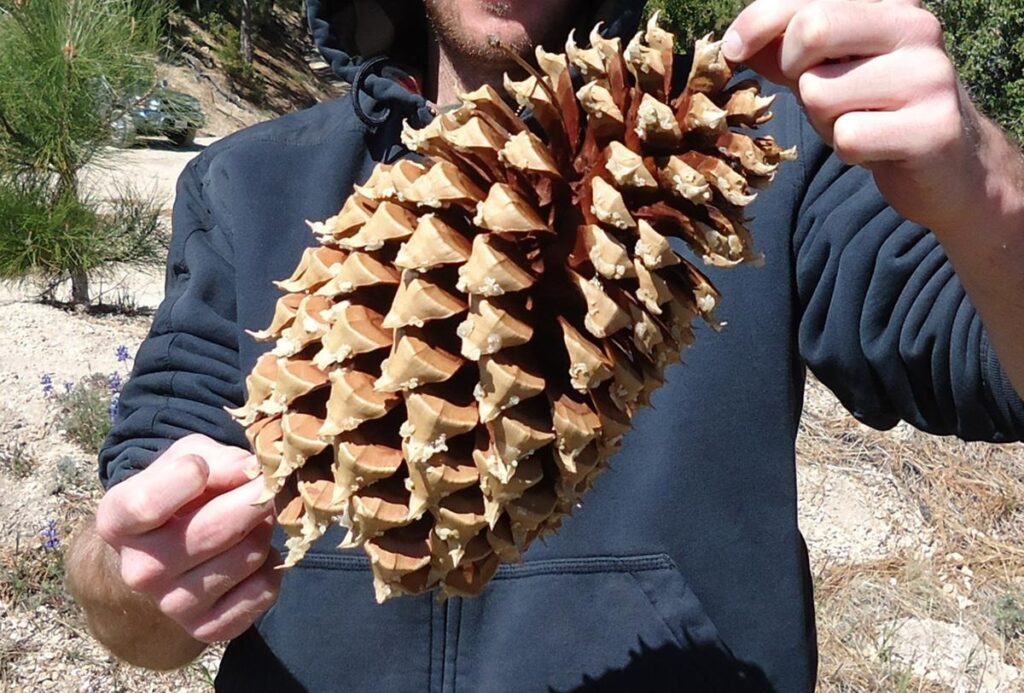
A man’s hand is dwarfed by the enormous cone of the Coulter pine. Photo: damontighe

The big-cone pine grows on steep south-facing slopes at elevations of 500-7000 feet and has dark gray to black bark that is deeply rugged with scaly ridges. The leaves are needle-like, arranged in bundles of three, and have a glaucous gray-green color. And they are also huge! They measure 5.9-11.8 inches (15-30 centimeters) (!) long and stout, 0.079 inches (2 millimeters) thick.
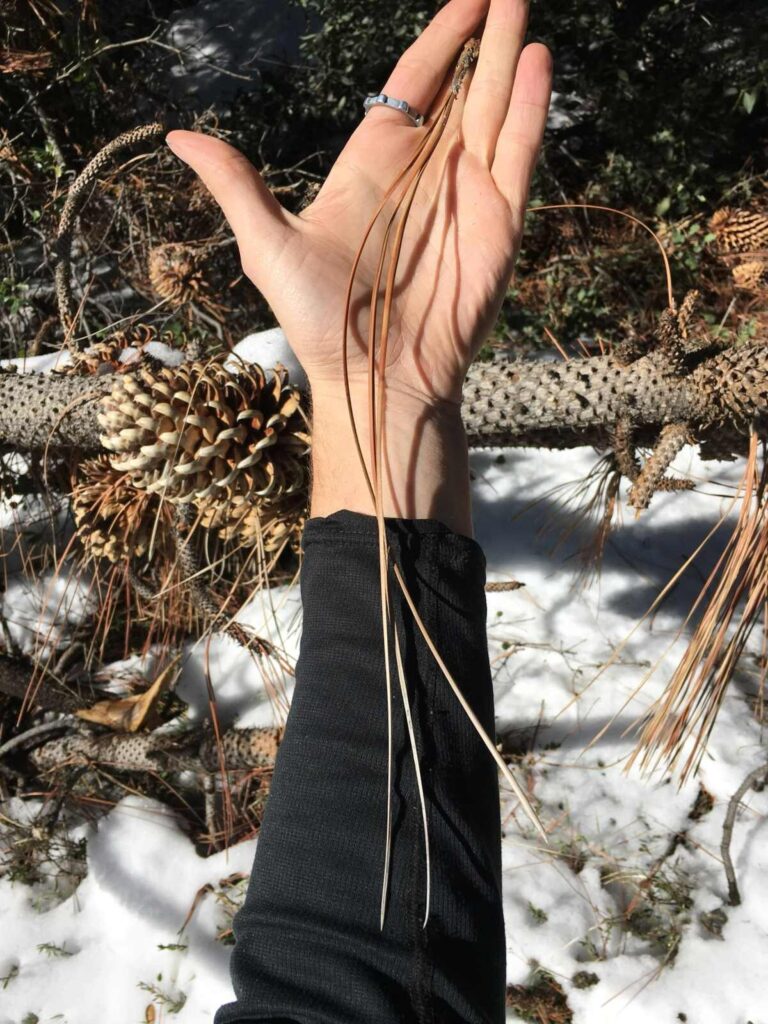
Not only the cones are huge – look at those leaves! Photo: damontighe

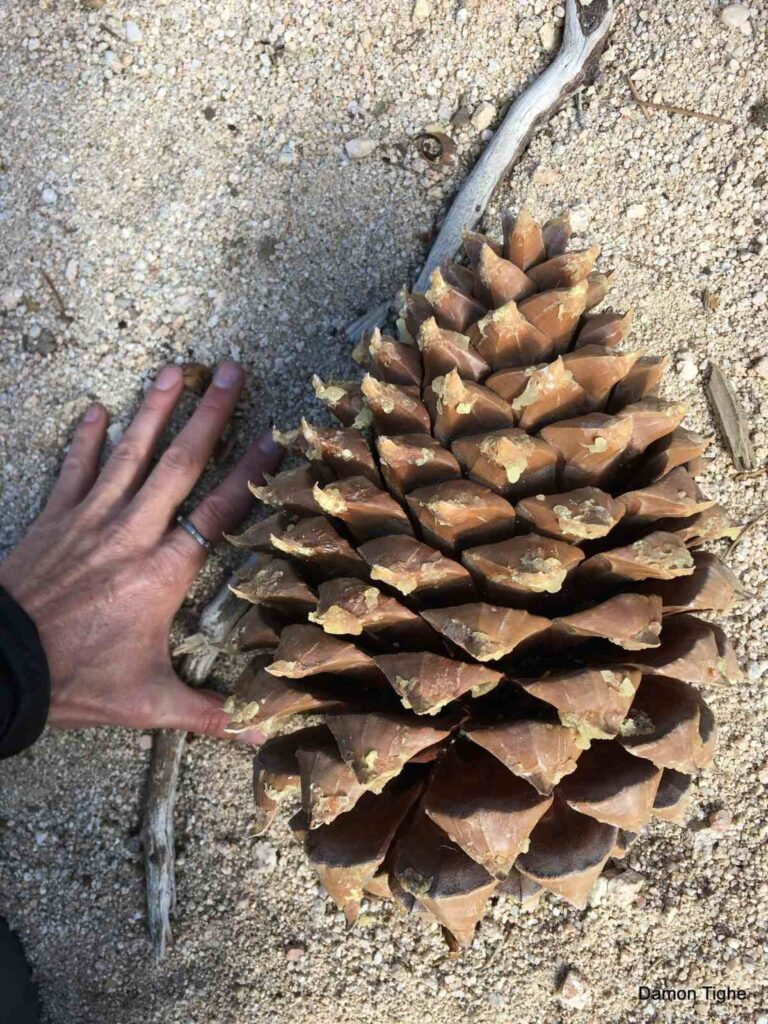
But the most remarkable feature of this tree is its cones. The Coulter pine produces the heaviest cones of any pine species, and among conifers, only the bunya-bunya tree (Araucaria bidwillii) has heavier ones. The cones are 7.9-15.7 inches (20-40 centimeters) long and weigh 4.4-11 pounds (2-5 kilograms) when fresh. Each segment, or scale, of the cone is tipped with a talon-like hook. The seeds are large and brown, about 0.8 inches (2 centimeters) in diameter.
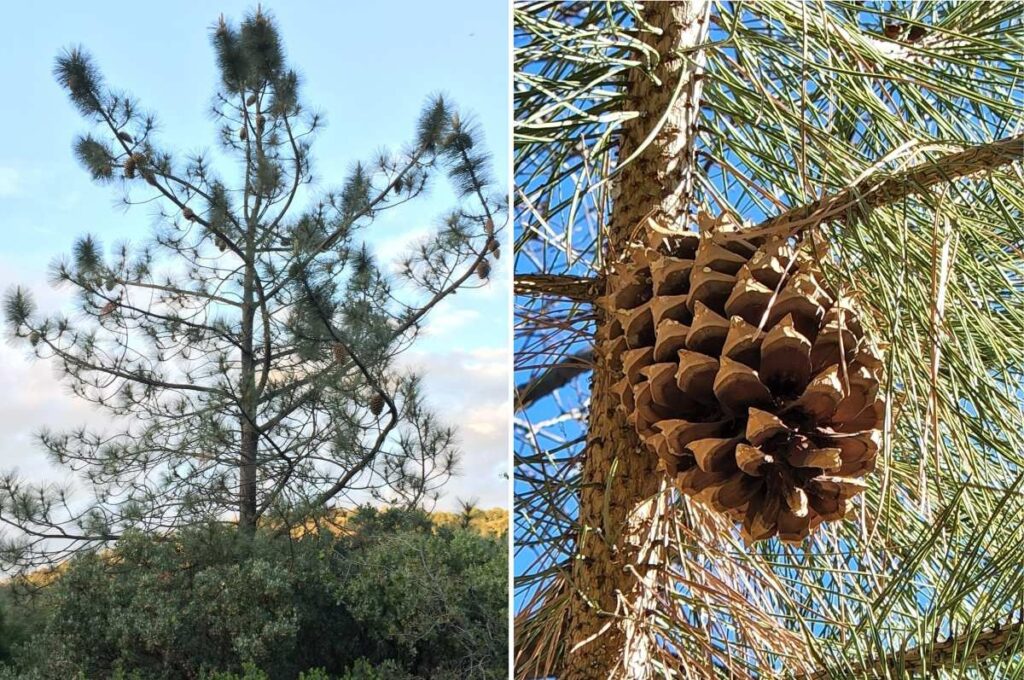
Coulter pine with the enormous cones still on. Mind your head! Photo: damontighe / rbelshee

The cones take two years to mature and can persist on the tree for several years after that. They are usually found on the upper branches of the tree, where they are less likely to damage the lower branches or the trunk when they fall.

However, they can still pose a serious threat to anyone or anything underneath them. The large size and weight of the cones, combined with the claw-like scales, have earned them the nickname “widowmakers” among locals – in remembrance of the unlucky individuals who met their fate as a result of the falling pine cones.
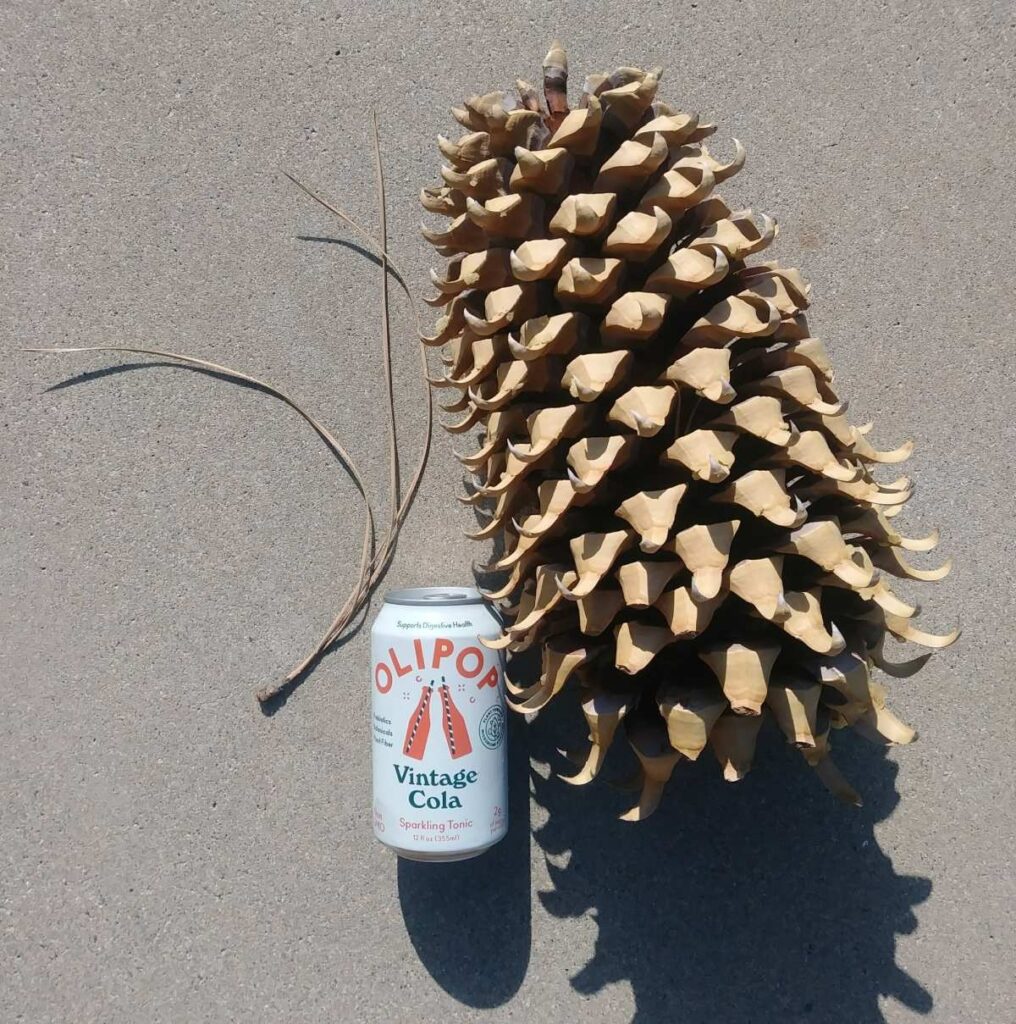
Oops, that pop is small! Photo: TankredGottfried

The Coulter pine is an important source of food and shelter for wildlife. White-headed woodpeckers feed on insects on the lower trunk and cones of the tree, while western gray squirrels eat the seeds. Black-tailed deer sometimes graze on the young trees.

The wood is weak and soft, so it is not widely used for timber or construction, but mainly for firewood and bird feeders.
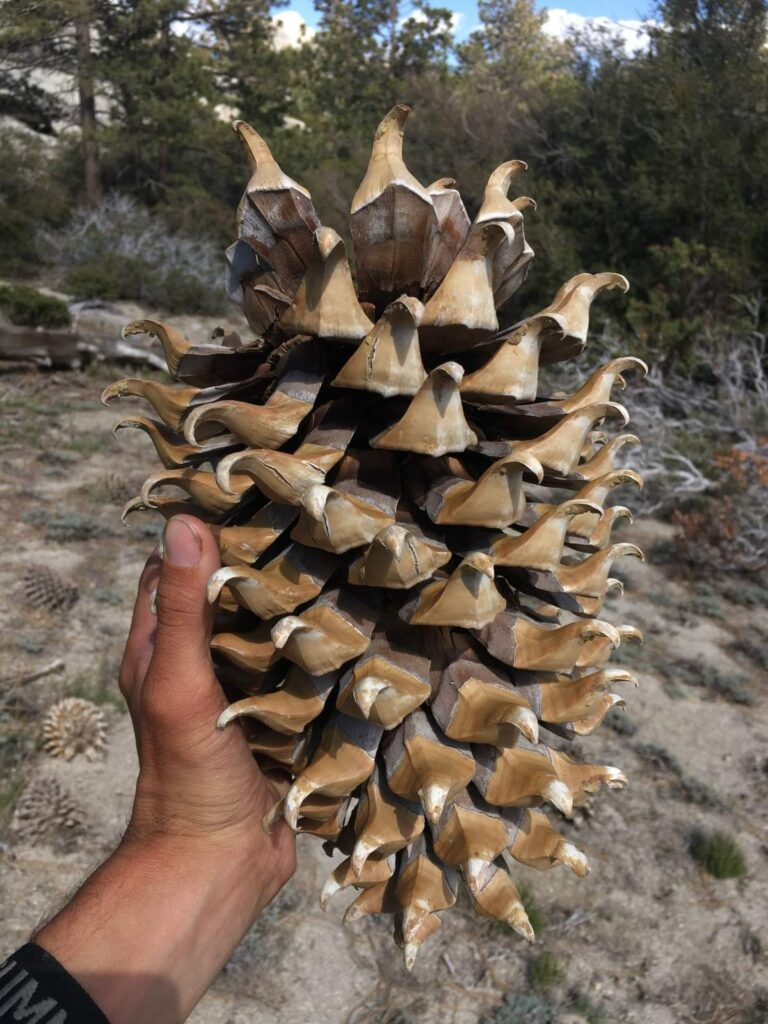
There’s much beauty involved too, beside the size. Photo: © Matt Berger

The Coulter pine is also cultivated as an ornamental tree, planted in parks and large gardens, and drought-tolerant landscaping. It has gained the Royal Horticultural Society’s Award of Garden Merit for its beauty and hardiness. However, beware – if you decide to grow this tree in your backyard, make sure you wear a hard hat when walking under it!

Filed Under: Trends Worldwide Tagged With: actually, cone, it’s, kill, largest, pine, trends, widowmaker, worlds, worldwide

Reader Interactions

Leave a Reply Cancel reply

Your email address will not be published. Required fields are marked *

Primary Sidebar

More to See

A Farmer Saves A’stray Kitten’ From The Street, But It Turns Out To Be A Cougar Cub

By Hasan Jasim Editorial Team

When Optical Illusions Play Tricks on Your Mind: The Earth and Cityscape Illusion

By Hasan Jasim Editorial Team

In This Hypnotic Video, Striped Eel Catfish Walk in Unison Across the Ocean Floor

By Hasan Jasim Editorial Team

The Unique Courting Rituals of Male Giraffes: Why They Drink Potential Mates’ Urine”

By Hasan Jasim Editorial Team

Trinidad’s Smallest Bird Needed a Rescue — Here’s How Asa Wright Nature Centre Revived an Exhausted Hummingbird

By Hasan Jasim Editorial Team

Stray dog refuses to leave pregnant dog’s side after she’s struck by a car

By Hasan Jasim Editorial Team

Every day before school, this kind young man assists a blind deer in finding food

By Hasan Jasim Editorial Team

Footer

ABOUT HASANJASIM.ONLINE

Hasanjasim.online is a digital platform dedicated to publishing well-researched articles about the animal kingdom, nature, and the environment. Our editorial team works to source stories from credible outlets, scientific research, and verified reports, aiming to inform as much as we entertain. From wildlife conservation and animal behavior to natural wonders and environmental science, we cover the topics that help readers better understand and appreciate the natural world. Whether you're a lifelong nature lover or simply curious about the planet we share, Hasanjasim.online aims to be a trustworthy destination for stories worth reading — and worth citing.

Recent

  • The Moment an Emu Wrestled a Man to the Ground — Then Turned the Tables
  • Why didn’t anyone tell me there’s an animal that smells exactly like hot, buttered popcorn?
  • I Never Liked the Caribbean—But This Island With Waterfalls, Hot Springs, and Rainforests Won Me Over
  • He Was a Magnificent 17-Point Buck — Now His Life Is Over
  • Man Rescues Lone Wolf Caught In A Trap — And What He Did Next Left The Internet In Awe
  • Why Lotus Seed Pods End Up Looking Like They’re Pulling Faces
  • Drilling Has Begun at Turkey’s ‘Noah’s Ark’ Formation. Here’s What’s Actually Been Found

Search