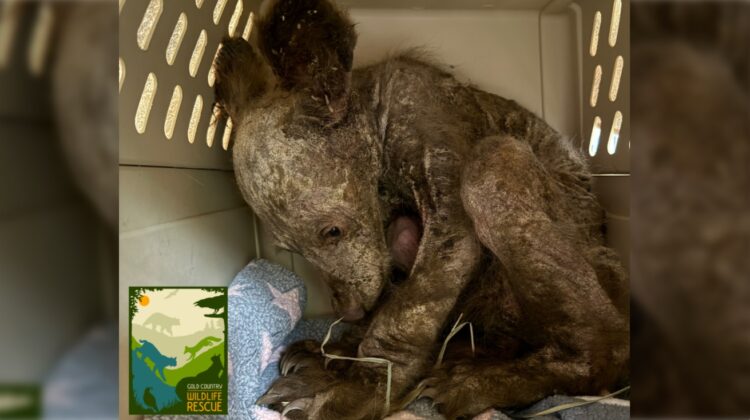
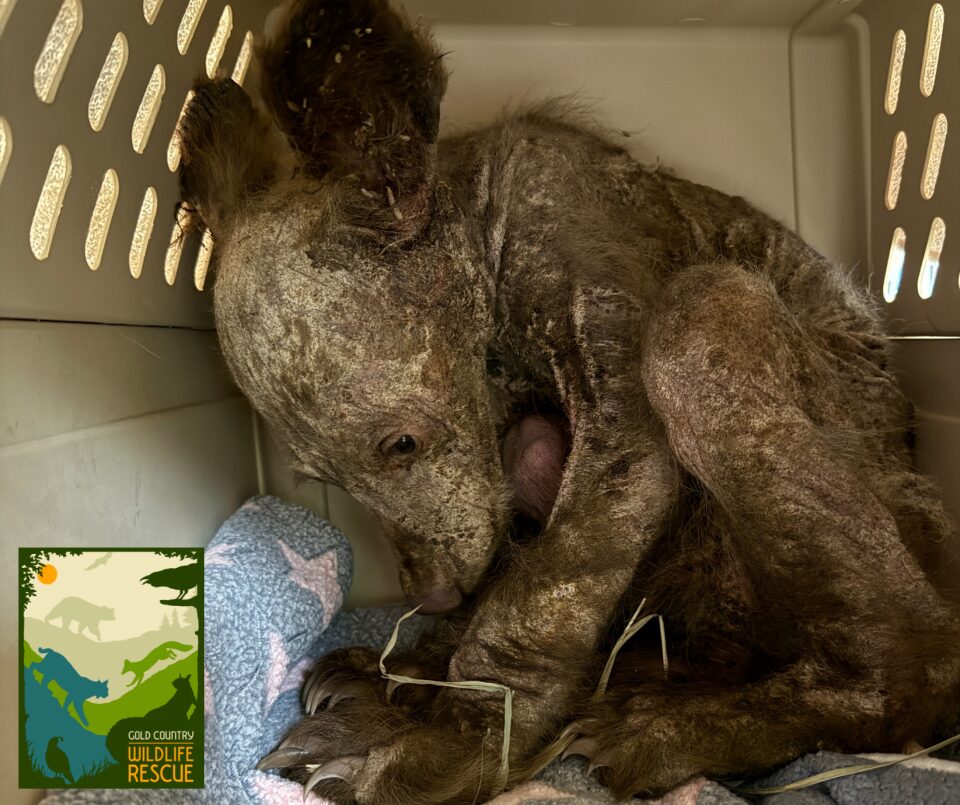
A fragile, nearly hairless black bear cub is fighting for its life after being rescued from the wilderness near El Dorado, California. According to Gold Country Wildlife Rescue, the cub was brought in on Wednesday, December 11, after a community member found it in poor condition.
A Delicate State
The cub arrived severely dehydrated, anemic, and underweight, with ear and skin infections that had gone untreated for some time. Veterinarians at the Auburn, California facility are managing the animal around the clock, and its most visible symptom — near-total hair loss — has made the case draw attention well beyond the rescue’s usual audience.
What’s Causing the Hair Loss?
Wildlife veterinarians haven’t confirmed a single cause yet, but they’re working through the usual suspects for bear alopecia:

- Sarcoptic mange — a mite infestation that is the most commonly documented cause of large-scale hair loss in black bears
- Fungal infection (ringworm) — common in young, immune-compromised wildlife
- Severe malnutrition — can cause secondary hair loss on top of an underlying parasite or infection
Mange in particular has been increasingly documented in California black bear populations in recent years, which is one reason wildlife biologists pay close attention to cases like this one.
How Wildlife Rescues Like This One Operate
Facilities such as Gold Country Wildlife Rescue run entirely on donations and volunteer veterinary time — they don’t receive standard government funding the way many people assume. A rescue like this typically involves weeks of quarantine, parasite treatment, nutritional rehabilitation, and — if the cub survives to a releasable weight — a soft release back into a low-conflict wilderness area, usually in partnership with the California Department of Fish and Wildlife.
How You Can Help
If this story moved you, there are a few concrete ways to support wildlife rehabilitation work like this:
- Donate directly to Gold Country Wildlife Rescue or a similar accredited wildlife rehab center in your state — most publish an Amazon wish list of medical and feeding supplies alongside cash donation options.
- Report sick or injured wildlife to your state wildlife agency rather than approaching the animal yourself — untreated mange and malnutrition cases are usually first spotted by hikers and rural residents.
- Support wildlife camera and monitoring gear funds — many small rescues rely on trail cameras (often in the $100–$250 range) to track recovering animals before release, and these are common wish-list items.
Following the Cub’s Recovery
Gold Country Wildlife Rescue typically posts recovery updates on its Facebook page as treatment progresses. As of this writing, the cub is responding to treatment, though rehabilitators caution that recovery from this level of mange and malnutrition can take several months.
Frequently Asked Questions
Is bear mange dangerous to humans or pets? Sarcoptic mange mites are species-specific in most cases, but pet owners in areas with known wildlife mange should still keep dogs away from wild animal dens or carcasses as a precaution.
Can a bear cub like this be released back into the wild? Yes, if it recovers to a healthy weight and its fur regrows normally, rehabilitators generally aim for release rather than permanent captivity, in coordination with state wildlife agencies.
How common is hair loss in black bears? It’s uncommon enough to draw scientific interest each time it’s documented, though California wildlife rehabilitators report seeing more mange-related cases in bears over the past several years.
Leave a Reply