The enigma of when humans transitioned from nudity to clothing is a puzzle embedded deep in the annals of human history. Clothing, beyond its functional role in protecting us from the elements, has become a medium for self-expression and a social barrier against the consequences of public indecency. But pinpointing the exact moment when humanity embraced the idea of covering up is no easy task.
The oldest surviving relic of early clothing is the Tarkhan Dress, a linen v-neck shirt discovered in a First Dynasty tomb at the ancient Egyptian cemetery Tarkhan. Egyptologist Flinders Petrie unearthed this ancient garment, and thanks to recent advancements in radiocarbon dating, we now know it originated sometime between 3482 to 3102 BCE.
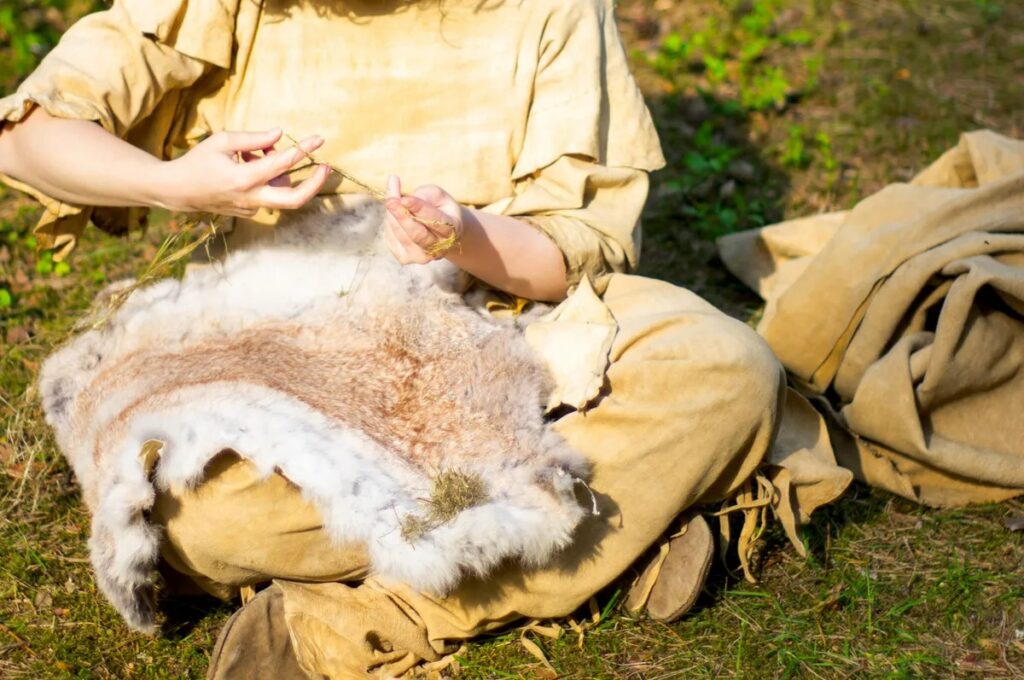
Image credit: Daumantas Liekis/Shutterstock.com
One might ponder whether humans were adorning themselves with clothing long before the Tarkhan Dress. Archaeologists, however, have yet to uncover any clothing predating this ancient linen attire. The scarcity of such finds may be attributed to the materials used in early clothing, primarily biodegradable substances like wool or linen. Unlike today’s nonbiodegradable synthetic fibers, these ancient fabrics were susceptible to decay. The Tarkhan Dress’s exceptional preservation can be attributed to the remarkably dry environment in which it was entombed.
While the Tarkhan Dress stands as the earliest complete garment discovered, it doesn’t mark the commencement of woven textiles. Fragments of woven plant-based textiles, dating back approximately 8,500 years, were uncovered in the remnants of the ancient settlement Çatalhöyük, Turkey. This suggests that clothing production and use may have been prevalent during that era.

Delving deeper into the fabric of time, evidence from Dzudzuana Cave in Georgia presents a fascinating revelation. Researchers stumbled upon wild flax fibers, some twisted and dyed with natural pigments, suggesting early sewing practices. Astonishingly, these fibers are around 30,000 years old, pushing the timeline for the origins of clothing significantly further into the past.
In an unconventional turn, scientists have explored the world of lice to glean insights into the dawn of clothing. By studying the DNA of head and body lice, researchers have attempted to estimate when the body louse, which lives in clothing, diverged from the head louse. Current estimates place this divergence between 83,000 to 170,000 years ago, providing a rough timeframe for the emergence of clothing. However, the adaptation of body lice would have taken time, suggesting that clothing might have originated slightly before this calculated period.

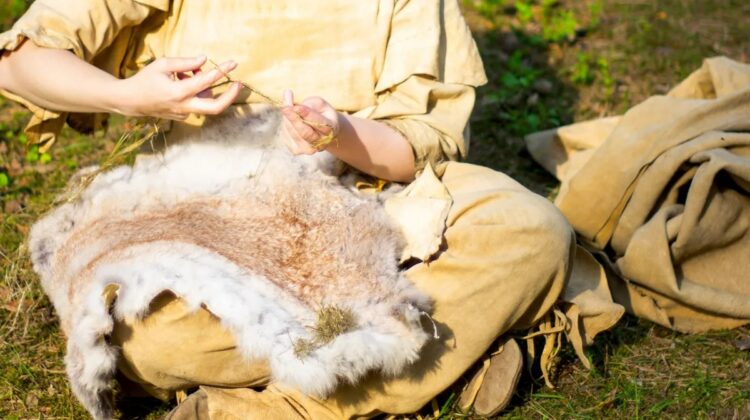
While our focus has been on Homo sapiens, evidence suggests that Neanderthals might have also embraced the concept of clothing, albeit in the form of fur coats. Nevertheless, as we venture further into the recesses of history, direct evidence becomes increasingly elusive. The true story of the birth of clothing may forever remain shrouded in the mysteries of the past, leaving us to wonder about the naked truth of humanity’s sartorial evolution.
Leave a Reply