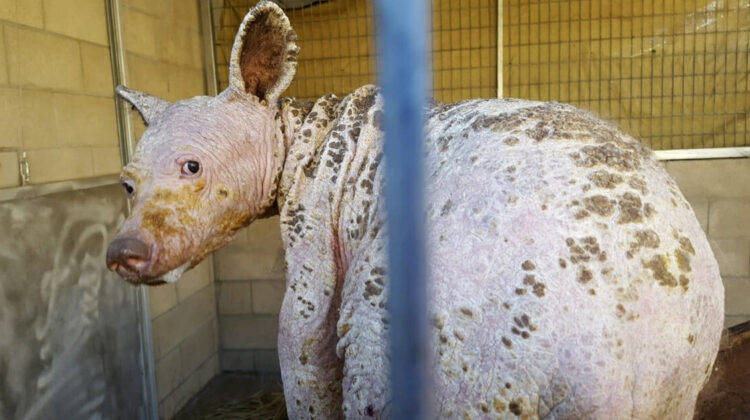
When rescuers first found her, they weren’t entirely sure the animal in front of them was a bear at all.
Found Dumpster-Diving in Placer County
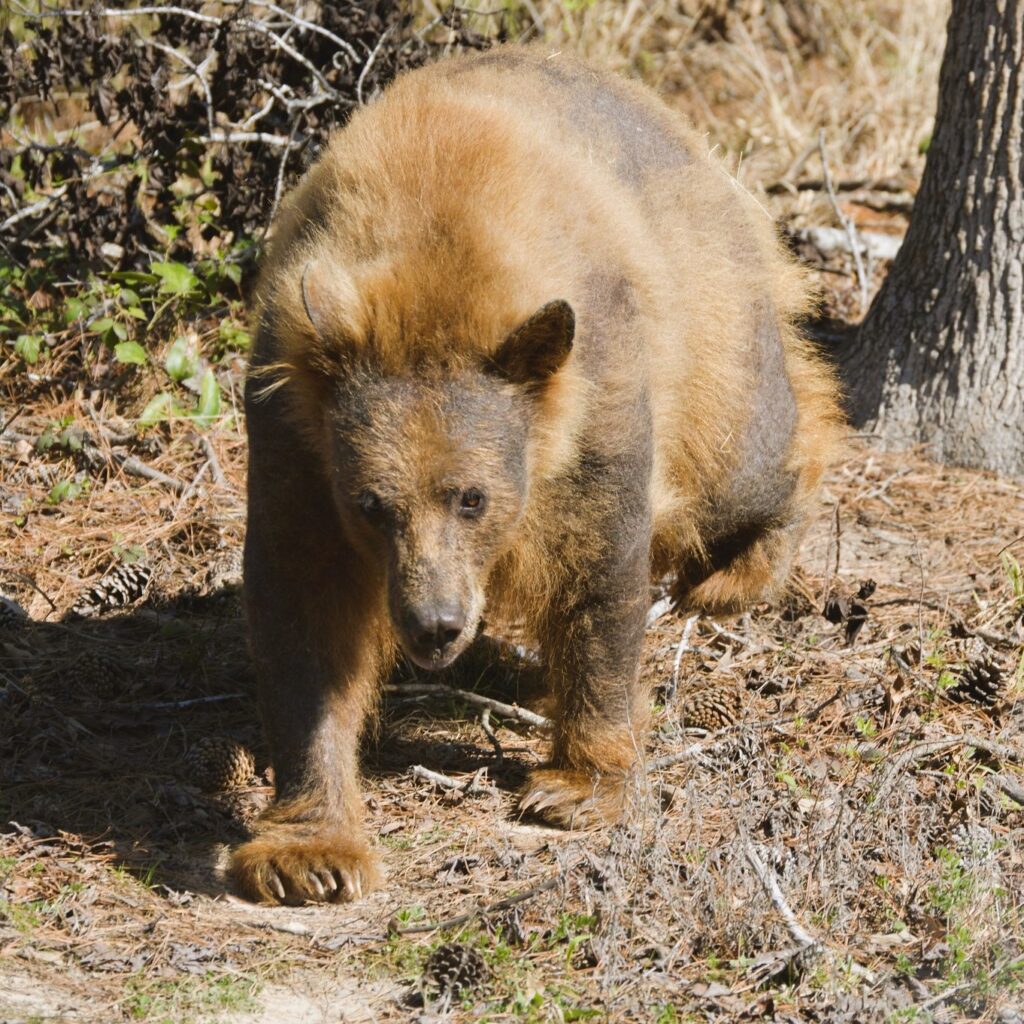
On Christmas Eve 2017, the California Department of Fish and Wildlife rescued a young black bear cub while she was dumpster-diving in Placer County. She weighed only about 30 pounds, was completely hairless, and her pink skin was covered in scabs and sores. Rescuers named her Eve, for the day she was found.
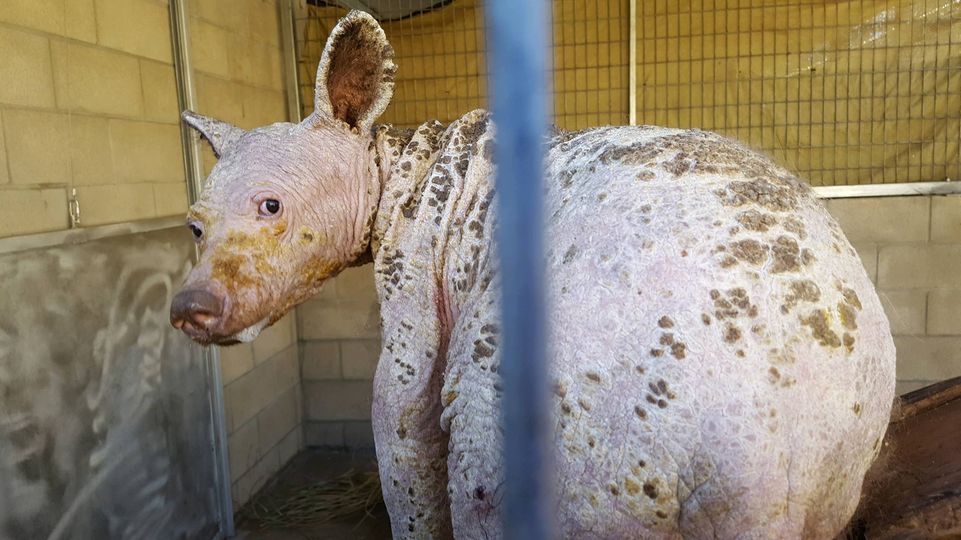
She was taken to The Fund for Animals Wildlife Center in Ramona, California, where staff diagnosed her with one of the most severe cases of mange — a skin condition caused by parasitic mites — that the center’s veterinary team had ever treated. Malnutrition had also stunted her growth.
Months of Slow, Uneven Recovery
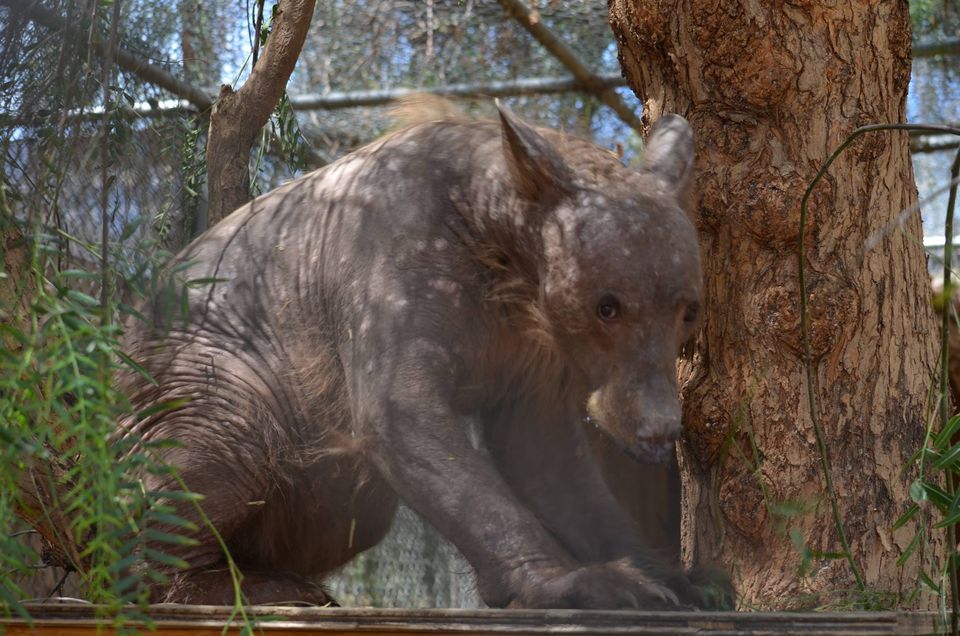
Eve’s treatment included regular medicated baths and ongoing veterinary care aimed at controlling the mite infestation and encouraging fur regrowth. Progress was gradual and inconsistent. By April 2018, staff reported only sparse regrowth in scattered patches, with continued skin crustiness along her spine. By July, the mange itself had largely cleared, though Eve continued to need treatment for secondary skin infections.
Through it all, staff described a bear who was playful and increasingly comfortable in captivity — splashing in her pool, engaging with enrichment toys, and generally acting like a normal, if unusually hairless, young bear.
Why She Couldn’t Return to the Wild
Center staff initially hoped Eve might eventually be released. That changed as it became clear her coat would never fully recover, and that she had grown too accustomed to human care to safely relearn wild behaviors — including hibernation and navigating interactions with other bears, skills she’d never had the chance to develop naturally. A bear’s coat isn’t just insulation; it’s protection during physical conflicts with other animals, something Eve would have lacked in the wild.
With release ruled out, the center began raising funds to transfer her permanently to the Cleveland Amory Black Beauty Ranch, a 1,400-acre sanctuary in Murchison, Texas, affiliated with the Humane Society of the United States.
Where Eve Is Now
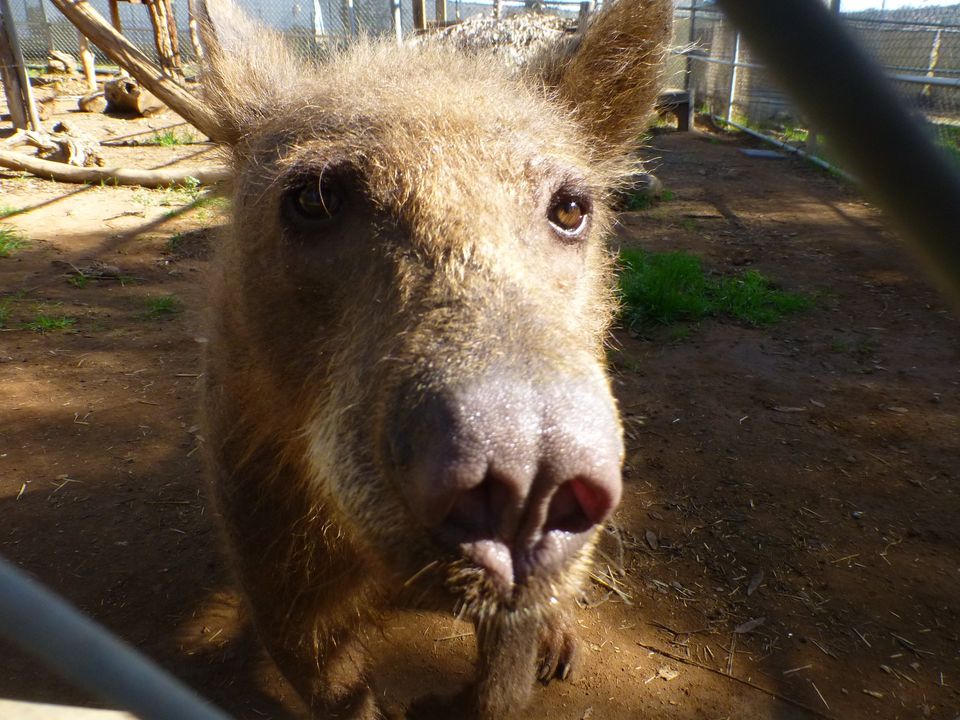
Eve completed that move in December 2019. Today she lives on roughly an acre of her own space at the ranch, with a heated den to keep her comfortable given her still-thin coat. She gained around 130 pounds during her recovery and, according to sanctuary staff, is healthy, feisty, and shows typical wild bear behavior despite her hair never fully growing back.
“There is no doubt that without the intervention of the dedicated wildlife center staff, Eve would not have survived,” Kitty Block, president and CEO of the Humane Society of the United States, said when Eve arrived at her permanent home. “We know her future now at our Black Beauty Ranch is a bright one and that all of her needs will be met for the rest of her life.”
Caring for a bear at the sanctuary costs roughly $15,000 a year, funded through donations. Eve now shares the property with several other rescued bears among the sanctuary’s roughly 800 animals, at a ranch founded in 1979 by author and animal advocate Cleveland Amory.
Frequently Asked Questions
What caused Eve to lose all her fur? Severe mange, a skin condition caused by parasitic mites rather than lice. Left untreated, it can cause extensive hair loss, skin damage and malnutrition, which is what rescuers found when Eve was first discovered.
Will Eve’s fur ever fully grow back? No. Sanctuary staff say her coat never fully recovered despite treatment, which is one of the key reasons she couldn’t be safely released back into the wild.
Where does Eve live today? She’s lived permanently at the Cleveland Amory Black Beauty Ranch in Murchison, Texas, since December 2019, with her own dedicated habitat and ongoing veterinary and daily care.
Sources: Humane Society of the United States; iHeartDogs; AOL/Bored Panda; CBS Sacramento.
Leave a Reply