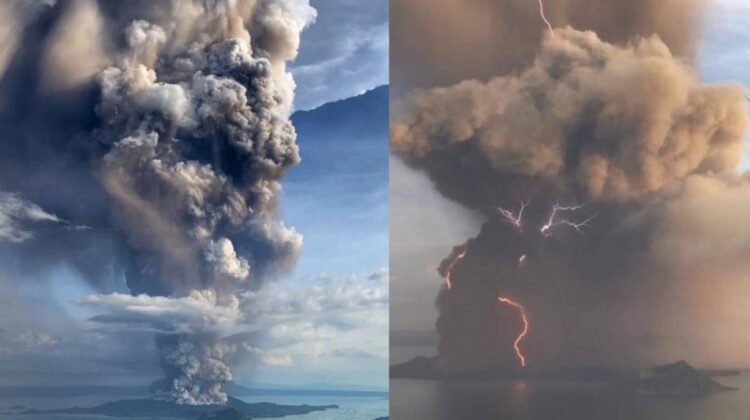
A stunning sky show is being produced by a volcanic eruption in the Philippines that has forced tens of thousands of people to flee.
Approximately 37 miles south of Manila, the Taal Volcano started to erupt on Sunday, forcing the closure of the country’s main airport until the ashfall subsided by Monday. In a warning, the Philippine Institute of Volcanology and Seismology stated that since the eruption’s start, there have been 144 volcanic earthquakes reported, 44 of which were powerful enough to be felt in nearby communities.
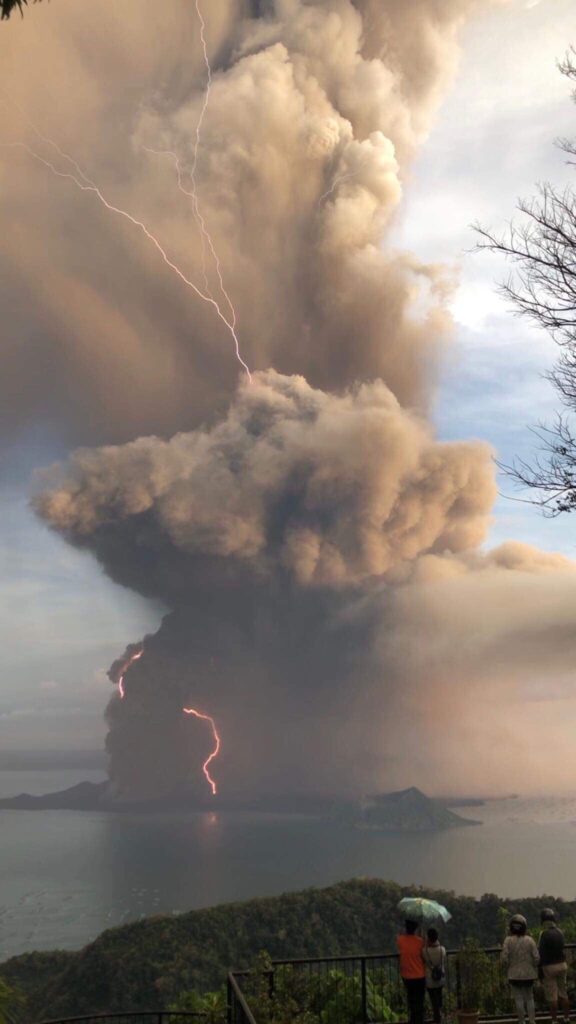
The institute’s warning stated that “such intense seismic activity likely indicates continuous magma intrusion beneath the Taal edifice, which may lead to further eruptive activity.”
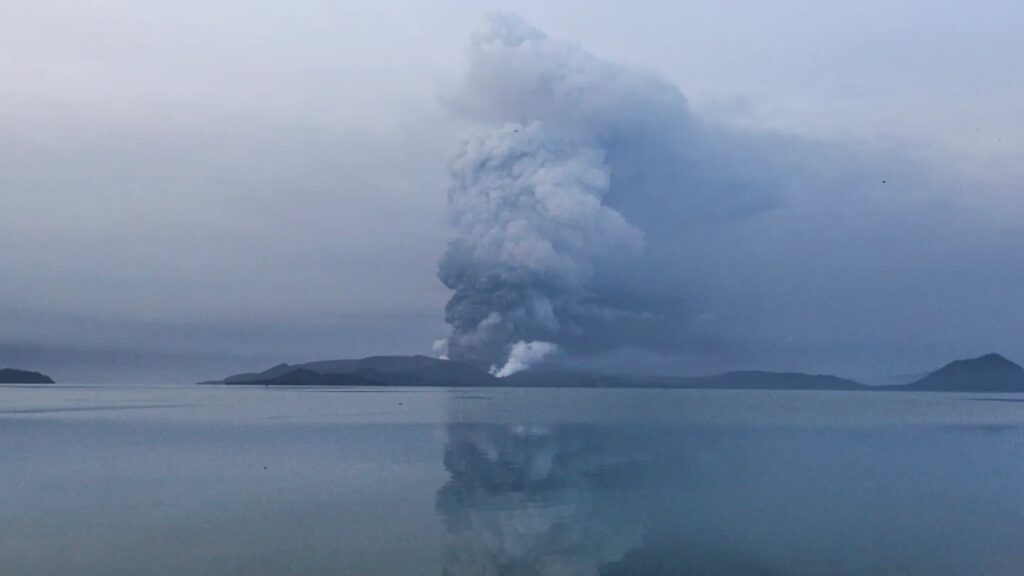
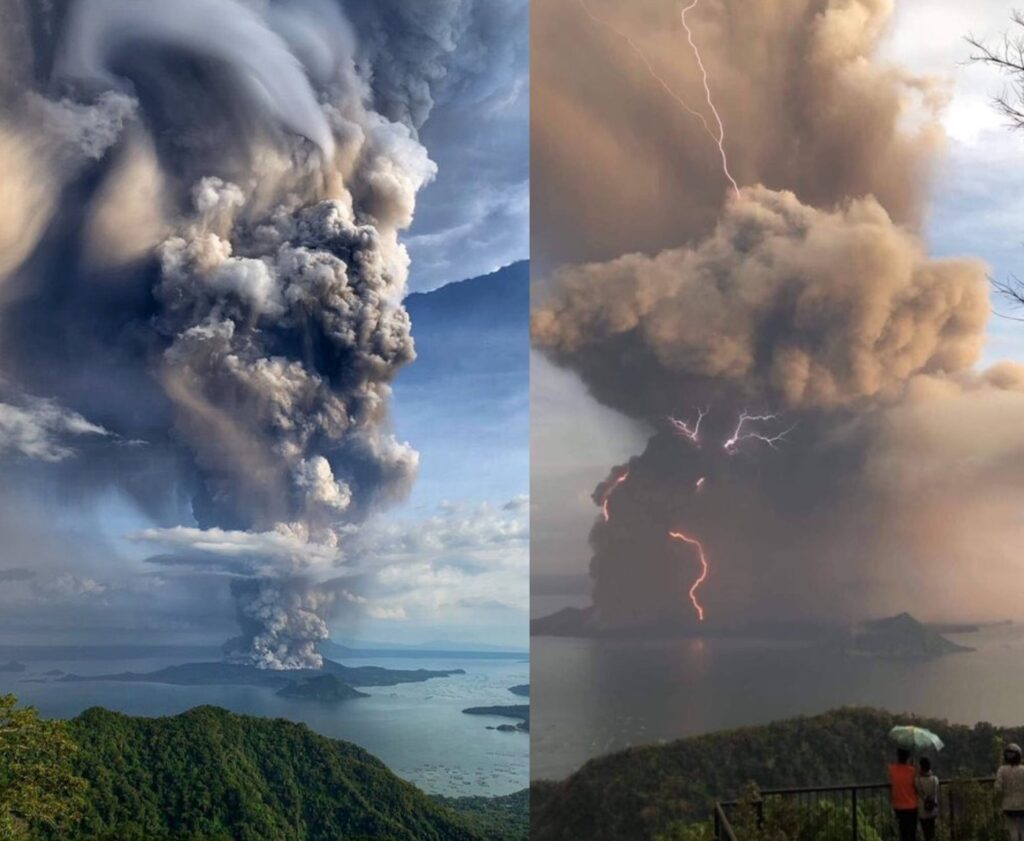
The volcanology institute added that the erupting volcano was still producing steam-filled plumes that were over a mile tall, resulting in significant ashfall. A huge column of smoke and ash was seen rising into the sky in photos and videos taken at the scene.
As night fell around 6 p.m. on Sunday, an impressive display of rare volcanic lightning was also seen. So what is volcanic lighting?
How a volcano creates lighting
When sparks fly during a volcanic eruption, it has everything to do with physics above as opposed to the tectonic activity down below.
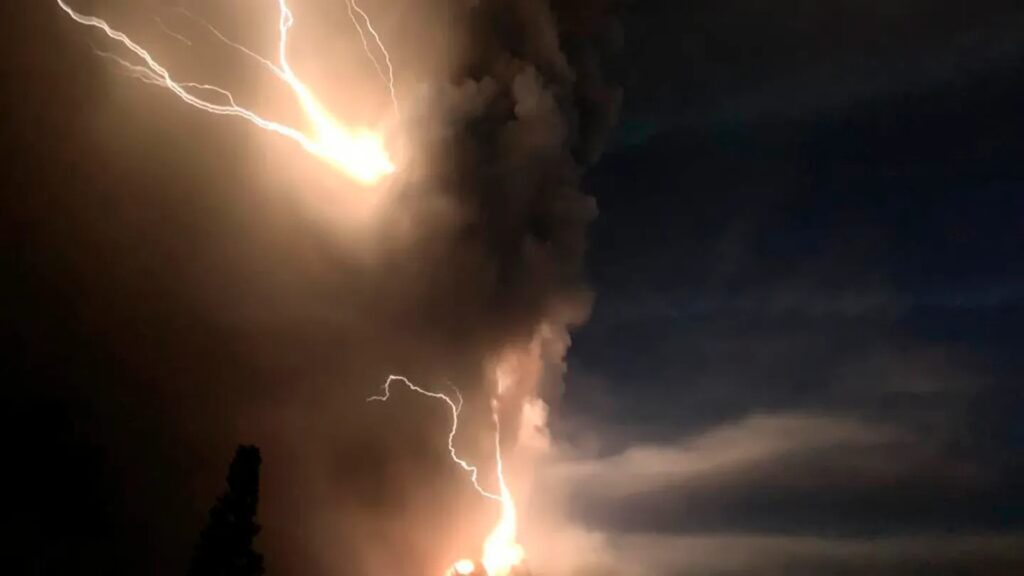
Lightning, one the oldest observed natural phenomenon on earth, is a giant spark of electricity in the atmosphere between clouds, the air or the ground. According to the National Severe Storms Laboratory, lightning can occur between opposite charges within a thunderstorm cloud or between opposite charges a the cloud and on the ground.
In order to get lightning during a volcanic eruption, there needs to be a thick plume of volcanic ash that allows a large charge separation between two masses.
“If the charge separation becomes big enough it is then able to overpower the air resistance, create a path of ionized air, and conduct electricity in the form of lightning,” according to geologists at Oregon State University. “The ash that is to be erupted begins as electrostatically neutral rock or rock fragments.”
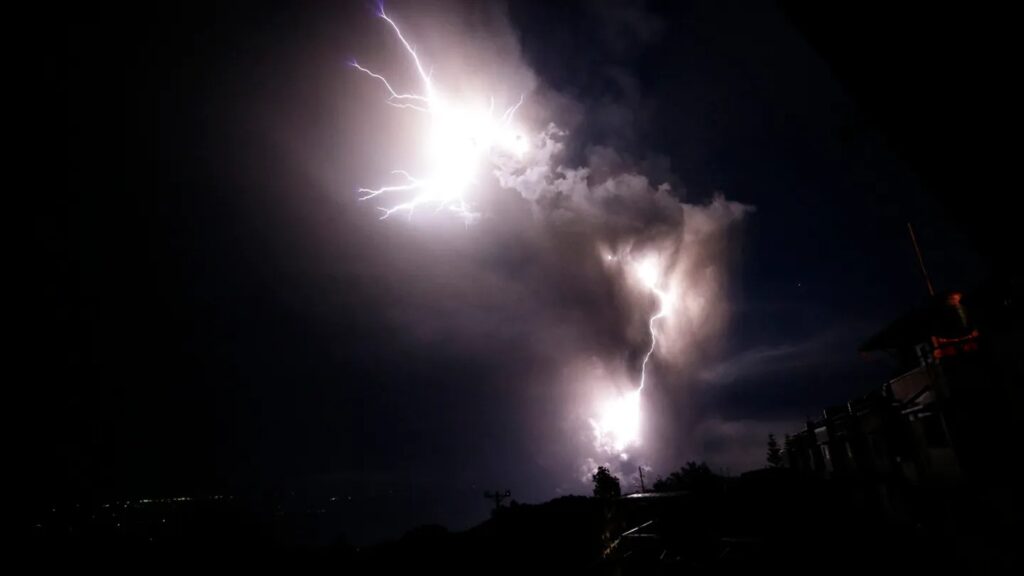
Heat and movement within a volcano is the first source of particle charging, but ash particles usually acquire a charge by friction from the violent movements of being blasted out during a volcanic eruption.
“Think of skidding your socked feet rapidly across the carpet or rubbing a balloon quickly against your head. The same type of charge is accumulating within the ash cloud, only on a much larger scale,” researchers at Oregon State note.
Volcanos that typically lack a thick volcanic plume, like those in Hawaii that have more lava than ash, rarely have volcanic lightning, according to National Geographic.
Volcanic lightning tied to ‘explosive’ eruptions
When a volcanic eruption is underway, location is directly related to where any lightning bolts may be spotted.
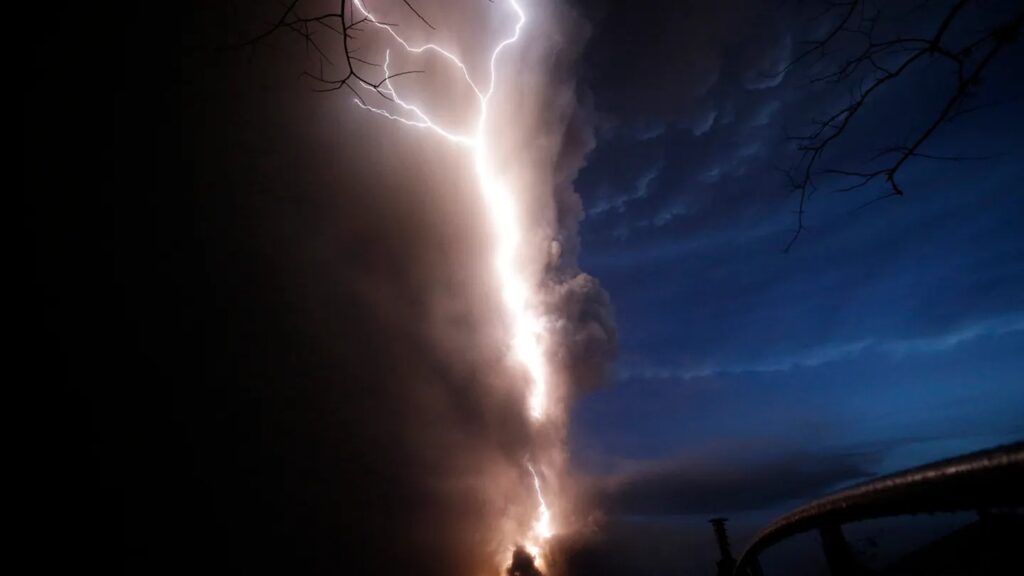
According to the United States Geological Survey, lightning discharges are commonly associated with the formation of ash plumes during a volcanic eruption, particularly those that are “explosive.”
As the ash plume rises into the sky, there are three regions of the plume where lighting discharges are likely to take place. Those areas include immediately above the vent of the volcano, in the column of ash that may extend several miles into the sky, and in the downwind plume of ash from the eruption as the column spreads out sideways.
“Lightning is the primary cause of unscheduled interruptions for most overhead power transmission lines and is a major cause of faults on typical overhead distribution lines,” according to the USGS. “Increased lightning discharge activity during volcanic eruptions, therefore, poses a heightened lightning hazard to power generation sites, substations, and transmission and distribution lines.”
Leave a Reply