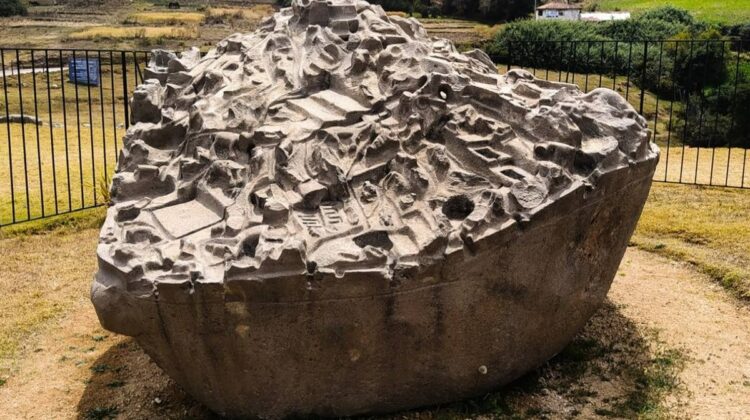
Hidden away in the Apurimac region of Peru, about 47 kilometers east of Abancay, lies an archaeological site that continues to baffle researchers and captivate visitors. The Sayhuite site, believed to have been an important religious center for the Inca civilization, holds many secrets, including a very peculiar stone.
Historians describe the site as a sanctuary dedicated to the cult of water, where the Inca conducted important rituals and ceremonies. A water temple featuring terraces and a cascading fountain on the hillside emphasizes the site’s dedication to water worship. John Hemming’s book “Monuments of the Incas” references a colonial account, according to which the temple’s interior was adorned with impressive columns wrapped in fabric and adorned with gold bands as thick as a human hand.
The site held great significance and was overseen by a priestess named Asarpay. In a tragic turn of events, when faced with the threat of capture by invading Spanish forces, Asarpay chose to end her life by leaping into a deep 400-meter gorge near the temple.
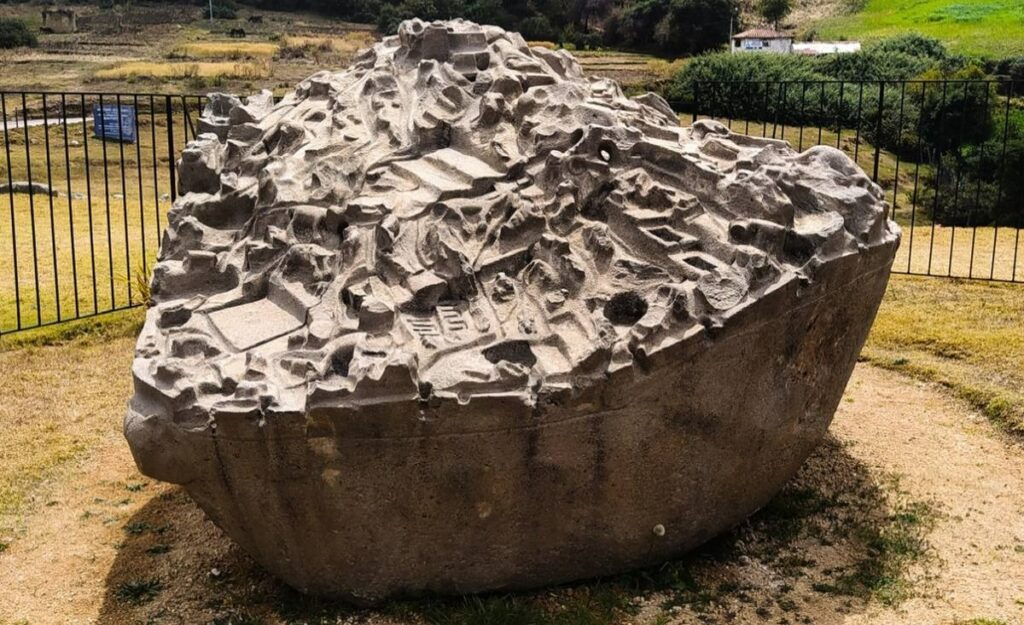
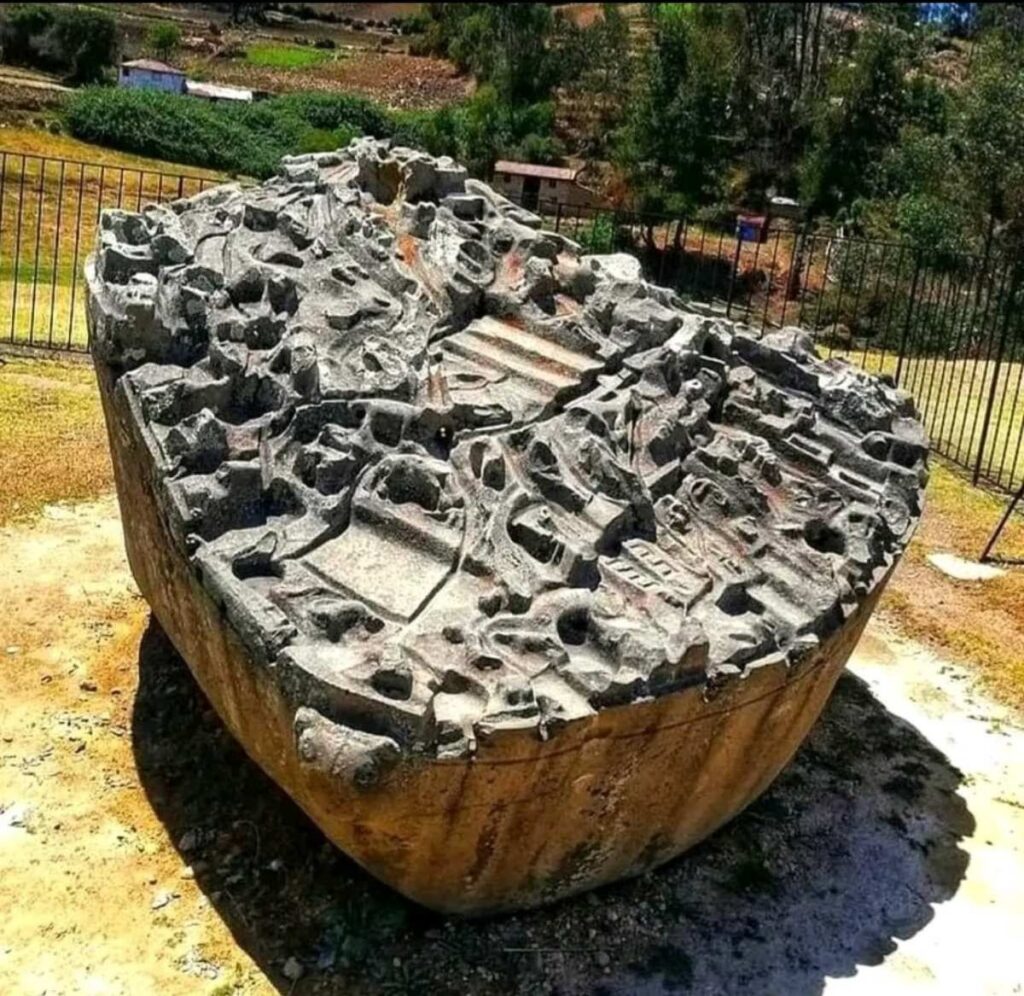
At the heart of this sacred complex lies the enigmatic Sayhuite Stone, a massive granite monolith measuring approximately 2 meters in length, 4 meters in width, and standing 2.5 meters tall. Its most striking feature is its intricately carved upper surface, which contains over 200 geometric and zoomorphic figures. These carvings depict a wide array of elements, including terraces, ponds, rivers, tunnels, irrigation channels, and various animals such as reptiles, frogs, felines, monkeys, and even sea creatures like pelicans and octopuses.
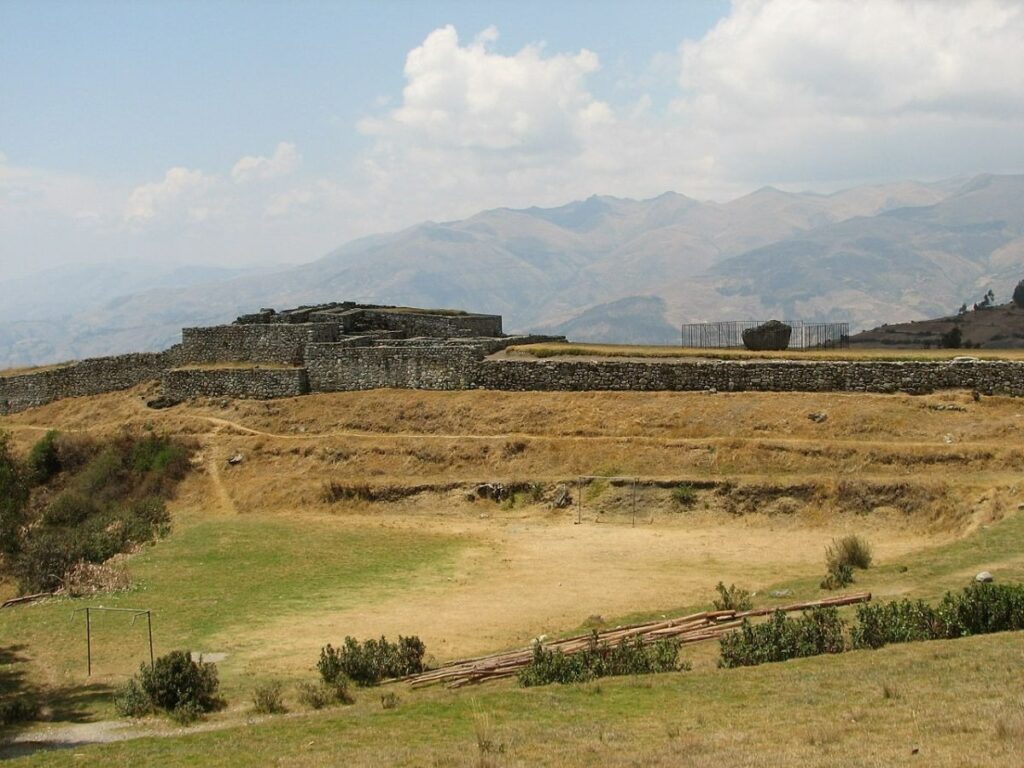
Found at the top of Concacha hill, the stone’s presence and features raise questions about its origin and purpose. How did such a massive boulder end up in this elevated position? Was it transported there, or carved in situ? And most importantly, what was it used for?
One of the most intriguing hypotheses regarding the Sayhuite Stone’s function relates to its potential use in hydraulic engineering. While the precise meaning and purposes of this relic remain a mystery, some researchers believe that the Sayhuite Stone was used as a scale model to design, develop, test, and document the properties of water flow for irrigation and other water projects. This theory suggests that the stone served as a sophisticated tool to instruct ancient engineers and technicians in the concepts and practices of hydraulic engineering.
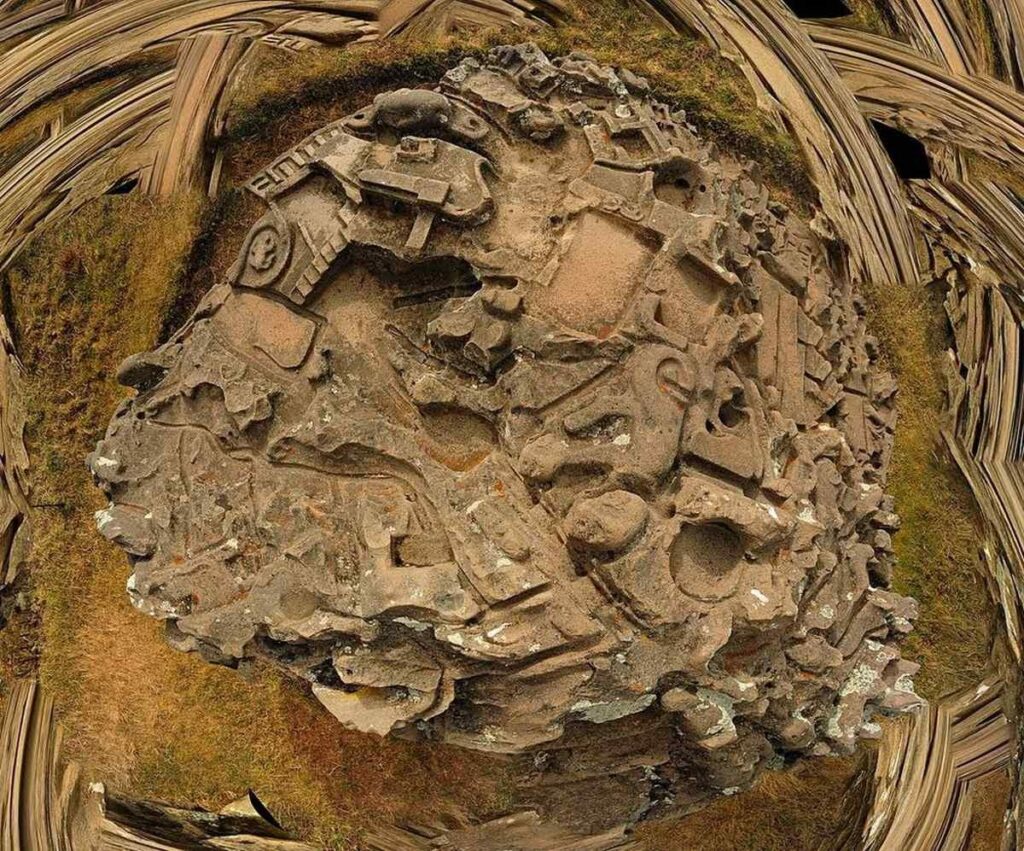
The complex network of miniature channels, ponds, and terraces carved into the stone’s surface could have allowed the Inca to simulate and study water flow patterns. This practical application would have been invaluable in a civilization that placed great importance on efficient water management for agriculture and urban planning.
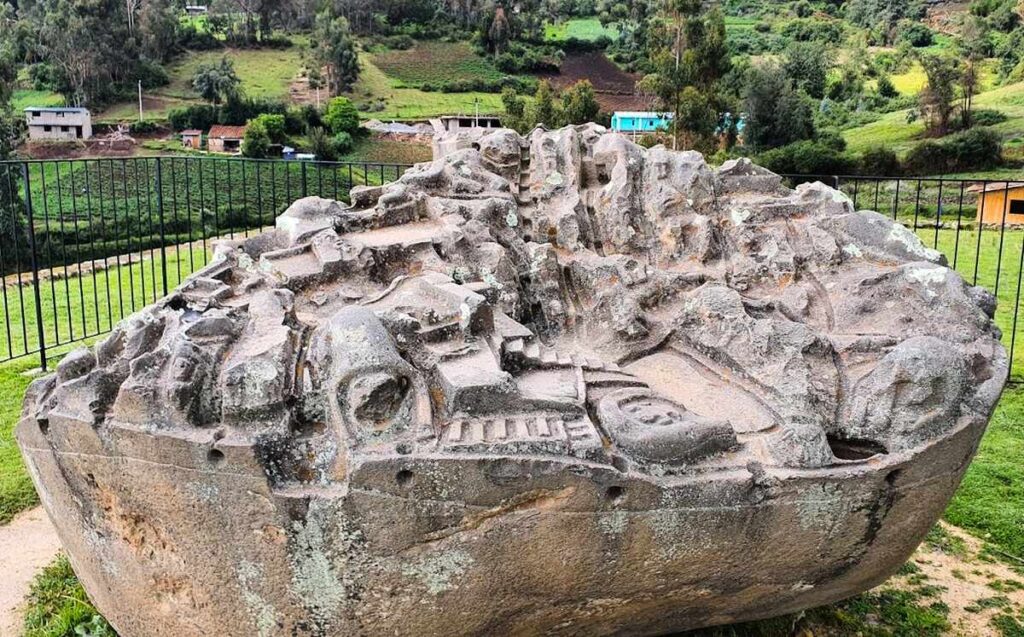
Interestingly, the Sayhuite Stone shows evidence of modification over time. Researchers have noted that the rock appears to have been altered several times with new material, either changing the paths of the water or adding new routes altogether. This dynamic nature of the stone supports the idea of its use as an experimental model, with engineers potentially refining their designs based on observations and results.
The experimentation process itself might have been quite fascinating. Researchers speculate that the Inca could have conducted tests by pouring actual water over the stone to observe flow patterns and behavior. Even more intriguingly, Dr. Arlan Andrews has proposed the possibility that liquid mercury might have been used in these experiments. The presence of notches carved along the edge of the stone, presumably to allow liquids to pour out, lends credence to these theories of practical experimentation.
However, it’s important to note that the Sayhuite Stone’s purpose likely extended beyond mere practical applications. Given its location at a site of religious significance, the stone probably played a role in Inca spiritual practices as well. The intricate carvings of animals and geometric shapes might have held symbolic meanings related to the Inca worldview and their reverence for water.
Some scholars interpret the stone as a representation of the Inca cosmos, with its varied elements symbolizing different aspects of the natural and spiritual world. The diversity of carved animals, including creatures from different ecological zones, has led to speculation that the stone might represent a microcosm of the Inca Empire itself.
The multifaceted nature of the Sayhuite Stone – potentially serving as both a practical tool and a spiritual artifact – reflects the holistic worldview of the Inca civilization. For the Inca, the practical and the spiritual were often intertwined, with engineering feats seen as a way to honor their gods and maintain cosmic balance. The Sayhuite site is a place where engineering, spirituality, and natural forces converged in the Inca worldview.
As research continues, the Sayhuite Stone remains a source of fascination and debate among archaeologists, historians, and engineers. Its complex designs and evidence of modification over time suggest a sophisticated understanding of hydraulics and a dynamic approach to problem-solving. Whether used for practical experiments, spiritual ceremonies, or likely a combination of both, the Sayhuite Stone stands as evidence of the ingenuity and holistic thinking of the Inca civilization.
Leave a Reply