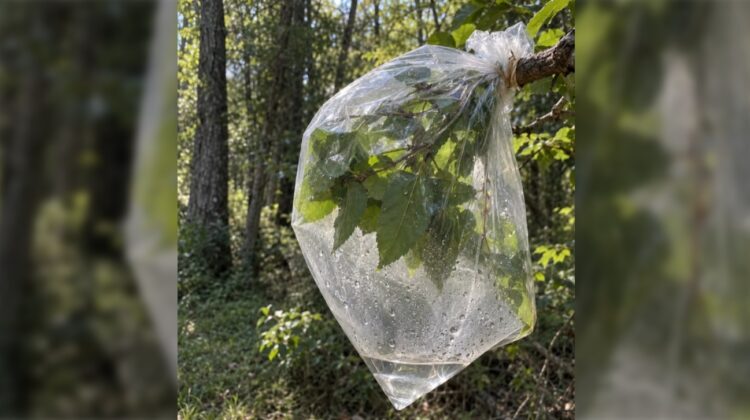
Plants lose water all day long through their leaves, a process called transpiration. In an emergency, you can trap some of that moisture with nothing more than a clear plastic bag and a leafy branch. It’s a neat example of how nature can help you survive, but it comes with real limits and one serious safety rule.
How The Method Works
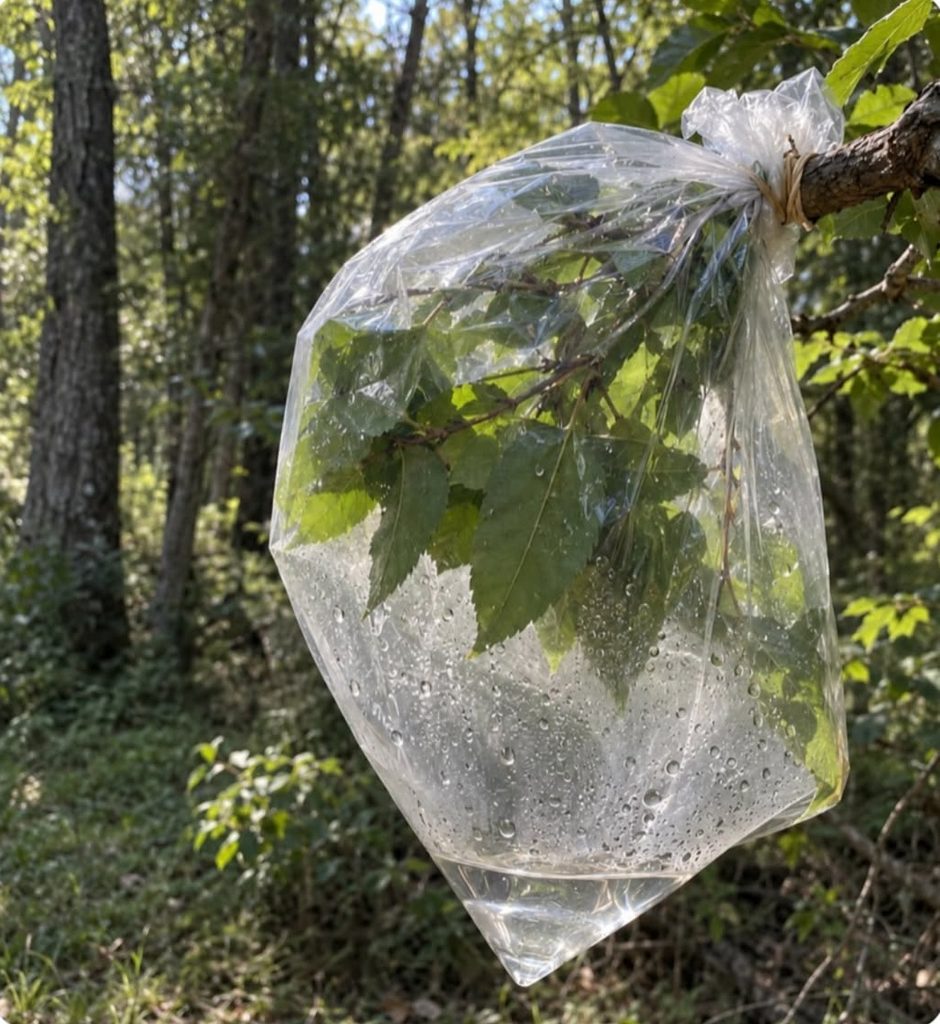
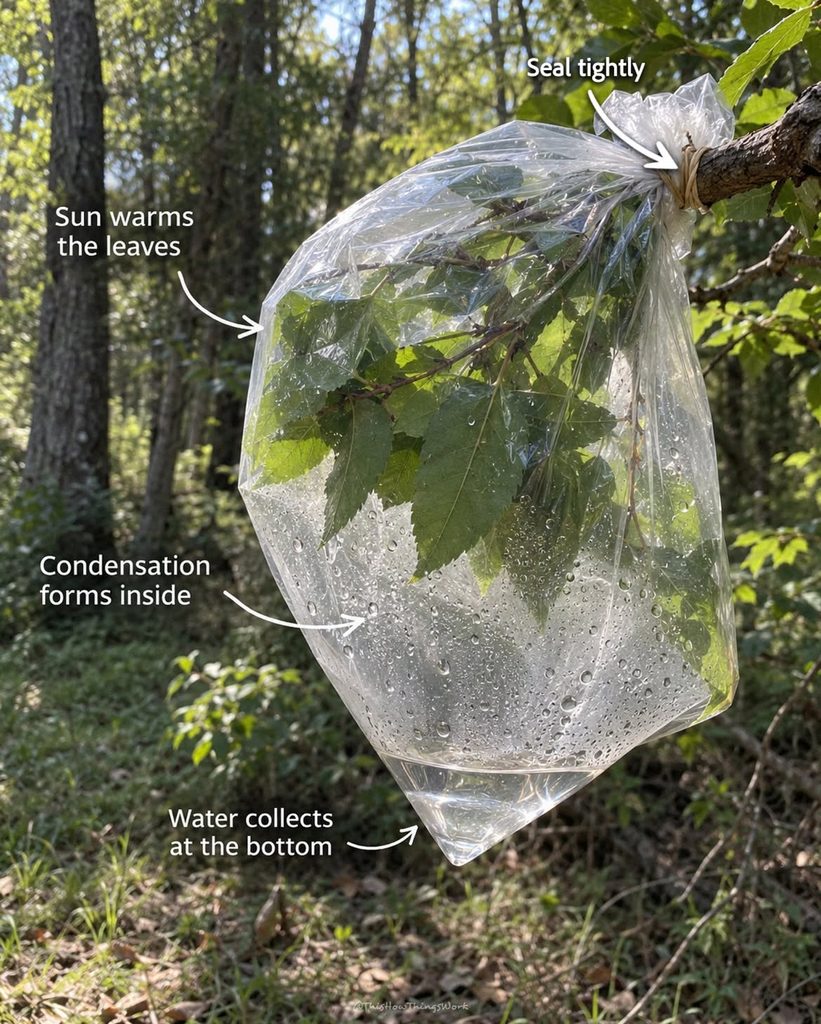
During daylight, a healthy plant releases water vapor from its leaves. If a clear bag is sealed around a branch, that vapor is trapped. As it cools against the plastic, it condenses into droplets that run down to the lowest point of the bag, as survival writers have long described. The technique appears in military survival guidance, including the U.S. Army’s FM 21-76 manual, according to a 2025 preprint comparing improvised water-collection methods.
Setting One Up
- Pick a healthy, leafy branch in sunlight. Green, actively growing foliage releases the most vapor.
- Use a clear bag. Dark bags absorb more heat and can work against you, and clear plastic lets sunlight in.
- Enclose as much foliage as possible and seal the opening tightly with cord or tape.
- Make a low point. Tilt the branch so the bag’s corner hangs lower than the opening, or drop a small rock inside, so droplets pool in one spot, as The Art of Manliness suggests.
- Check it periodically and empty it when water has collected. Setting up several bags increases your total.
What To Expect
Don’t count on much. A survival instructor quoted by The Survival Mom blog cautions that individual bags won’t produce large quantities. The yield depends on sunlight, temperature, humidity and the type of plant, and many researchers treat it as a supplement rather than a main source. The 2025 review also found that several traditional improvised methods, solar stills in particular, give poor returns for the effort they require.
If you have other options, they usually come first: rainwater, a known safe source, or a filter or purifier in your kit. Staying put, staying in the shade and calling for help matter far more than any single water trick.
The Safety Rule You Can’t Skip
Use only a plant you can positively identify as nontoxic. Water that condenses inside the bag can pick up compounds from the leaves. Survival guides warn never to use poisonous plants for this method, and examples cited include oleander and poison sumac. If you can’t identify the plant with certainty, don’t use it.
Treat the water before you drink it. Condensed water can still carry contaminants from dirt, insects or bird droppings on the leaves. Public-health guidance generally recommends boiling water for at least one minute, or using a reliable filter or purification tablets when you have them.
Frequently Asked Questions
Is transpiration bag water safe to drink straight from the bag? Not necessarily. It should come from a correctly identified nontoxic plant, and it’s best to treat it before drinking.
How much water can one bag collect? Usually only a small amount. The yield depends heavily on weather, sunlight and the plant, so people often use several bags at once.
What kind of bag should I use? A clear plastic bag, so that sunlight can reach the leaves and the vapor can condense on the inside surface.
What plants should I avoid? Any poisonous or unidentified plant. Skip anything you can’t identify with confidence, including plants like oleander and poison sumac.
Is this a reliable main water source? No. Treat it as a supplement and prioritize safe sources, shelter and getting help.
Sources: The Survival Mom, The Art of Manliness, a 2025 medRxiv preprint on improvised water procurement in wilderness medicine, and the U.S. Army FM 21-76 Survival Manual as referenced in that review.
Leave a Reply