• Skip to main content
  • Skip to primary sidebar
  • Skip to footer
  • Home
  • About Us
  • Copyright Report
  • Submit Content
  • Terms
  • Privacy Policy
  • Legal Disclaimer

Hasan Jasim

Hasan Jasim is a place where you may get entertainment, viral videos, trending material, and breaking news. For a social generation, we are the largest community on the planet.

These Moths Drink the Tears of Sleeping Birds: A Rare and Bizarre Behavior in the Amazon Jungle

by Hasan Jasim Editorial Team Leave a Comment

ShareTweet

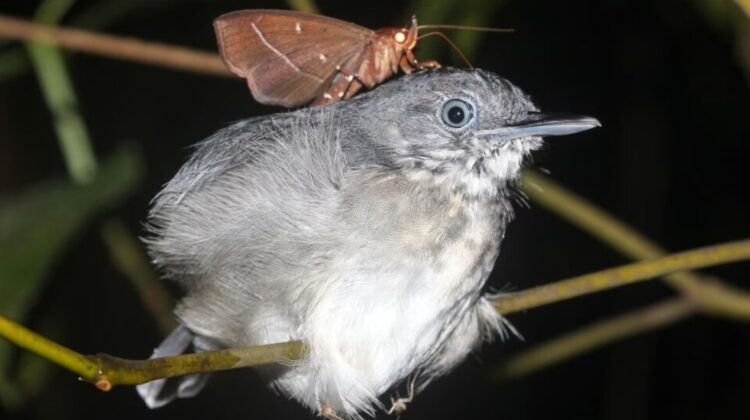
In the vast and lush Amazon jungle, nature never ceases to amaze us. The discovery of a tear-feeding moth by Leandro Moraes, a biologist at the National Institute of Amazonian Research in Brazil, has added to the already fascinating world of insects. The Gorgone macarea moth was seen feeding on the tears of a sleeping black-chinned antbird in the Solimões River area. The behavior, although rare, has been observed before in Madagascar and Colombia, but this marks the first time in Brazil.
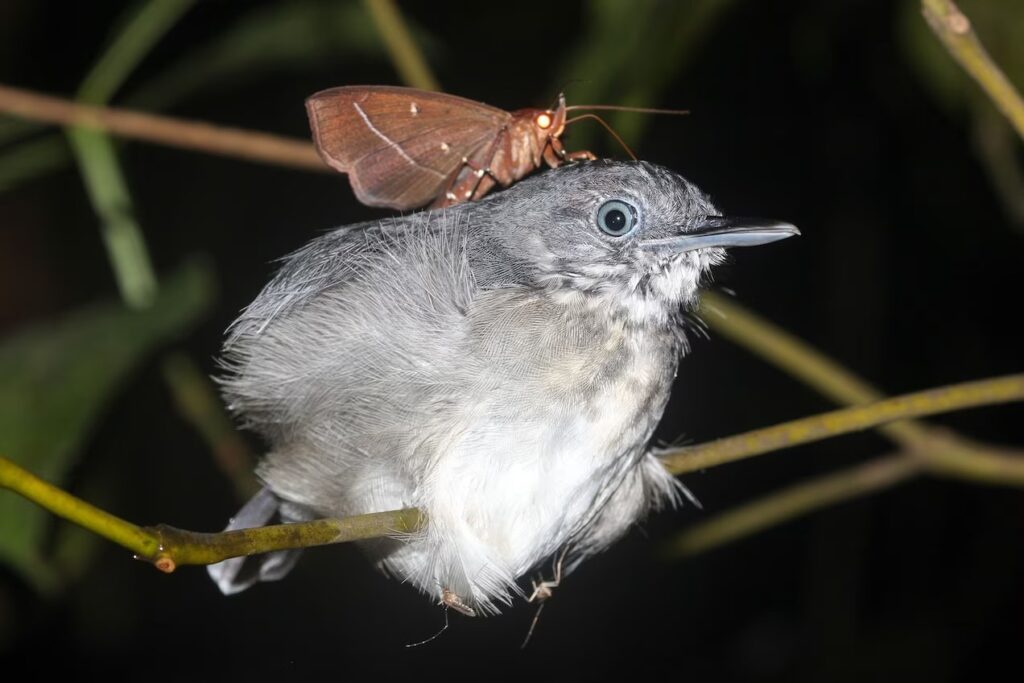
A biologist spotted thismoth (Gorgone macarea) sitting on the neck of a black-chinned antbird in Brazil with its long proboscis poised to drink the bird’s tears. PHOTOGRAPH BY LEANDRO MORAES.

The reason behind this behavior is still not entirely clear. In general, moths and butterflies feed on the tears of animals as a means of obtaining salt, which is vital for their survival, but not present in nectar. In the Amazonian region, where this behavior was observed, salt is abundant due to annual flooding from the Solimões River. So why would the moths need to supplement their salt intake with bird tears?
One possibility is that the moths are looking for a source of protein, which is essential for their reproductive success and lifespan. Although moths typically get their protein from plant nectar, tears are an alternative source of protein, as they contain albumin and globulin. Additionally, moths may be seeking other nutrients that are scarce in their environment.
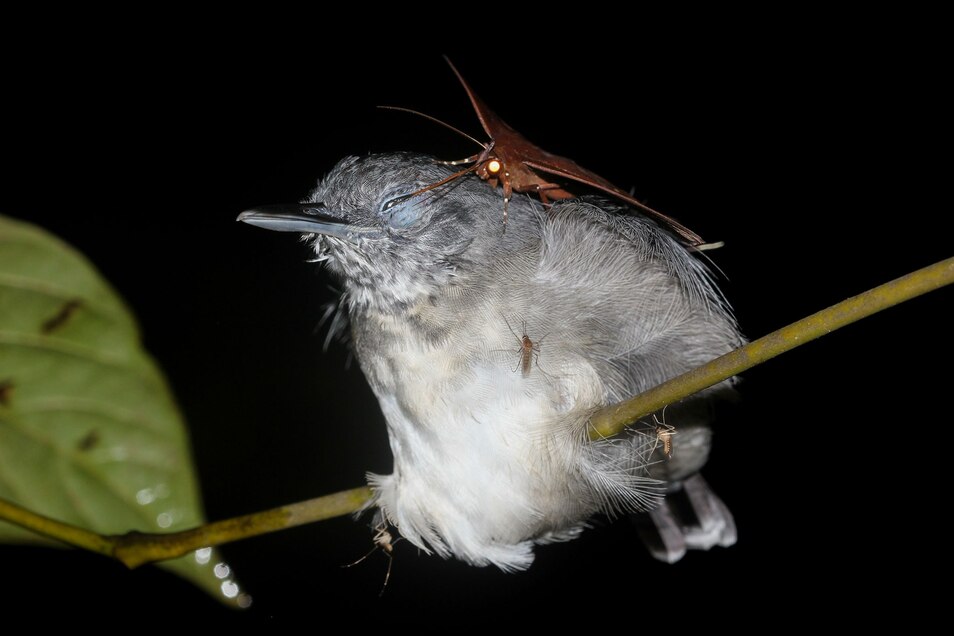
Rude! This moth (Gorgone macarea) may drink the tears of birds, like this black-chinned antbird, to get an extra boost of protein.
PHOTOGRAPH BY LEANDRO MORAES

While it is still unclear why moths drink bird tears, one thing is certain: the behavior does not seem to harm the birds. The moths target sleeping birds, and since they do not show any signs of discomfort, it is believed that the birds are indifferent to the tear extraction. However, there is some concern that the behavior may pose a risk to birds, as tear-drinking moths have been known to transmit eye diseases to livestock.
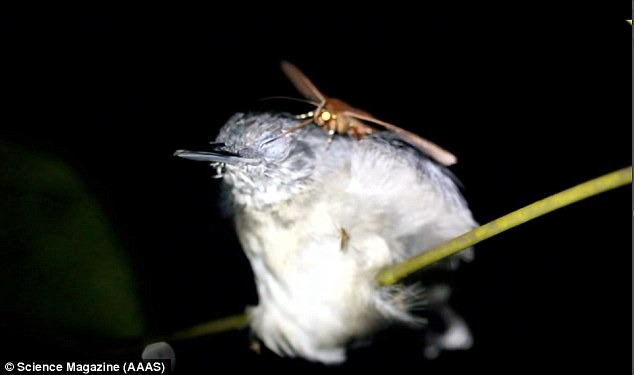
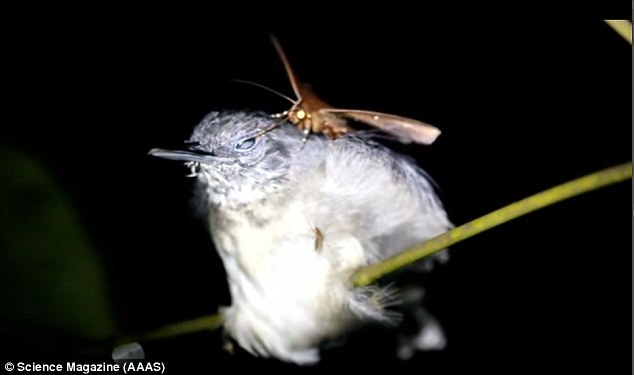
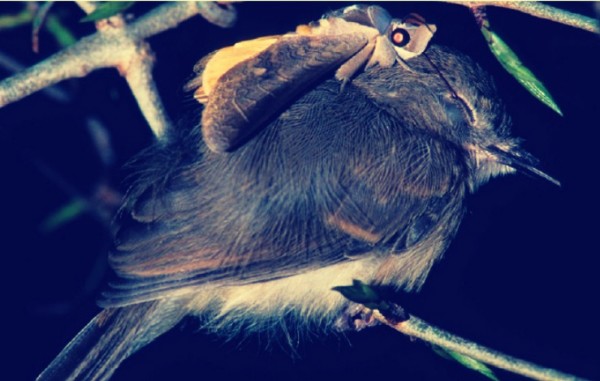
An ecologist working with the National Institute of Amazonian Research has documented the disturbing moment a moth slurps tears straight out of a sleeping bird’s eye, using its long proboscis to pry the eyelids open
In the brief clip, a black-chinned antbird can be seen snoozing on a branch, unaware of the moth perched atop its head

The discovery of the tear-feeding moth is an exciting addition to the already diverse world of insects. It highlights the importance of understanding the behavior and ecology of these fascinating creatures, as well as their impact on other species in their environment. The Amazon rainforest is a unique and vital ecosystem that provides a home for an incredible diversity of animals, including about 1,300 bird species and an estimated 2.5 million types of insects. As we continue to learn more about the natural world, we are reminded of how much we still have to discover and understand.

Filed Under: Trends Worldwide Tagged With: amazon, behavior, Birds, bizarre, drink, jungle, moths, rare, sleeping, tears, these, trends, worldwide

Reader Interactions

Leave a Reply Cancel reply

Your email address will not be published. Required fields are marked *

Primary Sidebar

More to See

A Brilliant Little Hummingbird Constructs a Roofed House

By Hasan Jasim Editorial Team

The Alpine Ibex: A Majestic Symbol of Conservation Triumph

By Hasan Jasim Editorial Team

Christian leaders suggest newly-released UFO photos could be ‘falling angels,’ not extraterrestrials

By Hasan Jasim Editorial Team

3 Popular Foods That Could Secretly Be Destroying Your Brain

By Hasan Jasim Editorial Team

Haunting Photographs Show the Previously Luxurious Interior of an Abandoned Orient Express Train

By Hasan Jasim Editorial Team

Cat stuffed in paper bag, left in dumpster now safe thanks to rescuers

By Hasan Jasim Editorial Team

First Time in 50 Years That a Rare Four-Foot Rainbow Snake has Been Seen in Florida

By Hasan Jasim Editorial Team

Footer

ABOUT HASANJASIM.ONLINE

Hasanjasim.online is a digital platform dedicated to publishing well-researched articles about the animal kingdom, nature, and the environment. Our editorial team works to source stories from credible outlets, scientific research, and verified reports, aiming to inform as much as we entertain. From wildlife conservation and animal behavior to natural wonders and environmental science, we cover the topics that help readers better understand and appreciate the natural world. Whether you're a lifelong nature lover or simply curious about the planet we share, Hasanjasim.online aims to be a trustworthy destination for stories worth reading — and worth citing.

Recent

  • Euphorbia Hirta (“Asthma-Plant”): What Traditional Use and Real Research Actually Show
  • A Mystery Animal Has Been Randomly Attacking People in New Hampshire — Here’s What We Know
  • A Woman Was Filmed Sharing Her Ice Cream With Her Dog — Here’s What Vets Actually Say About It
  • Dolphin Calf Incident in Ceuta Sparks Outrage After Disturbing Beach Footage Emerges
  • Lactuca Serriola Root: Traditional Uses of Prickly Lettuce (Wild Lettuce) Root
  • The Puppy a Firefighter Couldn’t Leave Behind — and the Story Didn’t End There
  • A Mother Dog Dove Into Floodwater Again and Again — Until All 7 of Her Puppies Were Safe

Search