• Skip to main content
  • Skip to primary sidebar
  • Skip to footer
  • Home
  • About Us
  • Copyright Report
  • Submit Content
  • Terms
  • Privacy Policy
  • Legal Disclaimer

Hasan Jasim

Hasan Jasim is a place where you may get entertainment, viral videos, trending material, and breaking news. For a social generation, we are the largest community on the planet.

Mammal Ancestors’ Flattened Mummies Discovered 250 Million Years After Extinction Event

by Hasan Jasim Editorial Team Leave a Comment

ShareTweet

The basin revealed several specimens with their skin remarkably intact.

Lystrosaurus was spotted in a couple sequences in Jurassic World Dominion (including a deleted one in which it chomps the head off an Oviraptor). While the silver screen may be the last place we’ll ever see such an animal alive and well, mummified specimens discovered in South Africa have revealed incredible detail in their skin.

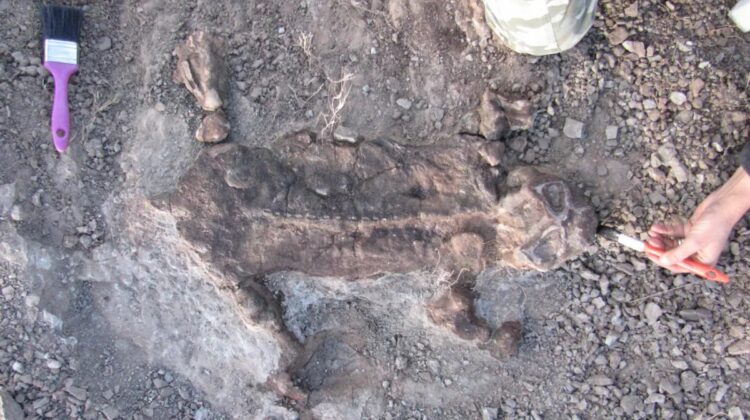
The extraordinarily well preserved Lystrosaurus mummies were discovered in South Africa’s southern Karoo Basin and are thought to date from the early Triassic period, roughly 251 million years ago, when this region had harsh dry weather.

“The site where these fossils are located represents a uniquely fossil-rich accumulation during the immediate aftermath of the end-Permian mass extinction event,” Dr Pia Viglietti, a palaeontologist and researcher with the Field Museum of Natural History who co-authored a paper about the Lystrosaurus mummy discoveries in Palaeogeography, Palaeoclimatology, Palaeoecology, told IFLScience.
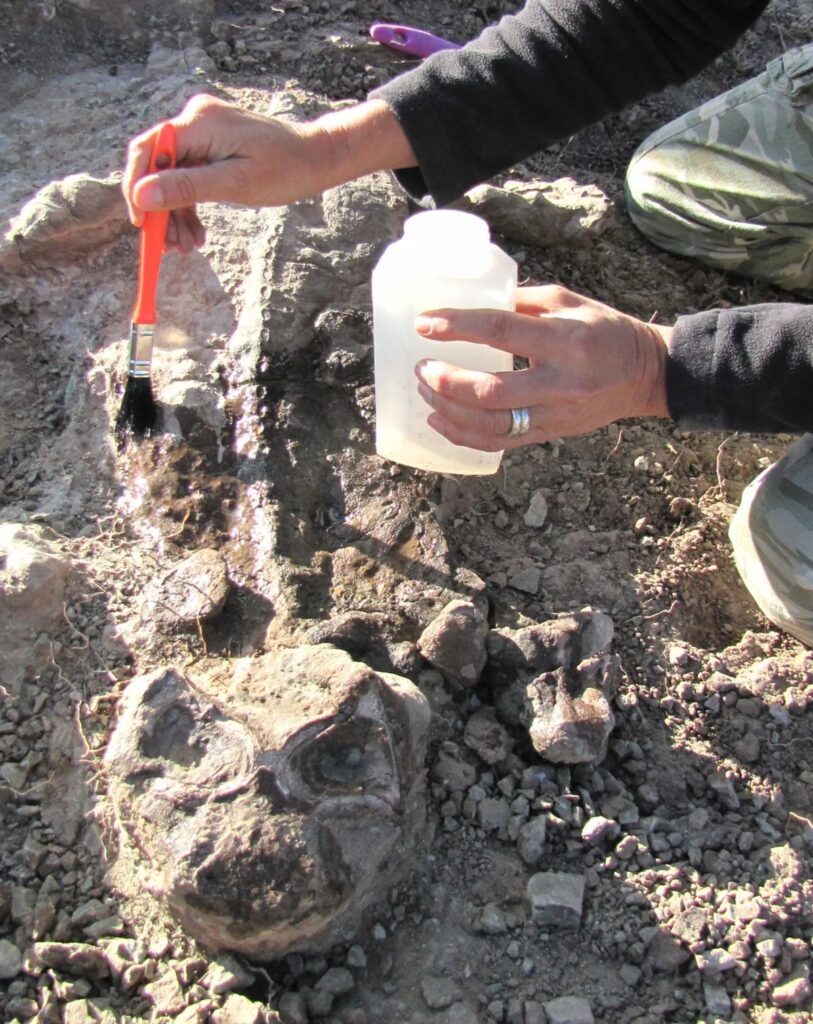
Lystrosaurus was an early mammal relative called a synapsid. Image credit: Roger Smith

“This level of preservation is uncommon among South African fossils from the Karoo Basin.” The texture of the skin impression “confirms notions that Lystrosaurus (an early mammal relative known as a synapsid) did not have scaly bodies like reptiles or other extremely early dinosaur and crocodile relatives living at the same time,” stated Viglietti.

“Many have believed that synapsids possessed a thick “hide” similar to hippos or rhinos, and the skin’s slightly “pustular” texture, as described in the research, is very reminiscent of this.”
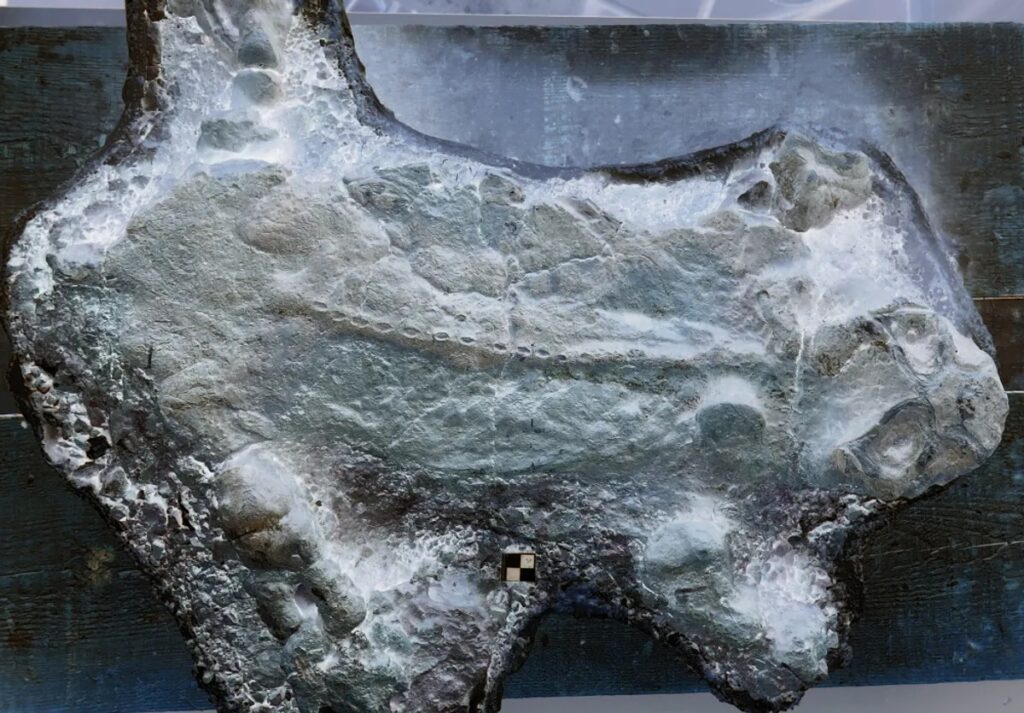
This inverted image of the Lystrosaurus skin shows further detail preserved in the specimens. Image credit: Roger Smith

According to Viglietti, indications contained within the sediment and the manner in which these animals were committed to the fossil record show that the early Triassic was experiencing variable weather when they were alive. This frequently meant extremely dry, arid circumstances, which is likely to have contributed to these animals’ deaths as they starved to death.

Histological examinations of the Karoo specimens indicate that they were juveniles and subadults, indicating that the conditions were reducing life expectancy. While it’s possible they adapted to attain sexual maturity at a younger age to mitigate this, it appears that it wasn’t enough in the end, since their presence in the stratigraphic record here goes off abruptly.
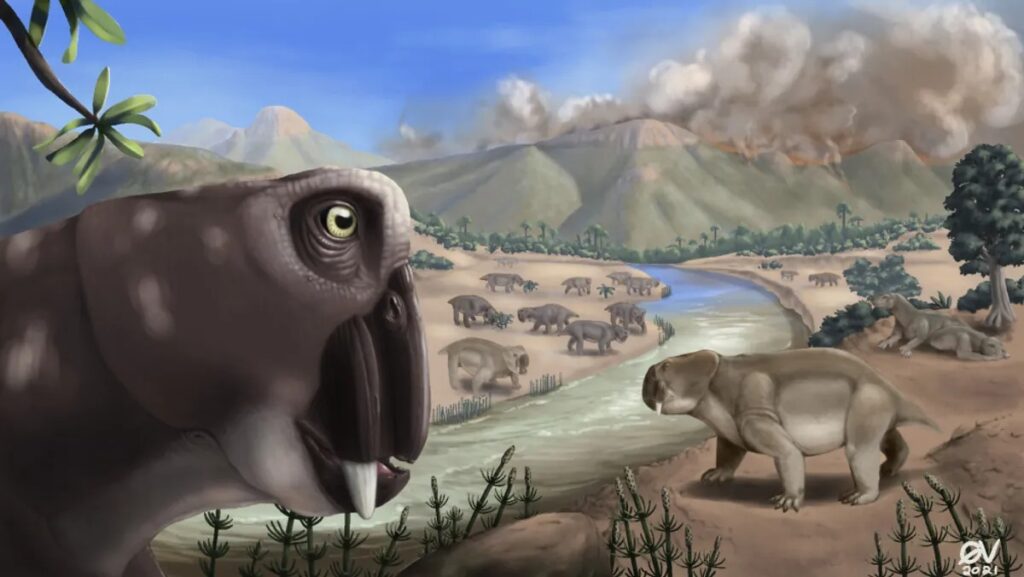
An illustration of Lystrosaurus in happier times. Image credit: Gina Viglietti

While Viglietti and colleagues’ paper is being proofed, she plans to continue researching how ancient species dealt, or failed to cope, with extreme weather and extinction events.

“I’m curious to learn more about mass extinction recovery because these data illustrate how long it takes to recover from a mass extinction event.” For years, many workers in the Karoo anticipated that recovery would be relatively quick following this event, but this site shows that even Lystrosaurus was struggling in the new unpredictable world of the early Triassic,” Viglietti told IFLScience.

Filed Under: Trends Worldwide Tagged With: after, ancestors’, discovered, event, extinction, flattened, mammal, million, mummies, trends, worldwide, years

Reader Interactions

Leave a Reply Cancel reply

Your email address will not be published. Required fields are marked *

Primary Sidebar

More to See

Almost no one recognizes this antique tool – are you one of the few who do?

By Hasan Jasim Editorial Team

Rescue takes in severely matted dog who looks like a wig — today she’s unrecognizable

By Hasan Jasim Editorial Team

Mother Goose is in charge of 47 babies and makes sure they are all safe

By Hasan Jasim Editorial Team

Scared shelter dog jumps for joy when he realizes he’s being adopted

By Hasan Jasim Editorial Team

A Friendly Deer Approaches a Deer Hunter in Search of Cuddles and Ends up Saving His Life

By Hasan Jasim Editorial Team

The Enduring Image: The 1989 “Tornado Girl” Photo

By Hasan Jasim Editorial Team

These” Conspiracy Theories” Turned Out To Be Completely True

By Hasan Jasim Editorial Team

Footer

ABOUT HASANJASIM.ONLINE

Hasanjasim.online is a digital platform dedicated to publishing well-researched articles about the animal kingdom, nature, and the environment. Our editorial team works to source stories from credible outlets, scientific research, and verified reports, aiming to inform as much as we entertain. From wildlife conservation and animal behavior to natural wonders and environmental science, we cover the topics that help readers better understand and appreciate the natural world. Whether you're a lifelong nature lover or simply curious about the planet we share, Hasanjasim.online aims to be a trustworthy destination for stories worth reading — and worth citing.

Recent

  • Euphorbia Hirta (“Asthma-Plant”): What Traditional Use and Real Research Actually Show
  • A Mystery Animal Has Been Randomly Attacking People in New Hampshire — Here’s What We Know
  • A Woman Was Filmed Sharing Her Ice Cream With Her Dog — Here’s What Vets Actually Say About It
  • Dolphin Calf Incident in Ceuta Sparks Outrage After Disturbing Beach Footage Emerges
  • Lactuca Serriola Root: Traditional Uses of Prickly Lettuce (Wild Lettuce) Root
  • The Puppy a Firefighter Couldn’t Leave Behind — and the Story Didn’t End There
  • A Mother Dog Dove Into Floodwater Again and Again — Until All 7 of Her Puppies Were Safe

Search