
The saiga antelope is a critically endangered antelope that originally inhabited a vast area of the Eurasian steppe zone from the foothills of the Carpathian Mountains, Caucasus and Mongolia. Between 1760-1953, 10 species of saiga antelopes were identified, 9 of them were extinct, and now there are 1 species of 2 subspecies Saiga Antelope is left. Mongolian Saiga is about 63-80cm shoulder height and 23-40kg, which has a stooping body, a large head, a distinctive pendulant proboscides nose, and an unusual style of running. Its skin is a light buff color, which becomes thicker and white in the winter. Males have pale yellowish horns, 28-38cm.
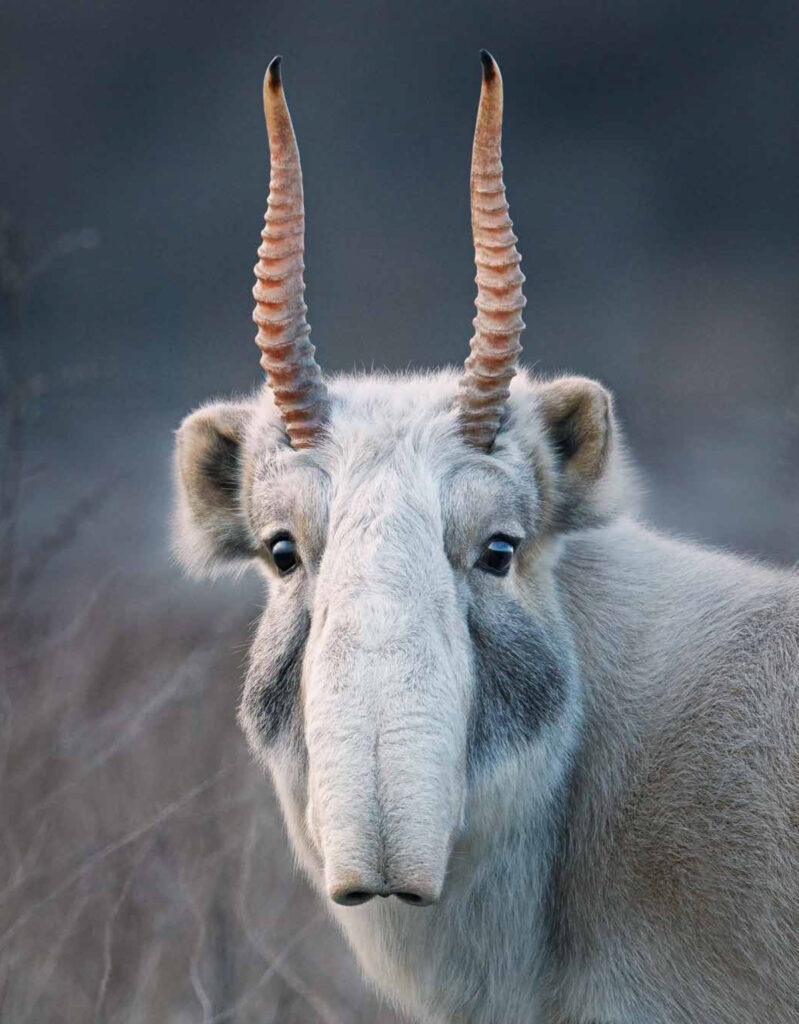
The earliest remains of the Saiga are found in the Middle Pleistocene in Kazakhstan. It has been found that the vast expanses of Eurasia have been around for 100,000 (one hundred thousand) years. Animals such as Mammoth, Giant Rhinoceros, Irish elk, and short-horned bison, which are found together with antelopes, extinct at the end of the late Pleistocene. As of 2010, the global population is thought to be around 50,000 individuals, mostly in Kazakhastan. But only 5000 of them is Mongolian Saiga Antelope. The Mongolian population is found in two remote areas of western Mongolia, mostly within the Sharga Nature Reserve, and Mankhan Nature Reserve.

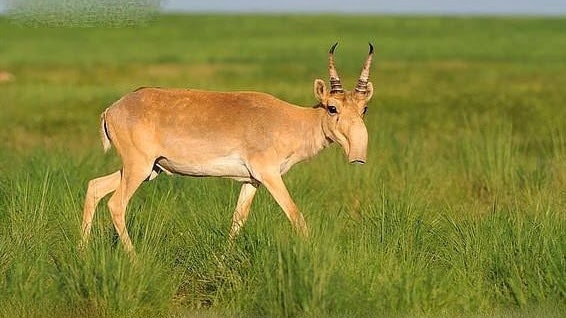
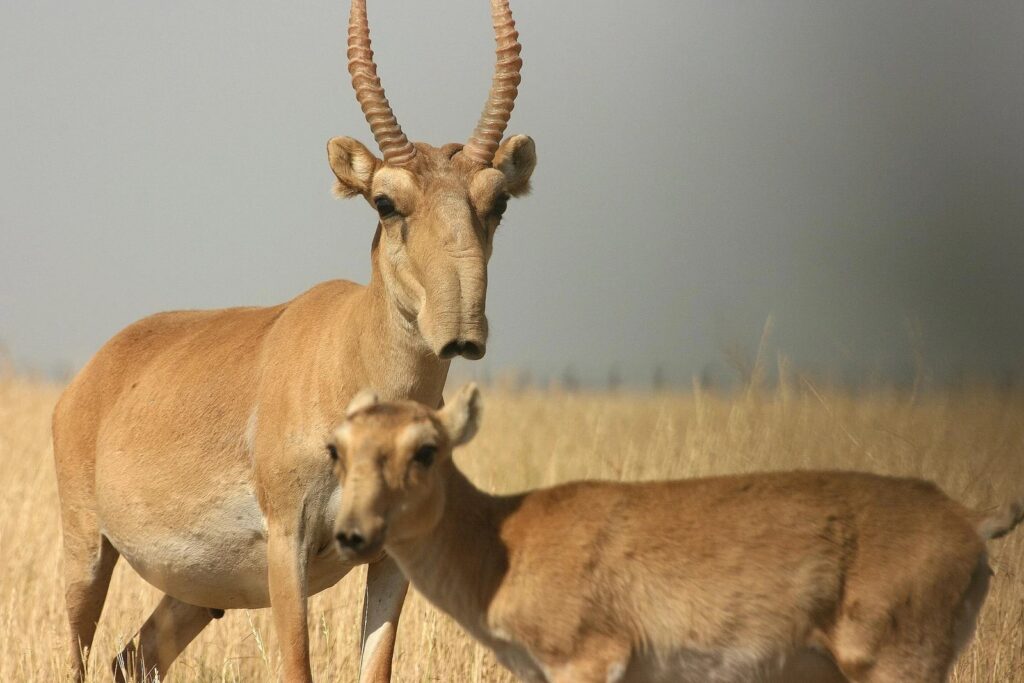
The Saiga Antelope plays an important role in the biocenosis of our Gobi Desert region. Being one of the nodes in the food chain, the lobe has a positive effect on the biodiversity of the flora and fauna. Predatory mammals and birds, such as gray wolves, lynx, eagles and vultures, will immediately catch Mongolian saiga. The carcass is eaten by a large number of scavengers and carrion. This herbivorous animal circulates in the grazing land, thinning the soil, and fertilizing the soil in the Gobi Desert to improve its productivity. The Mongolian Saiga is an important component of the Gobi Desert System and has a significant impact on the survival of flora and fauna.
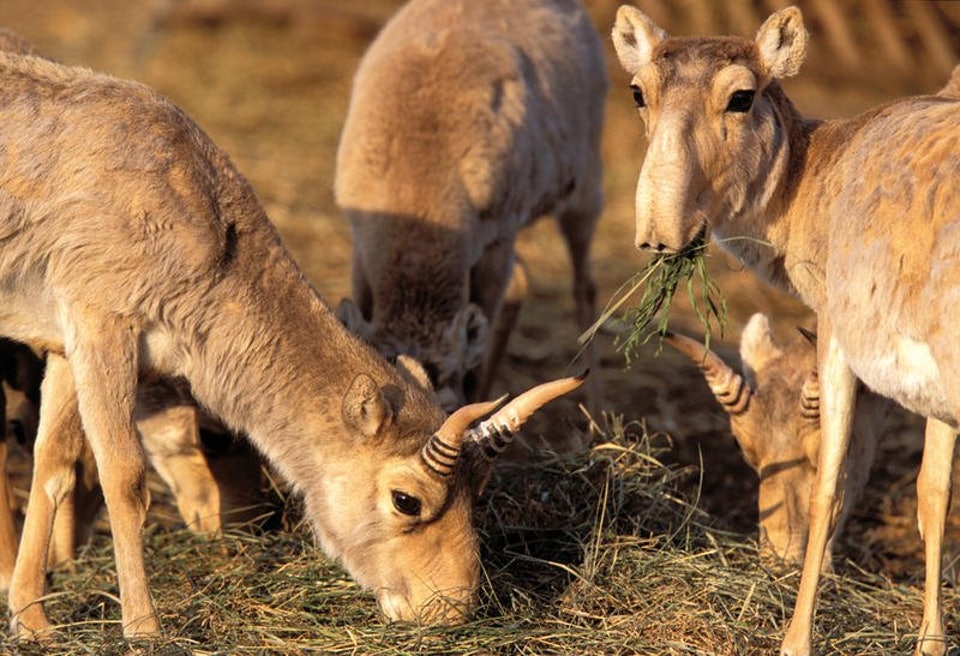
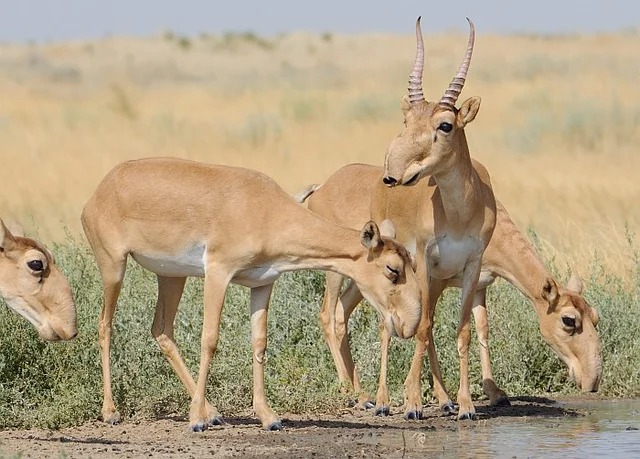
In the far west of the Mongolia will give you the best opportunities to watch and photograph this unique creature and many different stunning animals and natural landscapes.
5 interesting facts about Mongolian Saiga
- Mongolian Saiga is on of the most ancient creatures that has been surviving for 100000 years.
- Only male Saiga Antelope have horns.
- These animals are fastest in Mongolia. Top speed is about 80km
- Their inflatable, humped nose which hangs over its mouth and points downwards helps filter out dust kicked up by the herd.
- The decline in the saiga antelope population has been identified as one of the fastest populations collapses of large mammals in recent memory.
Saiga Antelope
| Habitat | Grasslands, semi-desert, woodlands |
| Location: | Russia, Kazakhstan, Mongolia |
| Lifespan: | 5 – 12 years |
| Size: | 100 – 140 cm (39 – 55 inches) |
| Weight: | 25 – 70 kg (57 – 152 lbs) |
| Color: | Sandy, beige, white, brown |
| Diet: | Plants, herbs, shrubs |
| Predators: | Wolves, foxes, feral dogs, birds of prey |
| Conservation Status: | Critically Endangered |
Leave a Reply