• Skip to main content
  • Skip to primary sidebar
  • Skip to footer
  • Home
  • About Us
  • Copyright Report
  • Submit Content
  • Terms
  • Privacy Policy
  • Legal Disclaimer

Hasan Jasim

Hasan Jasim is a place where you may get entertainment, viral videos, trending material, and breaking news. For a social generation, we are the largest community on the planet.

We All Know Rainbows But Have You Ever Seen a Moonbow – A Night Rainbow Lit By the Moon?

by Hasan Jasim Editorial Team Leave a Comment

ShareTweet

Moonbows, also called lunar rainbows, differ from your average rainbow in that they are created by the shimmers of moon rays rather than the sun.

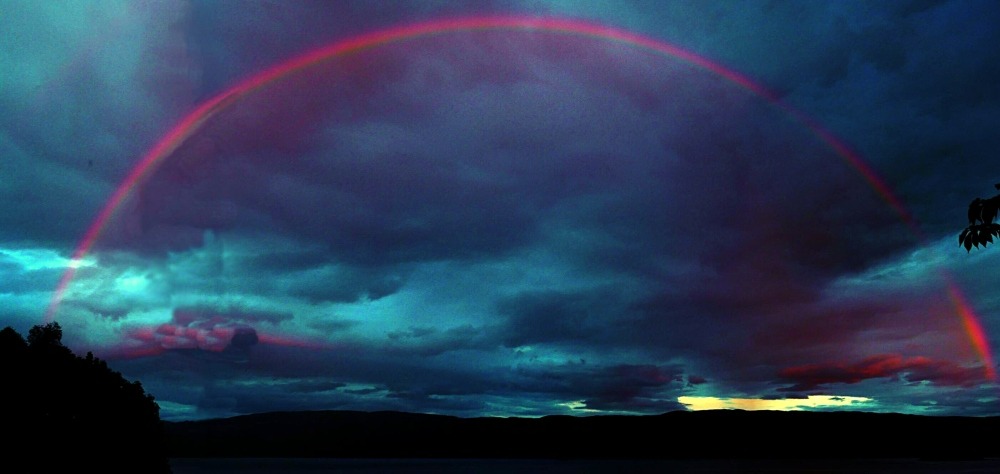
A 10pm blood red night rainbow over Scotland! Image credit: Stefan Lee Goodwin

A moonbow (also known as a moon rainbow or lunar rainbow) is a rainbow produced by moonlight instead of direct sunlight. Apart from the light source, its formation is no different from that of a solar rainbow: it is created by light being reflected in water droplets in the air caused by rain or a waterfall, for example. They are always positioned on the opposite side of the sky from the Moon relative to the observer.

Mentioned at least since Aristotle’s Meteorology (circa 350 BC), moonbows are much fainter than daytime rainbows, since the surface of the Moon reflects a smaller amount of light. For this reason, it is much more difficult for the human eye to discern colors in a moonbow, as the light tends to be too dim to activate the color receptors in our eyes. As a result, we usually see moonbows to be white, but their colors do appear in long exposure photographs.
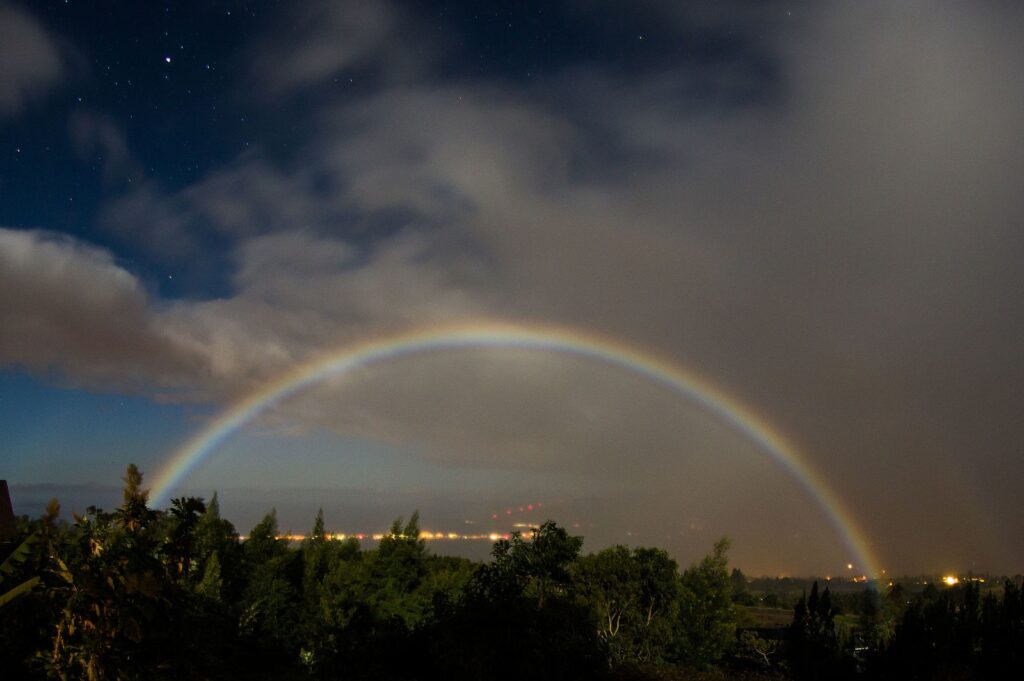
Lunar rainbow over Kihei, Maui, Hawaii, US. Image credit: Arne-kaiser

Moonbows are best viewed at and around full moon, when the Moon is at or nearest to its brightest phase and is not obscured by clouds. For moonbows to to appear, the Moon must be low in the sky (at an elevation of less than 42 degrees, preferably lower) and the night sky must be very dark. But since the sky is not completely dark on a rising/setting full moon, moonbows can only be observed two to three hours before sunrise, or two to three hours after sunset. And, of course, there must be water droplets (e.g. from rain or spray) in the sky, opposite the Moon.

This set of requirements makes moonbows much rarer than solar rainbows – they actually occur less than 10 percent as often as normal rainbows. Sometimes moonbows can also be observed during full moonrise during the winter months, when the sky is darker and rain falls at extreme latitudes. The definition of the colors is subject to the size of moisture drops present in the air: the smaller they are the less vivid the colors will be.


A night rainbow on Fraser Island, Queensland, Australia. Image credit: Garry

Apart from rain, moonbows can also be induced by spray, fog or mist. In the USA, such bows may be seen around various waterfalls including Niagara Falls, New York, Yosemite National Park, California, or Cumberland Falls, near Corbin, Kentucky. Victoria Falls, on the border between Zambia and Zimbabwe is also widely known for spray moonbows.
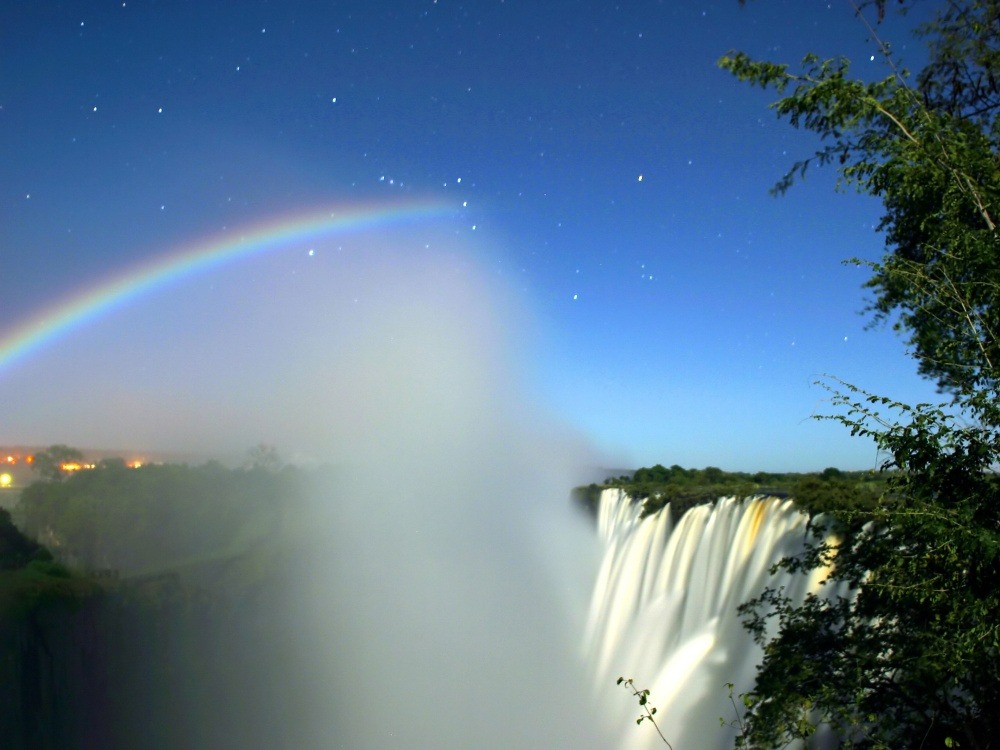
A spray-induced moonbow (lunar rainbow) at Victoria Falls (Zambia side). Image credit: CalvinBradshaw

How to spot a moonbow?

As noted above, moonbows are only visible for about 3 days around full moon, when viewed against a dark sky near the end of evening twilight, or before sunrise. In middle latitudes, the best time for moonbows is summer full moons, when the Moon spends more time low in the sky. In other seasons, moonbows may last only an hour.

In showery weather, always look for a pale moonbow when the Moon is low and bright. You probably won’t see much colors, but if you mount a camera on a tripod, you can capture the colors easily.

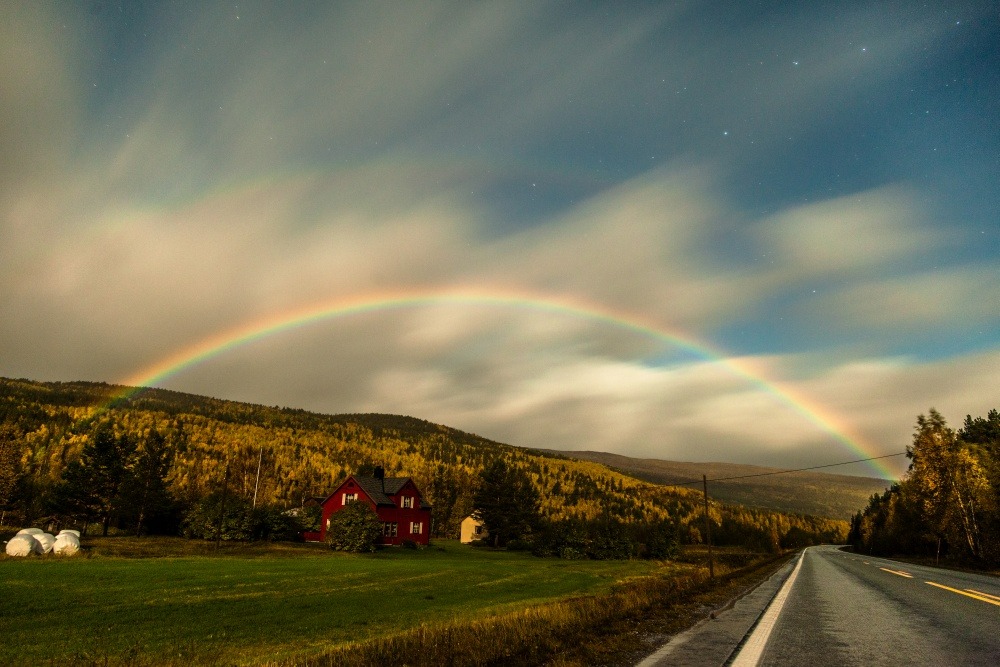
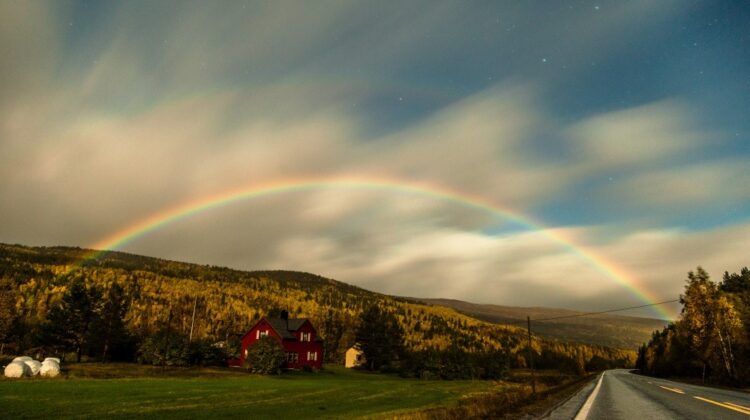
Image credit: Terje Nesthus

Good luck!

Filed Under: Trends Worldwide Tagged With: ever, have, know, moon,, moonbow?, night,, rainbow, rainbows, seen, trends, worldwide

Reader Interactions

Leave a Reply Cancel reply

Your email address will not be published. Required fields are marked *

Primary Sidebar

More to See

310-Million-Year-Old Fossil Spider: Germany’s Oldest Ever Found

By Hasan Jasim Editorial Team

It’s Something We’ve Caused: Giant Fissures Are Opening Up In The US

By Hasan Jasim Editorial Team

Guy Stops In The Road To Rescue A Kitten – And Gets Ambushed

By Hasan Jasim Editorial Team

The Albino Elephant Calf Who Survived Four Days Trapped In A Poaching Snare

By Hasan Jasim Editorial Team

Grounding with Trees: How Barefoot Earthing and Tree Energy Can Restore Balance

By Hasan Jasim Editorial Team

Turkey Eggs – Why Don’t We Eat Them?

By Hasan Jasim Editorial Team

Why you should always avoid entering the sea in this area if you notice currents forming in this manner

By Hasan Jasim Editorial Team

Footer

ABOUT HASANJASIM.ONLINE

Hasanjasim.online is a digital platform dedicated to publishing well-researched articles about the animal kingdom, nature, and the environment. Our editorial team works to source stories from credible outlets, scientific research, and verified reports, aiming to inform as much as we entertain. From wildlife conservation and animal behavior to natural wonders and environmental science, we cover the topics that help readers better understand and appreciate the natural world. Whether you're a lifelong nature lover or simply curious about the planet we share, Hasanjasim.online aims to be a trustworthy destination for stories worth reading — and worth citing.

Recent

  • This African Bird Wears Sunflowers Around Its Eyes — Meet the White-Crested Helmetshrike
  • 25 Animals You’ve Probably Never Heard Of — From a Cuban Land Snail to a Marsupial That Mates Itself to Death
  • Woman finds cow’s tooth in takeout taco. The chain says it can happen
  • Healthy Senior Dog Spared After Family Asked Veterinarians to Euthanize Her, Georgia Rescue Says
  • How People Around the World Write Laughter Online
  • The Disturbing Story Behind This Award-Winning Photojournalism Image
  • Massive Elephant Comes Face-to-Face With a Safari Guide, Why Doesn’t It Charge?

Search