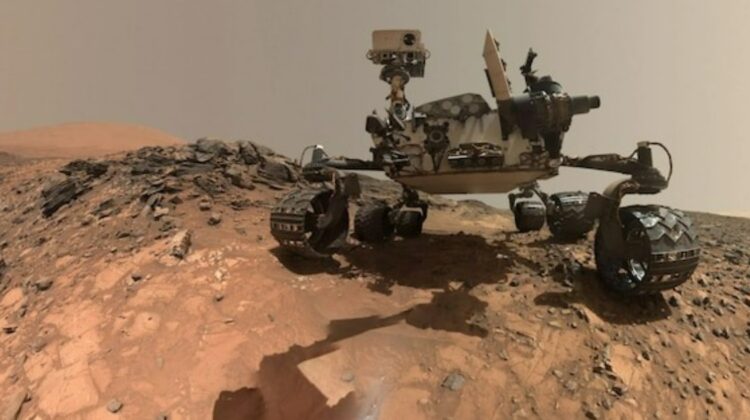
The exploration of Mars has captivated human curiosity for decades, but a new theory presented by Astrobiologist Dirk Schulze-Makuch from Technische Universität Berlin suggests a poignant twist: NASA’s Viking 1 mission in 1976 might have accidentally eradicated Martian life. This startling hypothesis raises critical questions about our methodologies in searching for extraterrestrial life and the assumptions underlying these efforts.
In 1976, NASA’s Viking 1 lander embarked on a groundbreaking journey to Mars, equipped to conduct the first experiments that could reveal the existence of life on the red planet. The mission involved analyzing soil samples with a combination of water and nutrients—a method predicated on terrestrial life’s dependence on liquid water. Early results from these experiments offered tantalizing hints of life, sparking a long-standing scientific debate that has mostly concluded with the consensus of a false positive result.
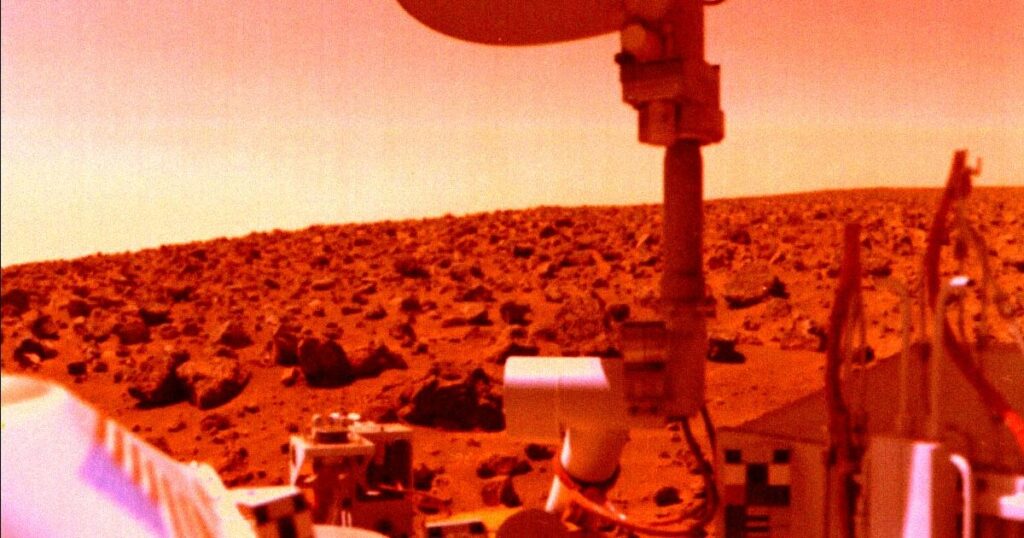
However, Schulze-Makuch’s analysis suggests an alternative scenario. Drawing parallels with Earth’s most arid ecosystems, such as the Atacama Desert, he proposes that Martian life could thrive on salt deposits rather than liquid water. These salt-adapted organisms absorb moisture from the atmosphere, an adaptation critical for survival in hyperarid conditions. The Viking experiments, which flooded Martian soil with water, may have inadvertently doomed these organisms by disrupting their moisture-balancing mechanisms.

Schulze-Makuch advocates for a shift in our search for life on Mars: from the long-standing “follow the water” strategy to also tracing hygroscopic compounds like salts, which could harbor microbial life. This approach could redefine future missions and potentially uncover new forms of life adapted to extreme environments.

Despite the intriguing possibilities raised by this hypothesis, it remains just that—a hypothesis. Schulze-Makuch emphasizes the necessity of diverse, independent life-detection methods in future missions to gather more convincing data and perhaps, finally answer the age-old question: Are we alone in the universe?
This new perspective not only deepens our understanding of possible life on Mars but also challenges our preconceptions about what life requires to thrive. As we plan future missions, incorporating a broader view of potential life-sustaining environments will be crucial. The legacy of the Viking missions continues to influence our quest for knowledge, reminding us that in the vastness of space, assumptions can be as limiting as they are necessary.
Leave a Reply