• Skip to main content
  • Skip to primary sidebar
  • Skip to footer
  • Home
  • About Us
  • Copyright Report
  • Submit Content
  • Terms
  • Privacy Policy
  • Legal Disclaimer

Hasan Jasim

Hasan Jasim is a place where you may get entertainment, viral videos, trending material, and breaking news. For a social generation, we are the largest community on the planet.

The Sun’s Poles Are About To Flip. What Will Happen When They Do?

by Hasan Jasim Editorial Team Leave a Comment

ShareTweet

The Sun’s activity is currently on the rise, marked by a flurry of solar flares and radio blackouts here on Earth. But what’s causing this heightened activity, and what does it mean for us?

This surge in solar activity is part of a well-documented 11-year cycle known as the Schwabe cycle. Discovered by German astronomer Heinrich Schwabe in the early 19th century, this cycle sees the Sun transition from periods of relative calm to peak activity and back again. During this cycle, the Sun’s magnetic poles reverse, a phenomenon that influences various solar phenomena such as sunspots, flares, and coronal mass ejections.
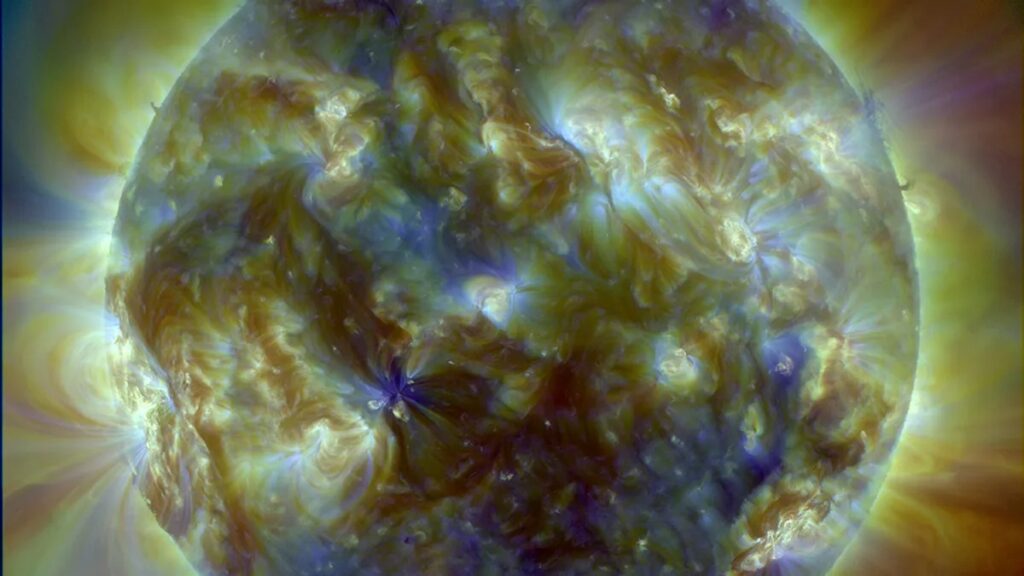
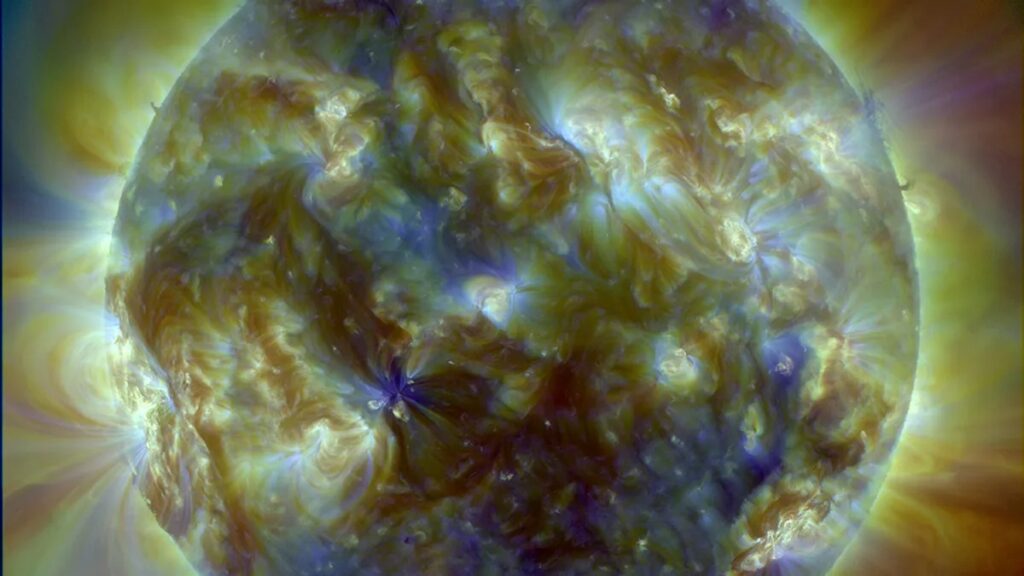
The Sun is particularly active right now. Image credit: NASA’s Solar Dynamics Observatory

Sunspots, in particular, play a significant role in understanding solar activity. These dark patches on the Sun’s surface are caused by fluctuations in its magnetic field. As the Sun’s equator rotates faster than its poles, it stirs up the magnetic field, leading to the formation of sunspots.

“The Sun’s magnetic fields rise through the convection zone and erupt through the photosphere into the chromosphere and corona,” explains NASA. “The eruptions lead to solar activity, which includes such phenomena as sunspots, flares, prominences, and coronal mass ejections.”

During the Schwabe cycle, the Sun’s magnetic field undergoes a complete reversal, akin to the Earth’s magnetic field, but on a much larger and more dynamic scale. This cycle typically lasts between 8 to 14 years, with periods of minimum solar activity followed by maximum activity.

Currently, we are witnessing an increase in solar activity, indicating that we are nearing the next solar maximum, which is predicted to occur sometime between January and October of this year.

However, recent research suggests a more precise method of predicting solar cycles by observing “terminator events.” These events occur when magnetic formations known as “magnetic donuts” converge and cancel each other out near the Sun’s equator. By studying the timing of these terminator events, researchers believe they can make more accurate predictions about the duration and intensity of solar cycles.

“If you measure how long a cycle is, not the minimum to minimum, but from terminator to terminator, you see that there is a strong linear relationship between how long one cycle is and how strong the next one is going to be,” explains NASA research scientist Robert Leamon.
Using this method, scientists predict that the Sun’s magnetic field will flip in mid-2024, just a few months before the onset of the solar maximum.

As we anticipate this significant event in the solar cycle, it serves as a reminder of the intricate dynamics of our closest star and the profound impact it has on our planet. Understanding these cycles not only helps us prepare for potential disruptions caused by solar activity but also deepens our knowledge of the fundamental processes driving our solar system.

Filed Under: Trends Worldwide Tagged With: about, flip, happen, poles:, sun’s, they, trends, what, when, will, worldwide

Reader Interactions

Leave a Reply Cancel reply

Your email address will not be published. Required fields are marked *

Primary Sidebar

More to See

After his house burned down, an 83-year-old man hugs someone very important

By Hasan Jasim Editorial Team

Surreal Situation In Alaska, a Polar Bear Appears to Wave to a Photographer

By Hasan Jasim Editorial Team

Photographer Uses Gyroscopic Camera To Capture Incredible Video Of Earth’s Rotation

By Hasan Jasim Editorial Team

Are 2007 nickels rare?

By Hasan Jasim Editorial Team

110-Million-Year-Old Dinosaur Tracks Found In Texas Riverbed Due To Drought

By Hasan Jasim Editorial Team

‘Frozen’ Cat Drags Herself Up Snowy Driveway Hoping Someone Will Notice Her

By Hasan Jasim Editorial Team

Man given reward after beating up tourist who threw rock at beloved seal

By Hasan Jasim Editorial Team

Footer

ABOUT HASANJASIM.ONLINE

Hasanjasim.online is a digital platform dedicated to publishing well-researched articles about the animal kingdom, nature, and the environment. Our editorial team works to source stories from credible outlets, scientific research, and verified reports, aiming to inform as much as we entertain. From wildlife conservation and animal behavior to natural wonders and environmental science, we cover the topics that help readers better understand and appreciate the natural world. Whether you're a lifelong nature lover or simply curious about the planet we share, Hasanjasim.online aims to be a trustworthy destination for stories worth reading — and worth citing.

Recent

  • Euphorbia Hirta (“Asthma-Plant”): What Traditional Use and Real Research Actually Show
  • A Mystery Animal Has Been Randomly Attacking People in New Hampshire — Here’s What We Know
  • A Woman Was Filmed Sharing Her Ice Cream With Her Dog — Here’s What Vets Actually Say About It
  • Dolphin Calf Incident in Ceuta Sparks Outrage After Disturbing Beach Footage Emerges
  • Lactuca Serriola Root: Traditional Uses of Prickly Lettuce (Wild Lettuce) Root
  • The Puppy a Firefighter Couldn’t Leave Behind — and the Story Didn’t End There
  • A Mother Dog Dove Into Floodwater Again and Again — Until All 7 of Her Puppies Were Safe

Search