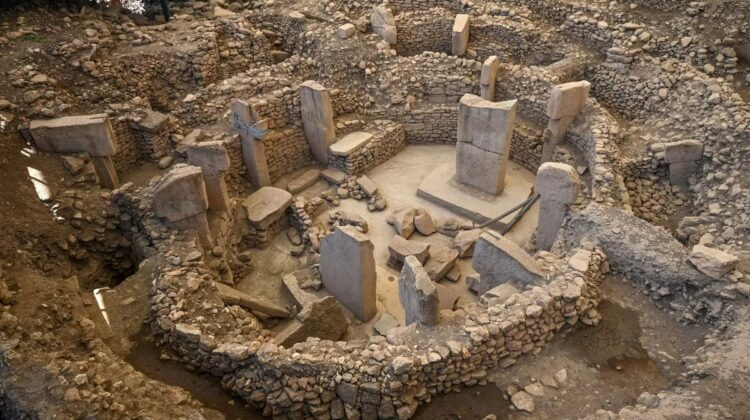
Göbekli Tepe, the world’s earliest-known temple, was built around 11 500 years ago, when woolly mammoths still roamed the Earth, and Britain wasn’t yet an island.

In 1963, scientists from Istanbul University and the University of Chicago found ancient stone tools while conducting a survey on the hill of Göbekli Tepe (which means ‘potbelly hill’ in Turkish) not far from the city of Şanlıurfa in Southeastern Anatolia, Turkey. While the site was considered a sacred place, and they identified large stone slabs as well – which they believed were grave markers -, no excavations were carried out.
However, 31 years later, German archaeologist Klaus Schmidt decided to re-examine the area that was described in 1963. After locals guided Schmidt to the site, he realized that the hill could, in fact, hide the remains of prehistoric megaliths.
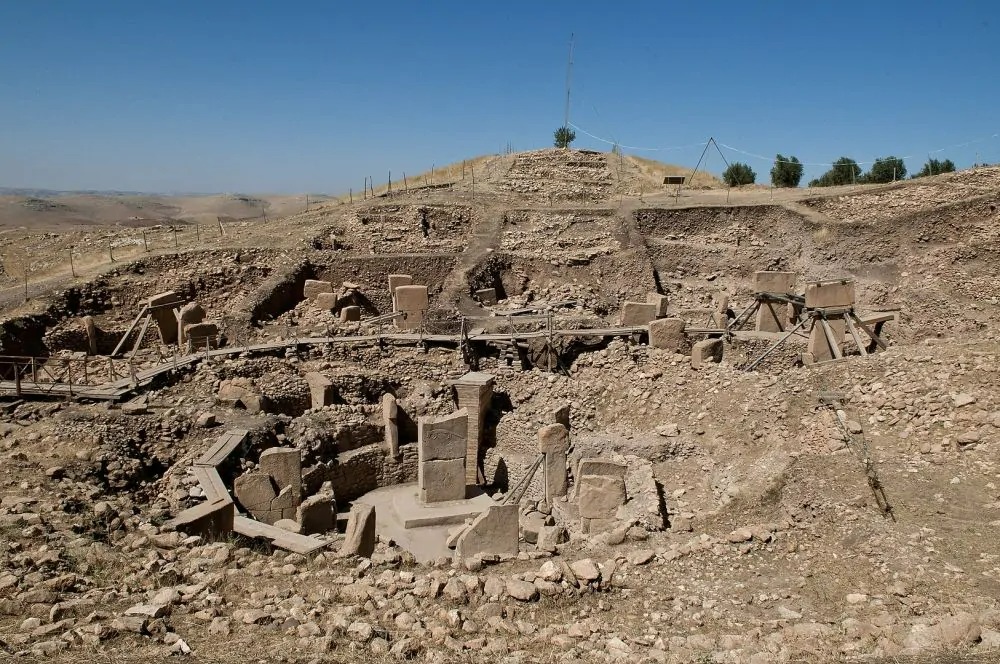
Excavations began a year later, in 1995, and archeologists soon unearthed a T-shaped pillar, which was followed by a number of large circular structures, and massive stone pillars.
Archaeologists have determined that the structures were built in the Neolithic period, around 11,500-11,000 years ago, well before the age of settled agricultural lifestyle kicked in. This means the site 7,000 years older than the Stonehenge, and according to the general consensus among scientists, the exceptional archeological site of Göbekli Tepe is indeed the oldest temple ever identified.

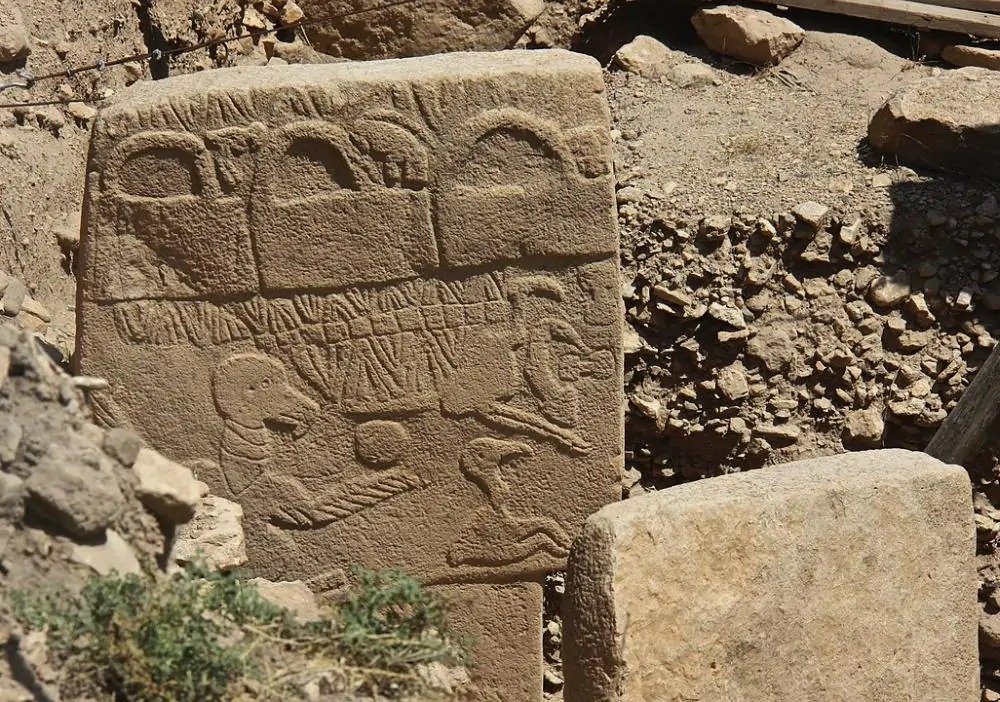
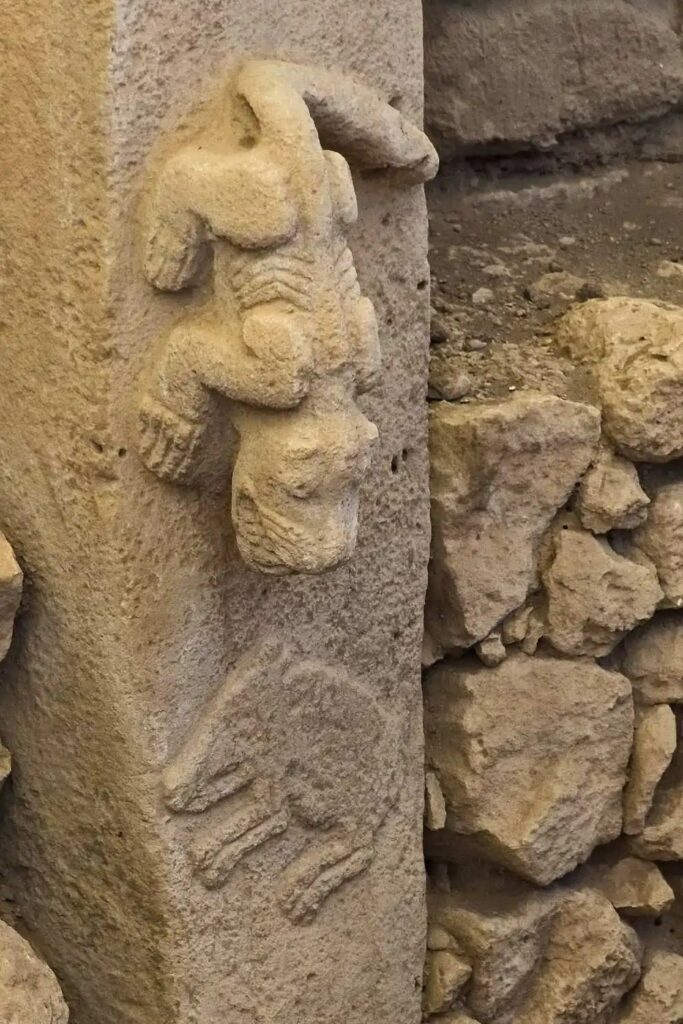
The enormous, round stone structures and monumental stone pillars – some of which reach up to 19 feet (5,5 meters) in height – are richly decorated with abstract details. These carvings include different symbols, and animals, such as serpents, foxes, and boars, but some man-like figures are also present.
Archaeologists have also found carved skull fragments at the site, along with statues and carvings depicting headless people.
According to a study, published in Science Advances, cut marks on the bones suggest that someone removed the flesh and then carved the bones with deep, straight grooves running from the front to the back. One of the skulls even had a hole drilled through it and contained traces of red ochre, which was known to be used for cave paintings and rituals.
Analysis of the skulls confirms that the incisions were made with stone tools, not long after the individuals had died. Based on the depth of the incisions, the researchers concluded that they were scalping marks. Other small traumas on the skulls suggest that the flesh had indeed, been skinned off.
Archeologists believe that the discovery of these skulls is evidence of a Neolithic skull cult in the area, which was’t uncommon in Anatolia.
While these findings may feel a bit creepy to some, they provide archaeologists with remarkable insights into prehistoric religions and symbolism.
For a long time, it was unclear whether the structures of Göbekli Tepe were built in a random pattern, or if they were the results of careful planning. The reason why this question spurred controversy is that the temple’s age suggests that it was built by hunter-gatherers. But the architectural techniques to build such a complex could have only been achieved by a society that had mastered agriculture.
Still, based on a study by archaeologists at Tel Aviv University (AFTAU), Göbekli Tepe, which dates back to a period well before the beginnings of settled agricultural lifestyle, is the result of precise engineering.
The scientists used an algorithm to analyze the architectural layout of the unearthed complex. They found that if the columns in the middle of the circular structures are connected by a line, they form a perfect equilateral triangle. This architectural complexity suggests that the builders of Göbekli Tepe were working based on a preconceived geometric plan.

If the structures were built according to some kind of blueprint, it implies a high degree of collaboration and long-term planning, which is unusual in hunter-gatherer societies. Furthermore, rectangular architecture and square shapes can also be observed at Göebli Tepe, and those weren’t common during the Stone Age, which lasted to around 3300 BC.
“Our findings suggest that major architectural transformations during this period, such as the transition to rectangular architecture, were knowledge-based, top-down processes carried out by specialists. (…) Our research indicates that the methods of architectural planning, abstract design rules, and organizational patterns were already being used during this formative period in human history,” said Gil Haklay, co-author of the study, and department member of the Israel Antiquities Authority.

It looks like that the oldest temple in the world also holds many secrets, and uncovering these mysteries is made even more difficult by the fact that it was built in an era when writing wasn’t yet invented. But that makes some archaeologists even more determined to learn as much as possible about this remarkable piece of human history.
Leave a Reply