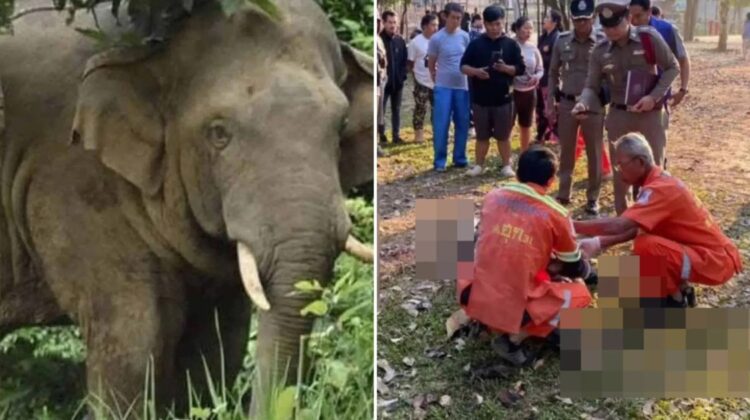
A tourist has died after being attacked by a wild elephant in Thailand’s Khao Yai National Park, marking the third fatal incident officially linked to the same animal, according to park authorities.
The victim, a 65-year-old Thai man identified locally as Jirathachai Jiraphatboonyathorn, was taking an early morning walk with his wife through a campsite in the national park when the attack occurred at around 5:30 a.m. on Monday.
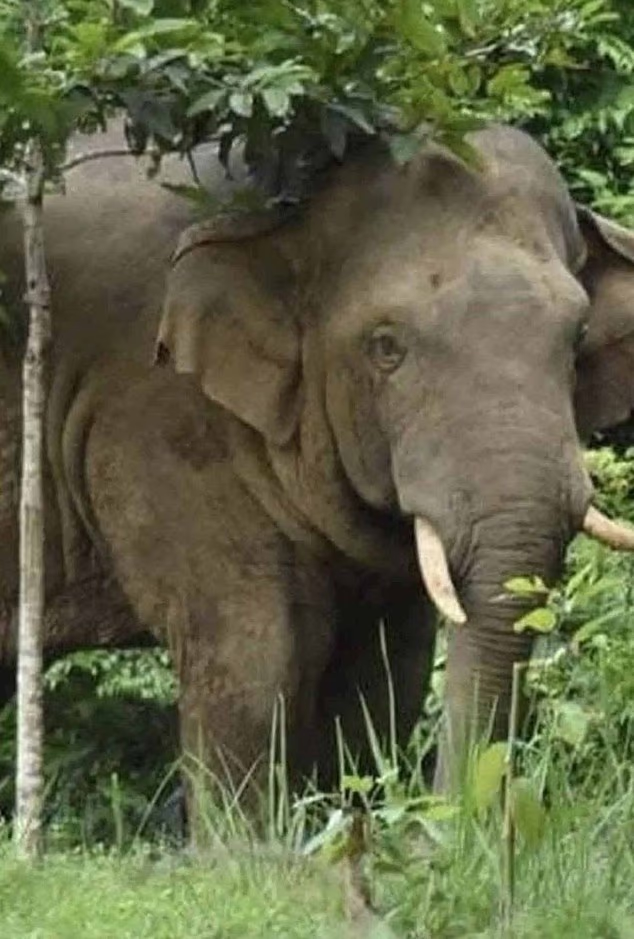
Officials said a male wild elephant known as Phlai Oyewan suddenly charged toward the couple. The elephant reportedly lifted the man with its trunk, threw him to the ground, and trampled him repeatedly.
The victim suffered catastrophic injuries and died at the scene. His wife managed to escape unharmed after park rangers intervened and drove the elephant away, while other campers witnessed the incident from nearby tents.
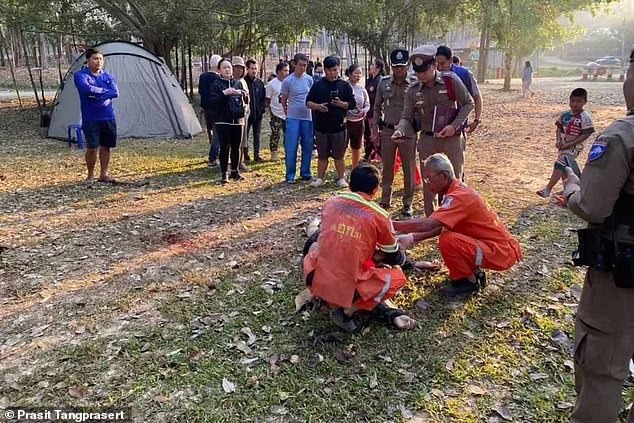
Emergency responders later confirmed the man had sustained multiple severe injuries, including several broken limbs.
According to park officials, the elephant was believed to be in musth, a periodic condition in male elephants characterized by elevated testosterone levels that can lead to increased aggression and unpredictable behavior.
Authorities said Phlai Oyewan has previously been linked to the deaths of two other people, while officials suspect the elephant may have been involved in additional unresolved fatal incidents.
Park management announced that wildlife authorities would review possible measures, including relocating the elephant or implementing behavioral management strategies, to reduce the risk of future attacks.
Data from Thailand’s Department of National Parks, Wildlife and Plant Conservation shows that more than 220 people have been killed by wild elephants since 2012. During the same period, Thailand’s wild elephant population has grown significantly, increasing from approximately 334 animals in 2015 to nearly 800 in recent years, creating more frequent encounters between elephants and humans.
The incident follows several other fatal elephant attacks in Thailand. In early 2025, a young Spanish tourist died after being struck by an elephant while participating in a bathing activity at a sanctuary in southern Thailand. Another tourist also lost their life during an elephant attack at a national park in northern Thailand in late 2024.
Although wild elephants generally avoid human contact, conservation experts say they can become extremely dangerous when startled, protecting calves, defending territory, or during musth, making close encounters particularly hazardous.
Growing Human-Wildlife Conflict in Thailand
As wildlife populations recover and human activity increasingly overlaps with natural habitats, encounters between people and wild elephants have become more common across parts of Thailand. Conservationists stress that protecting both humans and wildlife requires stronger park management, public awareness, responsible tourism, habitat conservation, and effective conflict-prevention strategies. Experts also encourage visitors to follow all park safety guidelines and maintain a safe distance from wild animals, especially during breeding or musth seasons when elephants can behave unpredictably.
Leave a Reply