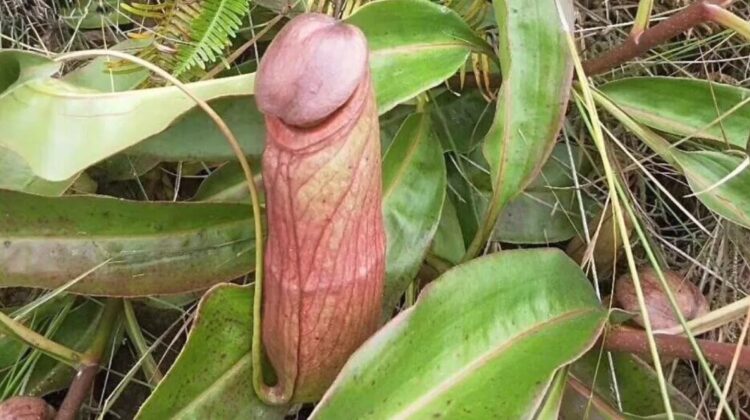
Many people couldn’t believe it was a genuine plant when it went viral. That was the case.
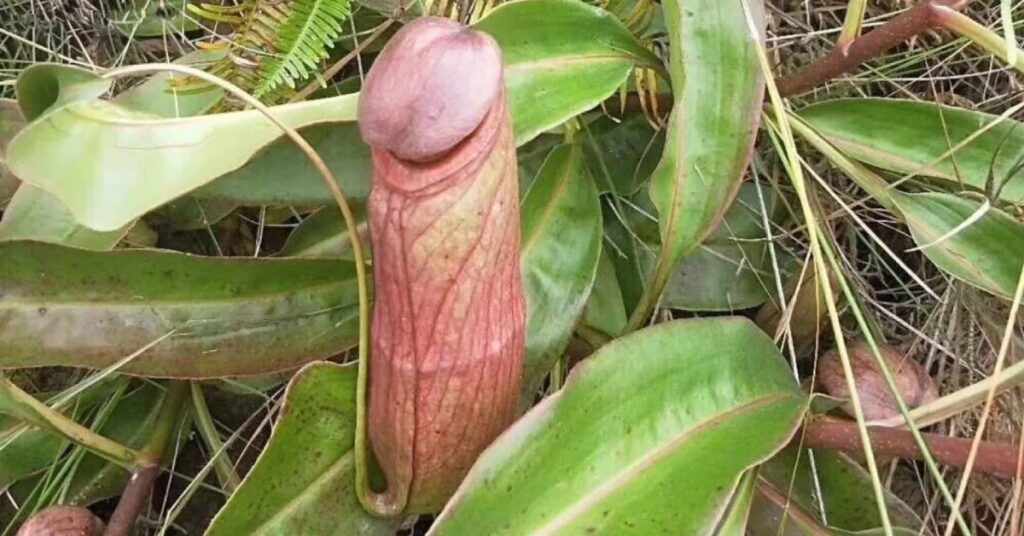
Images of a plant known as the ‘penis flytrap’ went viral in March 2019. The name is a pun on the plant Venus flytrap (Dionaea muscipula), the name of which might be an oblique allusion to the plant’s likeness to human female genitalia.
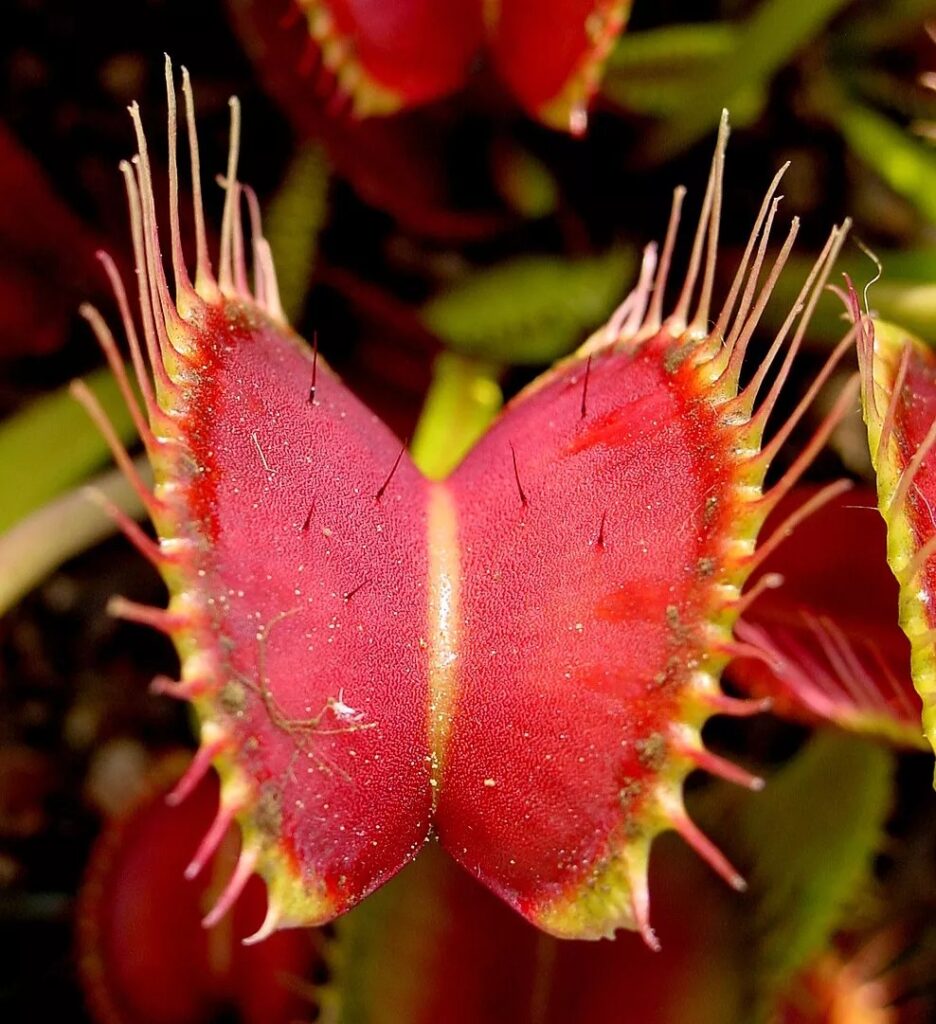
To begin, here’s what the Venus flytrap looks like.
Let’s return to the phallic-looking one now. The plant is native to the Philippines and belongs to the Nepenthes genus.
Despite the fact that the image’s provenance (see full version below) is unknown, Snopes conducted a fact check and determined that the shot is genuine and depicts the plant in question. They even inquired about the image with Clinton Morse, the living plant collections manager at the University of Connecticut’s Department of Ecology and Evolutionary Biology, who responded as follows:
“It is unmistakably a Nepenthes species, and it appears to be a legitimate photograph….” All Nepenthes feature a passive pitfall trap that begins as a closed trap and gradually opens up as the trap matures. The pitchers in the accompanying photograph are just beginning to open, giving them a penile aspect. I’ve never heard them referred to as ‘penis fly traps,’ but it’s a very fair description.”
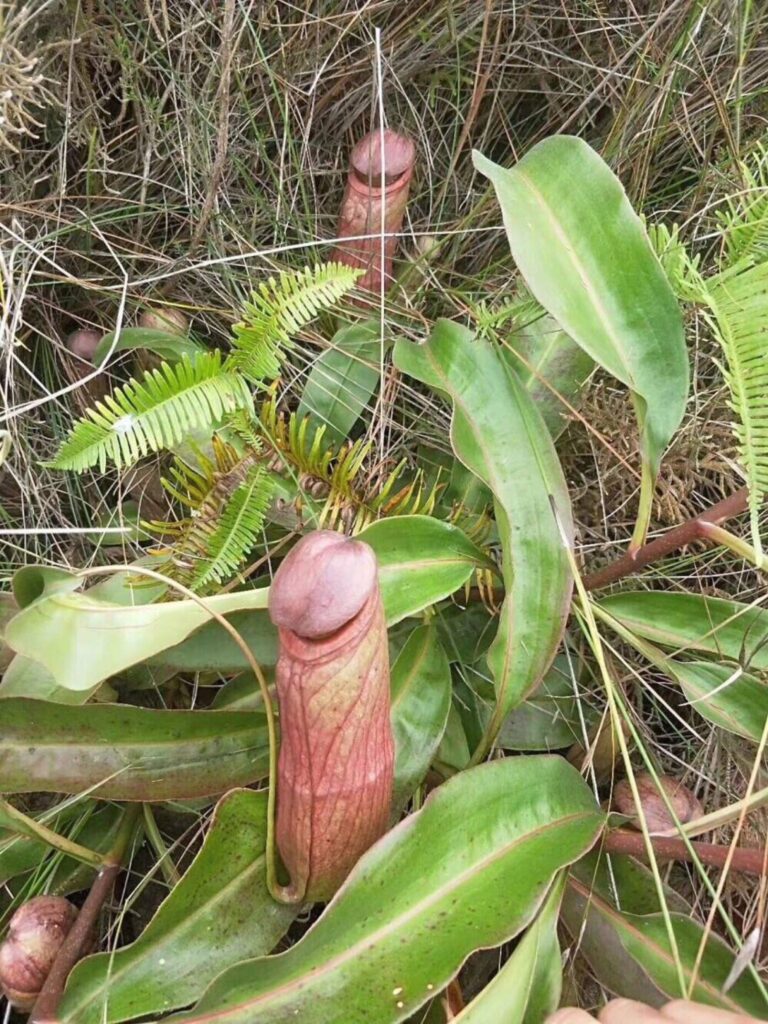
As a result, the photographs are most likely of Nepenthes philippinensis, a tropical pitcher plant that is only found in the Philippines. It grows from 0–600 meters (2,000 feet) above sea level in Palawan and the neighboring Calamian Islands (including Busuanga, Coron, and Culion) and Linapacan.
When the pit trap has fully grown and the lid is lifted, the plant becomes less phallic-looking (as opposed to the phase that some critics have dubbed “penile”). According to a 1999 assessment of the genus’ carnivorous habit, the open trap fills with water to entice insects that fall into it, with the plant scavenging the nutrients in the decaying carcasses.
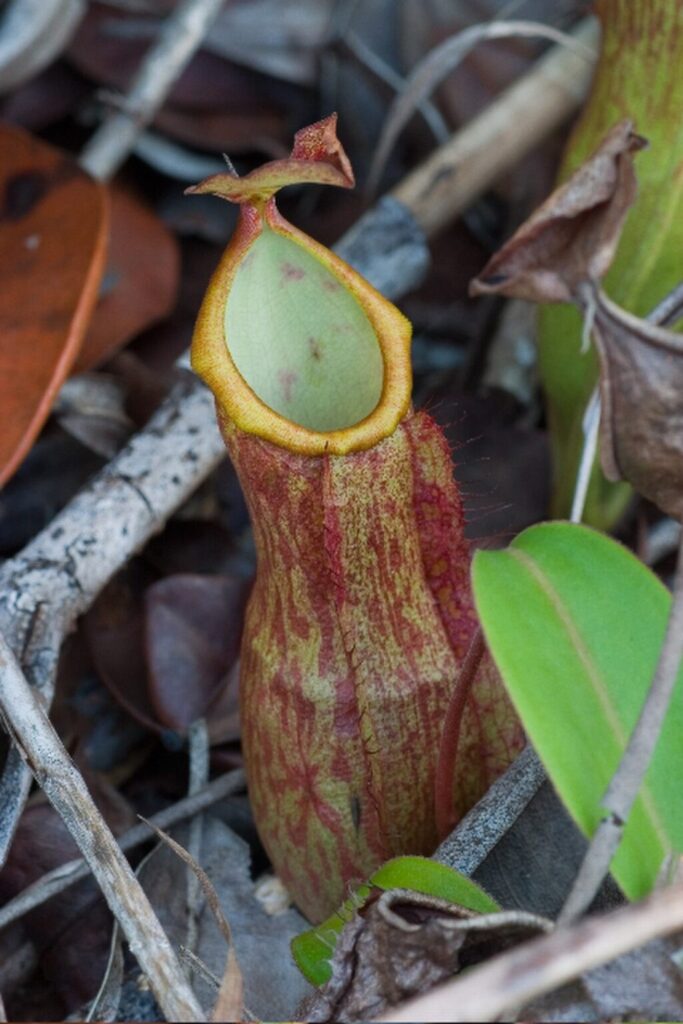
So, if you travel and discover the highlands and islands of the Philippines, there’s a good possibility you’ll stumble across this plant — in either phase.
But this is something you wouldn’t want to miss:
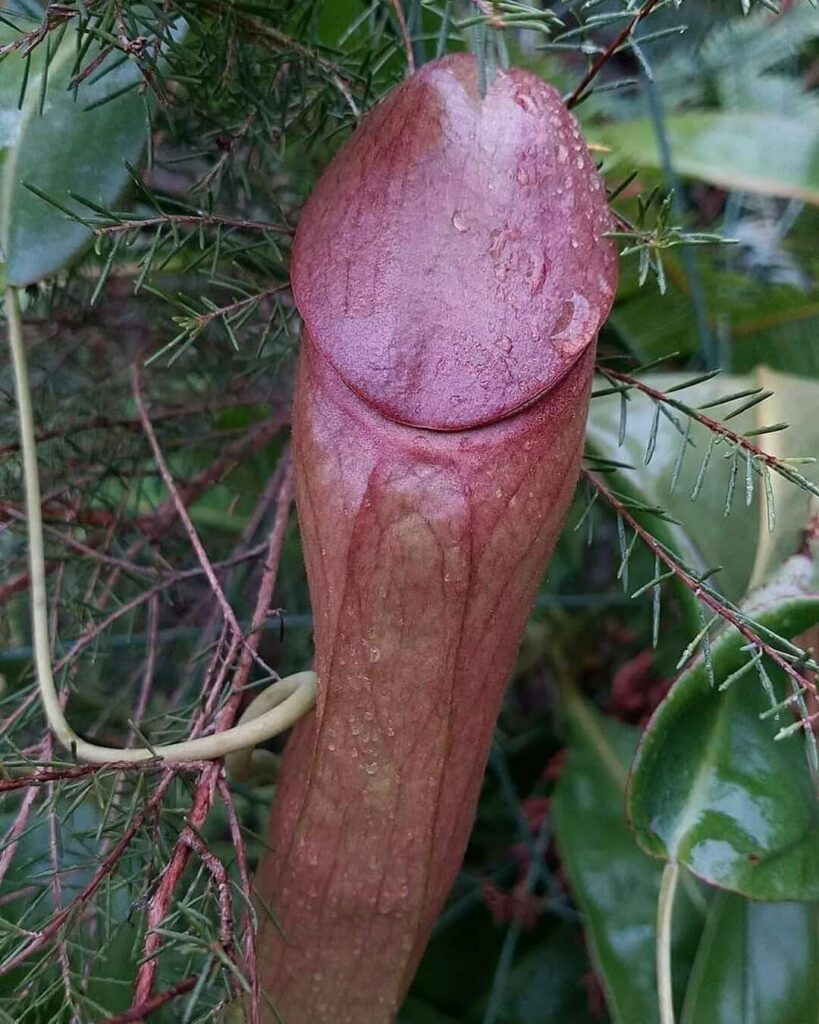
Or would you?
Please stop picking this plant that looks like a penis because it’ll go extinct!

Don’t get any ideas, the Cambodian government says.
If you’re in Cambodia and you come across the nepenthes bokorensis aka the carnivorous penis plant, please don’t pick it.
Cambodia’s Department of Environment recently appealed to people via Facebook, urging them to stop picking the plant because it might go extinct.
Apparently, the ministry was responding to a viral video depicting three women picking the carnivorous penis plant and taking pictures with them. According to Daily Mail, the incident happened at Bokor Mountain in Kampot.

The pitcher plant is often humorously compared to a penis due to the way it looks. However, its shaft-like tube is crucial to the plant’s survival as that is how it lures insects in to feed.
“Thank you for loving natural resources, but do not pick the flowers, or they will be ruined,” Cambodia’s Department of Environment said in Khmer via Facebook.
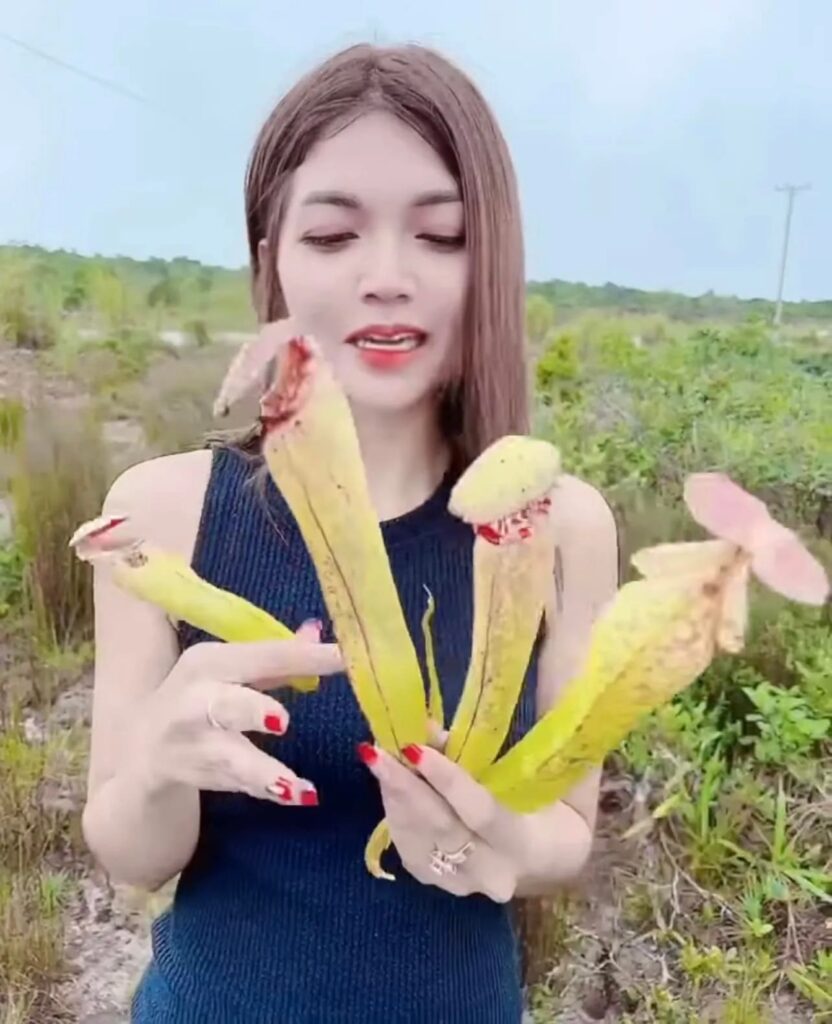
Botanical illustrator François Mey said the species’ survival is threatened due to land clearing activities in the Southeast Asian nation.
“If people are interested, even in a funny way, to pose, to make selfies with the plants, it’s fine. Just do not pick the pitchers because it weakens the plant, because the plant needs these pitchers to feed,” Mey said to Live Science.