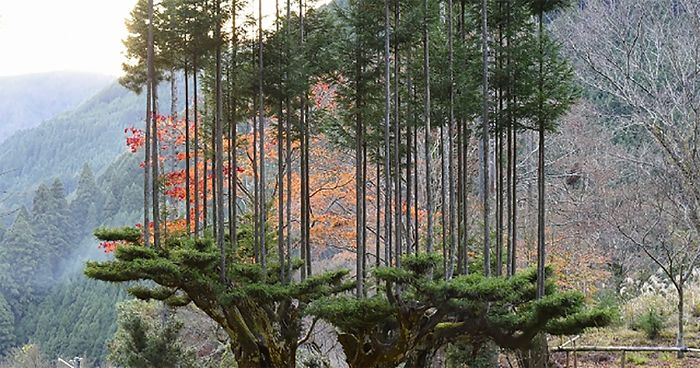
Japan has a long tradition of finding elegant, patient solutions to practical problems — and daisugi, a forestry technique developed roughly 600 years ago near Kyoto, is one of the more remarkable examples. It allows foresters to harvest high-quality lumber again and again from the same tree, without ever cutting it down.
What Is Daisugi?
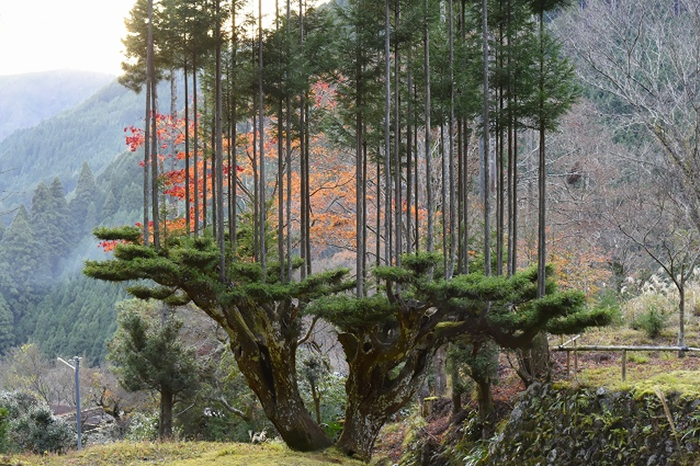
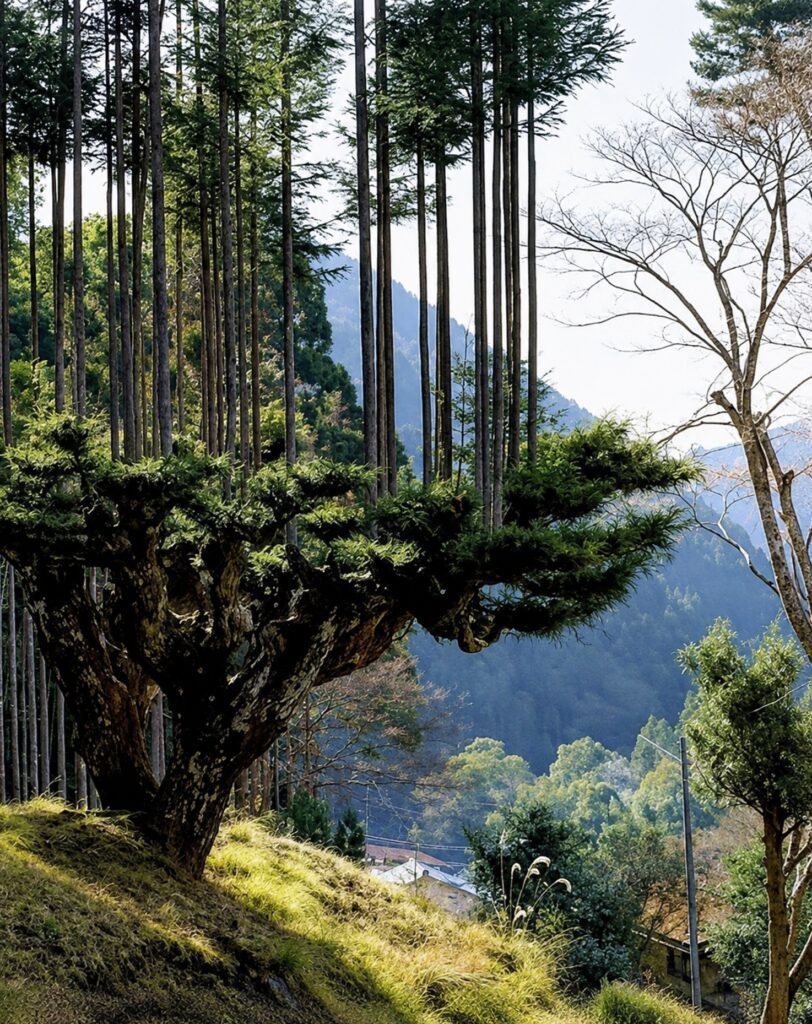
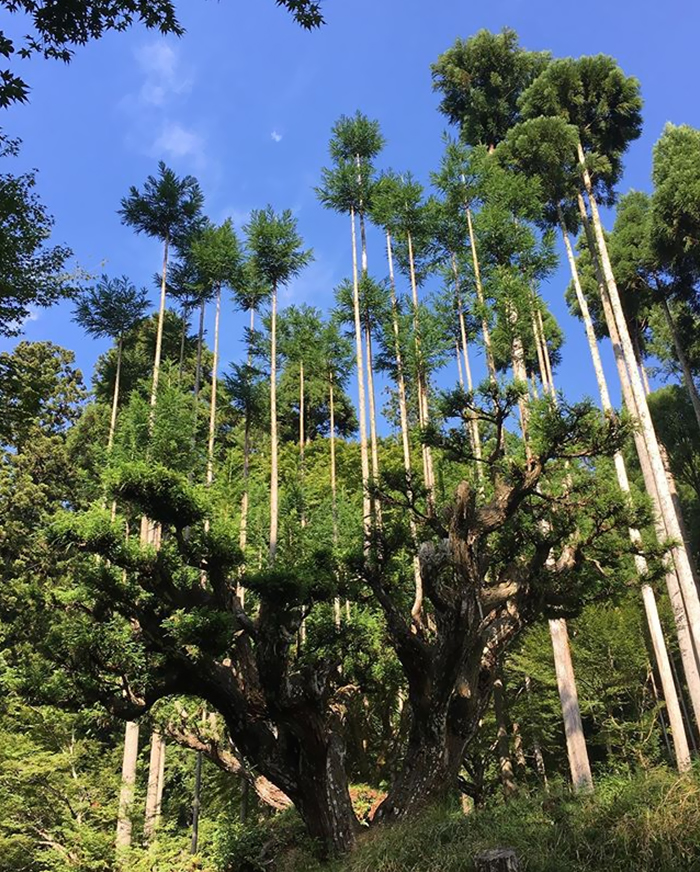
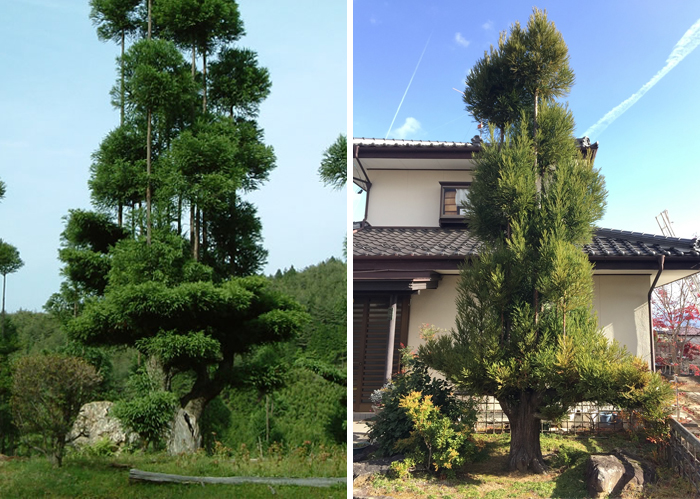
Daisugi (台杉), meaning “platform cedar,” is a pruning technique applied to Japanese cedar (Cryptomeria japonica, known locally as sugi). According to Wikipedia’s summary of the technique, it’s related to pollarding — a broader category of pruning methods used worldwide to repeatedly harvest wood from a living tree. In daisugi, a mother tree’s trunk is pruned every two to four years so that a set of straight, knot-free shoots grow vertically upward from the base, almost like a bonsai tree scaled up to full size.

Why It Was Invented
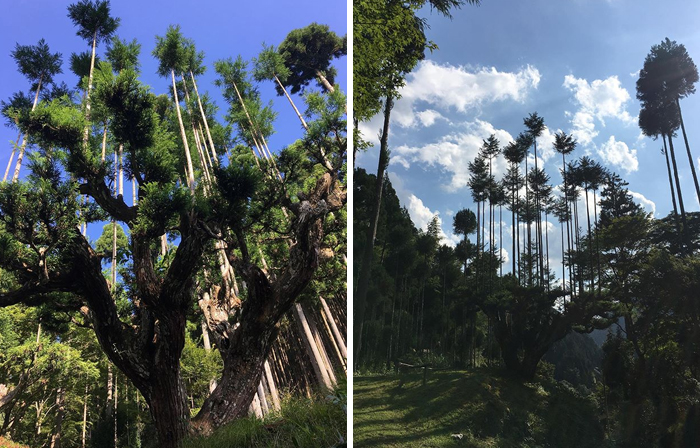
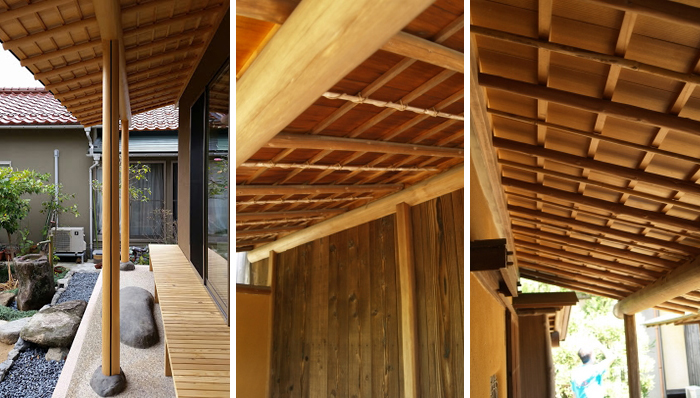
The technique originated in the Kitayama region northwest of Kyoto, most likely in the 14th or 15th century. According to Colossal, during Japan’s Muromachi period, an especially straight and refined style of sukiya-zukuri architecture became highly fashionable — driving up demand for taruki, a perfectly straight, knot-free type of lumber used in traditional roof construction. The Kitayama region’s mountainous terrain made planting and raising new saplings difficult, and land suitable for new plantations was scarce. Daisugi solved both problems at once: instead of planting new trees, foresters could repeatedly harvest straight timber shoots from cedars already established on the steep slopes.
How the Process Works

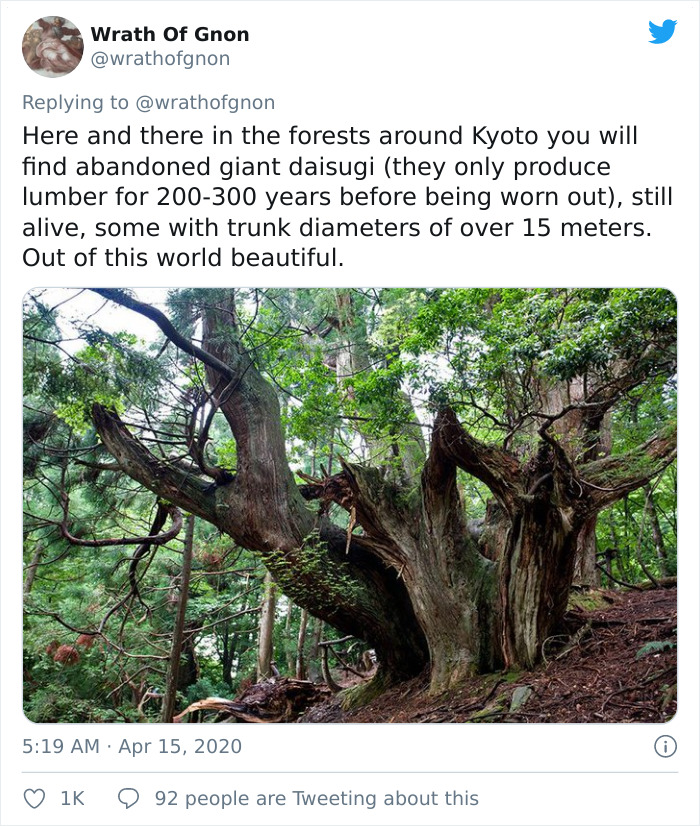
Roughly every 20 years, the vertical shoots growing from a daisugi mother tree are ready to harvest. A single well-established mother tree can produce as many as 100 shoots at a time, according to accounts of the technique, while its root system and base remain undisturbed and continue growing new shoots for the next cycle. Because the tree is never felled, a single daisugi specimen can remain productive for centuries — some documented trees have been harvested this way for 200 to 300 years.

The resulting lumber has a genuine practical advantage over standard-cut cedar: it’s reported to be notably denser and more flexible than timber from conventionally felled trees, making it well suited to rafters and roof framing — and, as several accounts note, more resistant to the kind of stress placed on structures during typhoons.

Why It Matters Today
Daisugi fell out of widespread commercial use with the rise of industrial-scale forestry, which favors faster, larger-volume harvesting over multi-decade cultivation. But the technique has drawn renewed interest in recent years as an early, functioning example of regenerative forestry — producing usable timber indefinitely from the same living root system, without the soil disruption, replanting costs, or carbon release associated with clear-cutting.
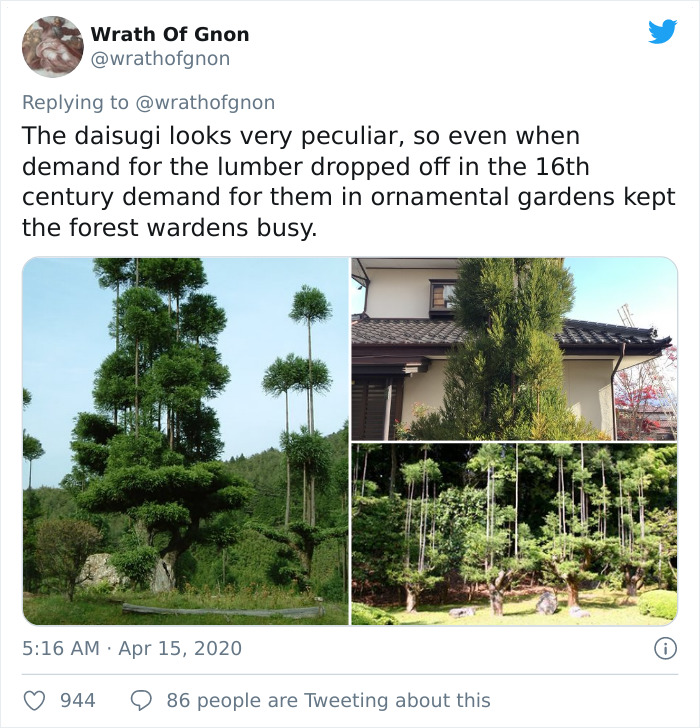
Today, daisugi is most often seen in temple gardens and private gardens around Kyoto rather than in commercial lumber production, prized as much for its sculptural appearance as for its timber.




Frequently Asked Questions
Is daisugi still used to produce commercial lumber today? Rarely — the technique has largely given way to faster industrial forestry methods, and surviving daisugi trees are now mostly maintained in gardens and temple grounds for their appearance rather than for large-scale timber production.
Does daisugi work on trees other than Japanese cedar? The technique was specifically developed for sugi (Japanese cedar), though it’s related to pollarding, a pruning approach used on various tree species around the world for repeated wood harvesting.
How is daisugi different from bonsai? Both involve careful, repeated pruning, but bonsai is typically about keeping a tree permanently miniature for ornamental display, while daisugi is a functional forestry method designed to repeatedly produce full-sized, harvestable timber shoots from one living tree.
Sources: Wikipedia, Colossal, and Open Culture, cited above — replacing the original single-source reliance on a viral Twitter thread.
Leave a Reply