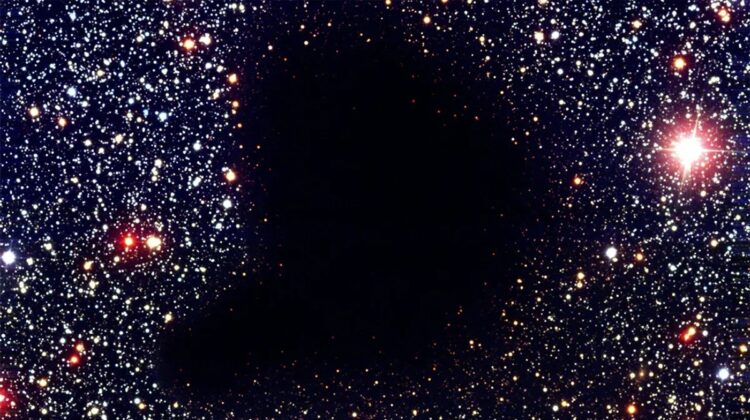
In the vast cosmos, stars come and go, living out their lives and eventually fading away. However, some stars have left astronomers puzzled by their sudden disappearance. While stars typically have dramatic ends, like going supernova or collapsing into black holes, these vanishing acts seem to defy conventional celestial expectations. The mystery of disappearing stars has intrigued scientists for decades, prompting various hypotheses, from failed supernovae to even the idea of advanced civilizations harnessing star power through Dyson Spheres.
One notable case of vanishing stars dates back to July 1952 when three stars vanished from the night sky within an hour, leaving astronomers perplexed. But these aren’t isolated incidents. In 2019, the Vanishing and Appearing Sources during a Century of Observations (VASCO) project aimed to investigate how many stars had disappeared from view over the last 70 years, and they identified around 100 stars that had gone missing without a clear explanation.
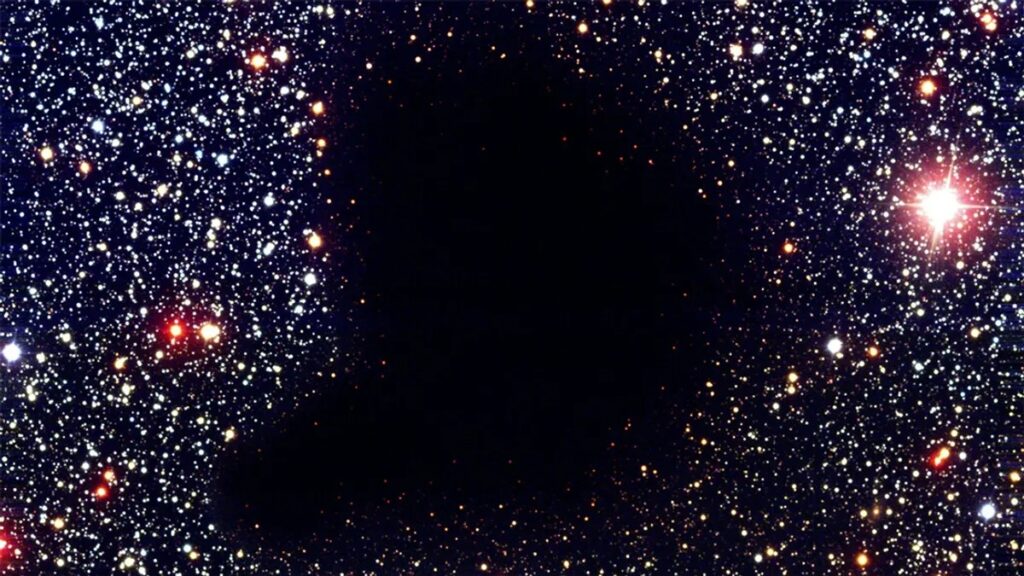
Image credit: ESO.
The VASCO team utilized images from the US Naval Observatory dating back to 1949, comparing them with data from the Pan-STARRS sky survey conducted between 2010 and 2014. Initially, their software identified around 150,000 potential sources of light that had disappeared over the years. After careful examination, they narrowed it down to 24,000 candidates and further refined the list by manually eliminating camera malfunctions and other errors. Ultimately, they were left with about 100 intriguing candidates of real sources of light that had vanished.
In the natural life cycle of stars, they typically dim, explode in a supernova, or evolve in other ways that leave an afterglow. Stars do not typically disappear entirely. One plausible explanation for the vanishing acts is that these stars failed to go supernova and instead collapsed into black holes. However, this occurrence is exceedingly rare, with an estimated rate of less than 1 in 90 million, which makes it an unlikely explanation for so many missing stars. A subsequent study by VASCO even suggested a failure rate as low as 1 in 600 million.
Other potential explanations include gravitational lensing, where massive celestial objects warp space-time, causing objects to appear magnified, or brief bursts of light, such as gamma-ray bursts, getting captured in older surveys. Additionally, nearby moving objects like asteroids could also contribute to these disappearances.
While these missing stars pique the interest of astrophysicists looking to understand the mechanisms behind their vanishing, there’s also a more speculative motivation: the hunt for Dyson Spheres. These hypothetical megastructures, constructed by advanced civilizations, could envelop a star and harness its energy with an array of solar panels. The search for transients like disappearing stars might, in theory, lead to the discovery of such advanced societies.
A different team suggested in a 2019 paper in The Astronomical Journal that if a particular region of the sky generates a surprisingly large number of vanishing candidates compared to the background, it could warrant additional attention as a potential “hot spot.” However, subsequent research has not provided compelling candidates for Dyson Spheres, leaving the scientific community with numerous missing stars and an ongoing mystery.
Leave a Reply