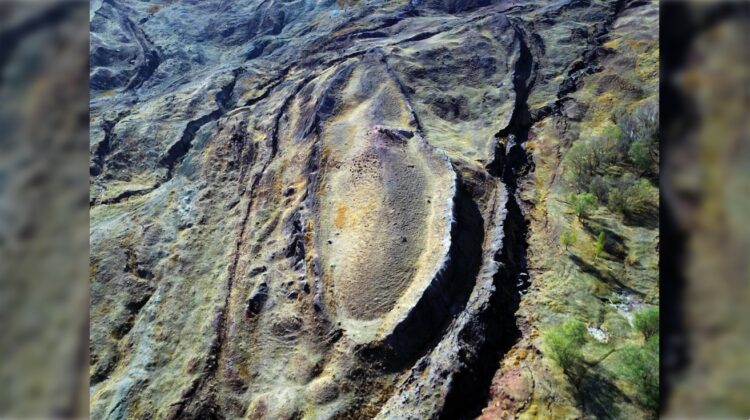
Drill crews pulled soil from as deep as 60 feet into Turkey’s Durupınar Formation this year, and what they didn’t find may matter as much as what they did.
A Formation That’s Been Argued Over for Decades
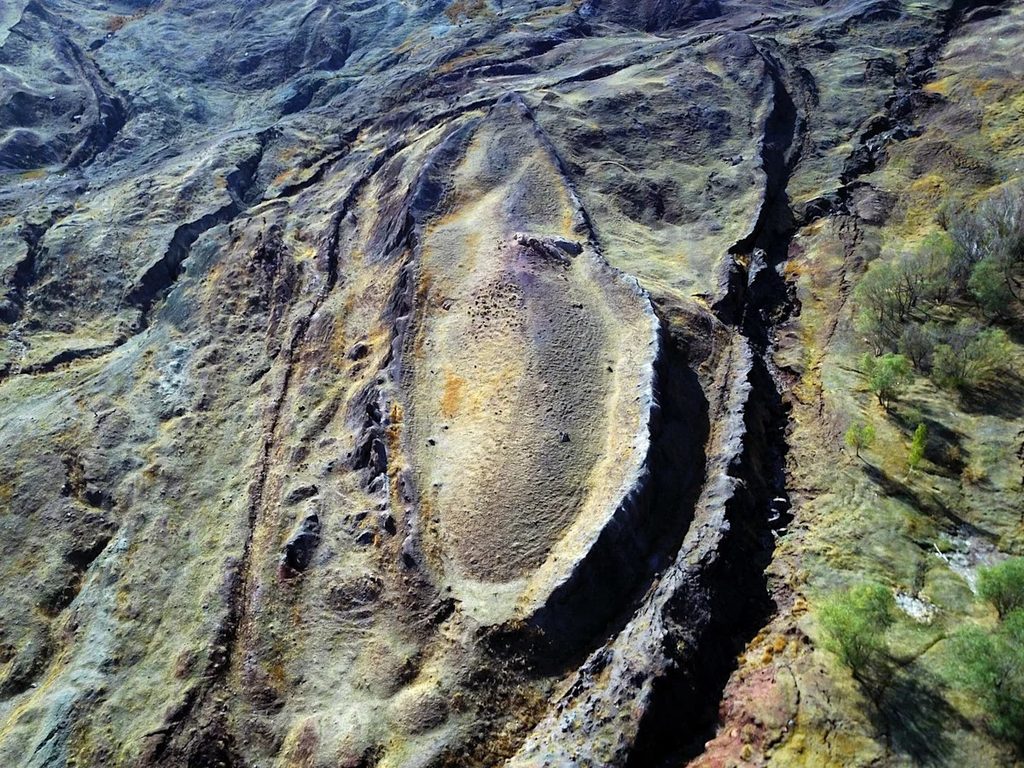
The Durupınar Formation, a boat-shaped feature near Turkey’s Mount Ararat, has drawn speculation about a connection to Noah’s Ark since it was first identified in aerial photographs in 1959. This year, a team coordinated by Prof. Cenker Atila of Sivas Cumhuriyet University, working with Andrew Jones of the Noah’s Ark Research Project and radar specialist Dr. Khosrow Bakhtar, carried out what organizers describe as the most extensive study of the site to date: roughly 20 researchers from five countries, hundreds of soil samples from inside and outside the formation, some pulled from as deep as 60 feet.
What the Drilling Found — and Didn’t
“When we drilled into the formation this year for the first time, we did not encounter any solid block of rock, of limestone [or] of any type of rock,” Jones told Fox News. “We were hitting mainly soil. We’re still studying our results, but we believe that this should give [skeptics] pause when they say this is a rock formation.”
Preliminary analysis found soil samples from inside the formation carried roughly 40% higher carbon levels than samples from outside it, a result the team says is consistent with, though not proof of, a high concentration of decayed wood. The team also recovered pottery fragments that could predate the traditional Ark timeline — notably, none of it was found inside the formation itself, only nearby. Jones has suggested the pottery could tie to ancient settlements near the site: “You can connect the dots,” he said. “If this is Noah’s Ark, we have people living right beside it early on.”
Nothing from this year’s fieldwork has been independently verified yet. Laboratory analysis of the samples is expected to continue through the winter.
Why a 1996 Study Still Matters Here
The site has been investigated before, and the most-cited skeptical conclusion has a telling origin. In 1996, geologist Lorence Collins and researcher David Fasold published a study in the Journal of Geoscience Education concluding the formation was a natural geological structure: specifically, a doubly plunging syncline, a downward fold in sedimentary rock shaped by erosion over time. Fasold wasn’t a neutral outsider — he had previously investigated the site believing it was the Ark, before reversing his position after years of fieldwork. Their paper reported no fossilized timber, no elemental carbon, and no structural remains consistent with a wooden vessel, and identified material some had described as ancient metal rivets as ordinary mineral concentrations.
That conclusion remains the central scientific counterweight to this year’s claims, and it’s one this year’s research team will eventually have to directly address.
An Honest Accounting of Where Things Stand
Jones, for his part, doesn’t claim the matter is settled. “What excites me most is that questions debated for decades can now be investigated using physical samples from documented locations and depths,” he told Newsweek. “We have taken a substantial step forward in our ability to test the site, not completed the investigation.”
He’s also candid about the skepticism his work draws, including from people close to him. “I can understand,” he said, “because I have friends who are atheists or agnostic, and they think that I’m looking for Santa’s house or something.”
Frequently Asked Questions
Has this year’s drilling proven anything? No. Researchers describe the carbon levels and absence of solid rock as intriguing but preliminary; lab results aren’t finalized, and no finding has been independently confirmed as evidence of a man-made structure.
What did earlier research conclude? A 1996 peer-reviewed study, co-authored by a researcher who had previously believed the site was the Ark, concluded it was a natural rock formation with no evidence of a wooden vessel.
Who’s running this year’s investigation? A team led by archaeologist Cenker Atila of Sivas Cumhuriyet University, with Andrew Jones of the Noah’s Ark Research Project, a software developer and independent researcher, as a prominent public voice.
Sources: Fox News; Newsweek; SSBCrack News; Anatolian Archaeology; Living Passages; Yahoo News; Collins & Fasold, “Bogus ‘Noah’s Ark’ from Turkey Exposed as a Common Geologic Structure,” Journal of Geoscience Education 44 (1996).
Leave a Reply