• Skip to main content
  • Skip to primary sidebar
  • Skip to footer
  • Home
  • About Us
  • Copyright Report
  • Submit Content
  • Terms
  • Privacy Policy
  • Legal Disclaimer

Hasan Jasim

Hasan Jasim is a place where you may get entertainment, viral videos, trending material, and breaking news. For a social generation, we are the largest community on the planet.

Meet the Incredible Fried Egg Jellyfish, Sunny Side Up

by Hasan Jasim Editorial Team Leave a Comment

ShareTweet

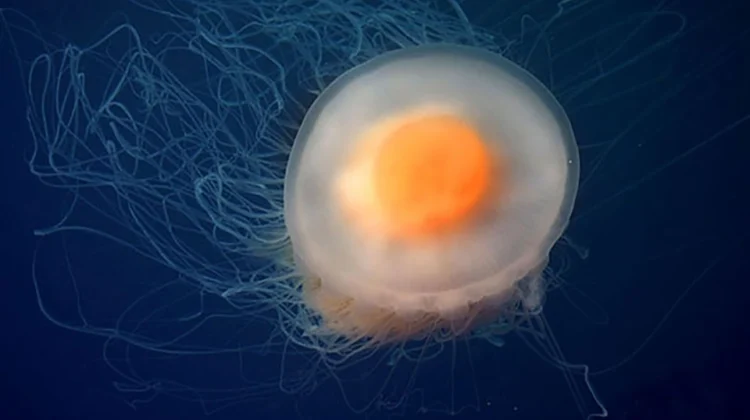
While we’ve seen jellies take on extreme forms, such as the huge phantom jelly, these jellyfish have evolved to resemble… cooked eggs.

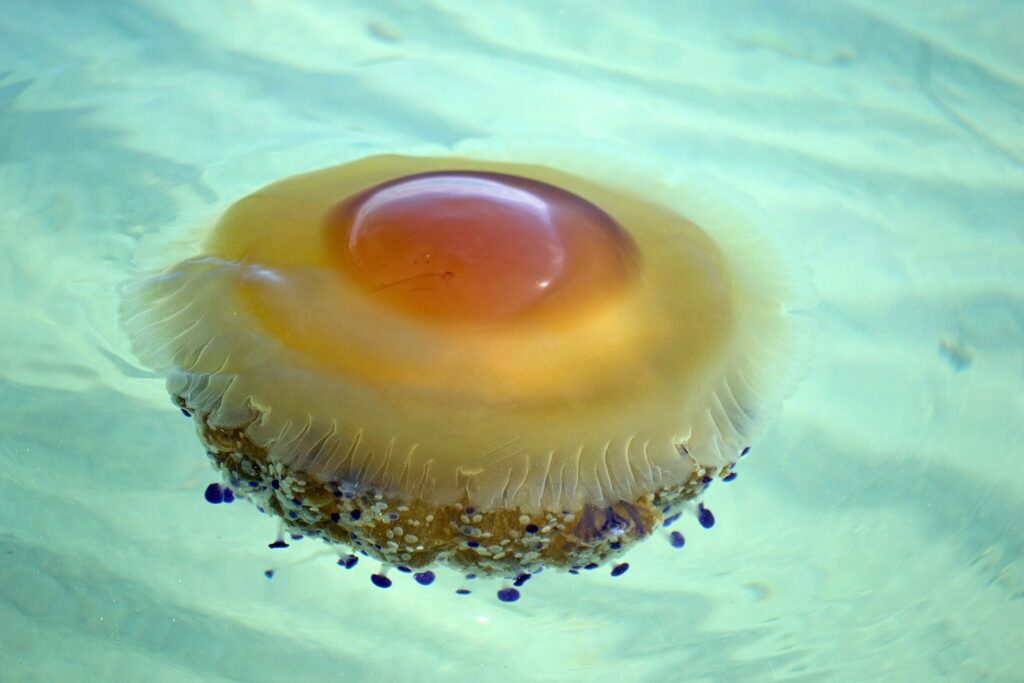
Fried egg jellyfish, also known as egg-yolk jellies, are jellyfish that look like fried eggs. However, don’t be fooled by the similarities; chewing on this Scyphozoa would be unpleasant.
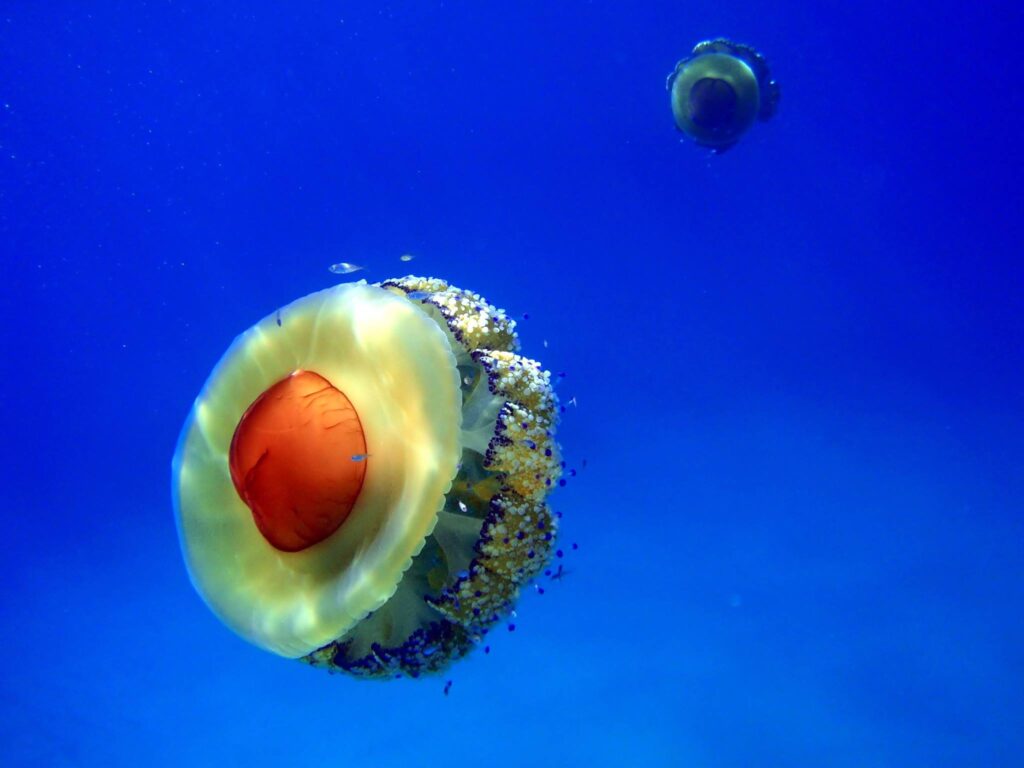
The fried egg jellyfish has a smooth and transparent bell with a characteristic yolk-yellow bell right in the middle.

Cotylorhiza tuberculata is one of the recognized fried egg jellyfish species. This is a smaller jellyfish that lives in the warmer seas of the Mediterranean Sea, Aegean Sea, and Adriatic Sea. They can grow to be as large as 16 inches (40 centimeters) in diameter, however most members of this species are no bigger than 6,7 inches (17 centimeters). Even though the Cotylorhiza tuberculata spends the most of its brief existence drifting in the water, it is capable of vigorous swimming.
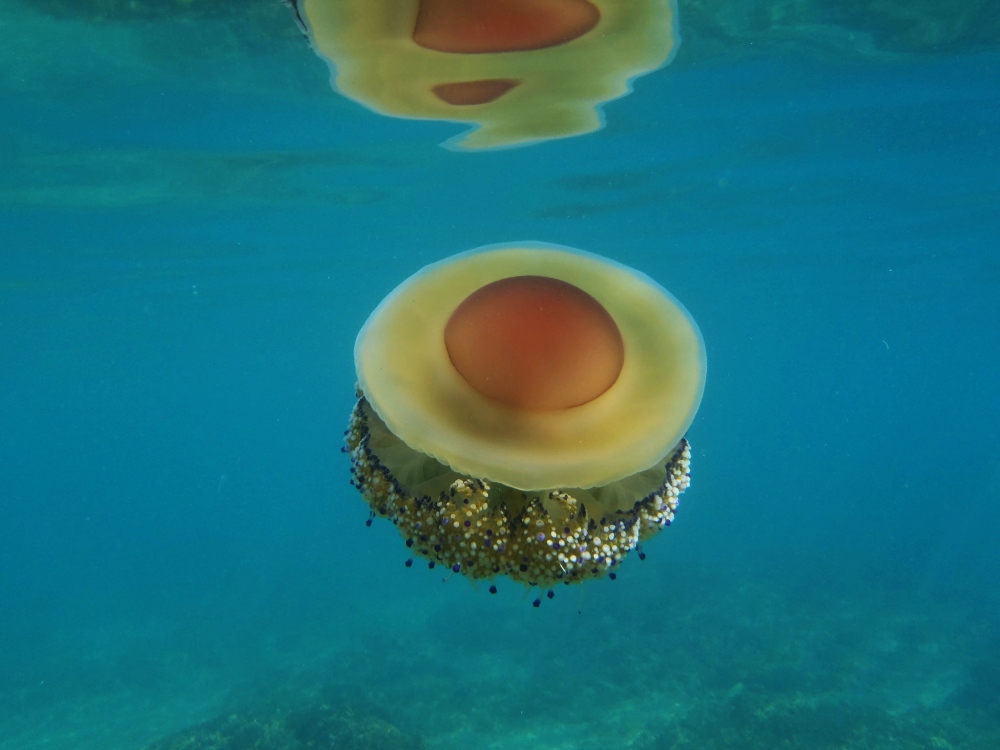
The Cotylorhiza tuberculata is a smaller Scyphozoa that is known as fried egg jellyfish. Image credit: Dimitris Siskopoulos

It has multiple small appendages that connect to form a ball-like structure. These clustered appendages have deep purple mouth-arm apertures that the jellyfish utilizes to collect and feed on food – its diet primarily consists of zooplankton and other jellyfish. It possesses a sting, but it has little or very little effect on people. In fact, its sting is so light that little fish frequently seek refuge within the jellyfish’s colorful tentacles. Crabs have also been observed traveling on top of or within the Cotylorhiza tuberculata’s bell.

Most intriguingly, the species has been the focus of research due to its specific cytotoxicity, which may be useful in the treatment of breast cancer.
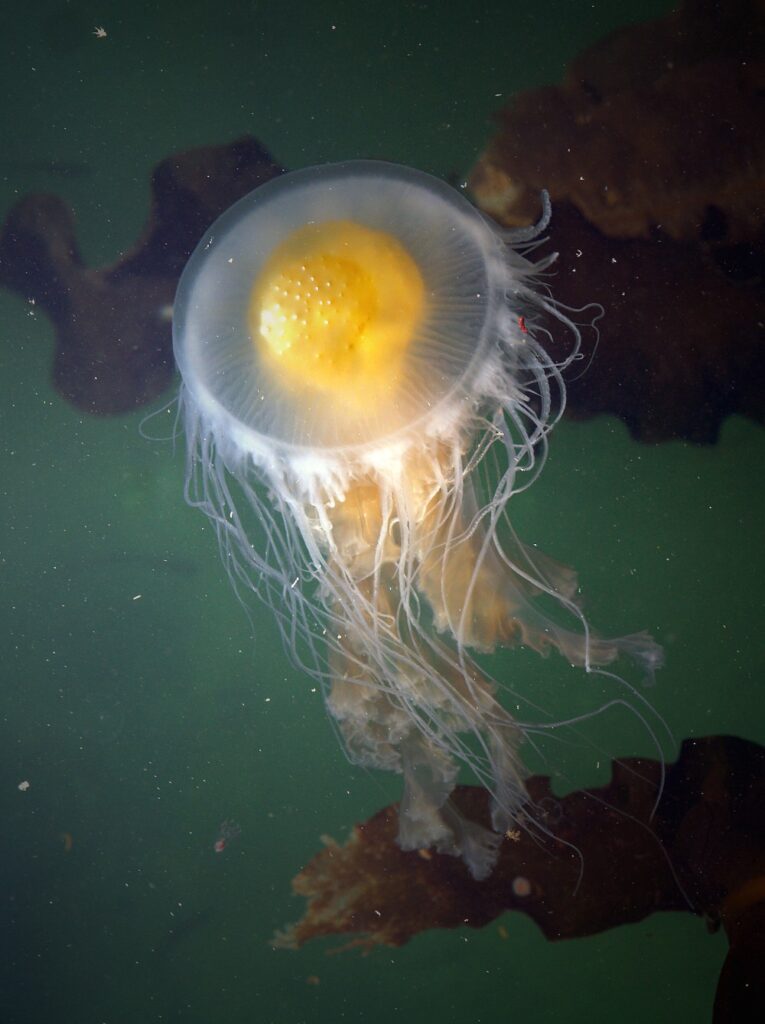
The large Phacellophora camtschatica also has a poached egg on it bell. Image credit: by and by

The much bigger Phacellophora camtschatica is another known member of the egg-yolk jellies. This jellyfish’s bell may grow to be 2 feet (60 centimeters) big, and it has dozens of tentacles that can reach an incredible 20 feet (6 meters). It is also distinguished by the golden coloring in the core of its bell, which resembles a poached egg. This jellyfish, unlike its distant relative, may be found in the shallow waters of the Atlantic and Pacific Oceans. It feeds by collecting medusae and plankton with its lengthy tentacles and bringing them into its mouth.

Another image to give you a sense of its true size:
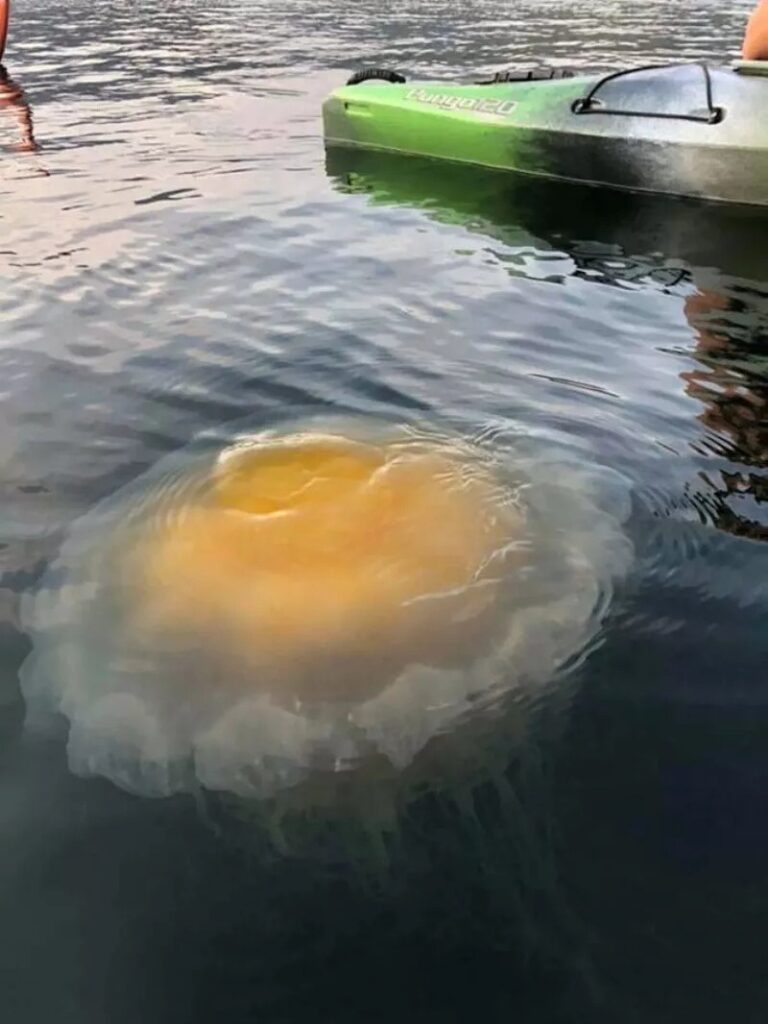
This fried egg jellyfish was spotted off B.C.’s Sunshine Coast. Photo: Donna Harrison

The IUCN has not assessed their conservation status, and it is unknown how many fried egg jellyfish exist in the waters.

However, we do know that many creatures, including sea turtles, fish, and seabirds, rely on fried egg jellies as a source of food. While these medusae seem just like poached eggs to us, some marine species can mistake plastic bags for jellyfish and become sick or die if they consume them.
As a result, we should strive to keep hazardous plastic and other rubbish out of the water so that these great ecosystems, and the lovely jellyfish that lives inside them, can be maintained for future generations.

Sources: 1, 2, 3

Filed Under: Trends Worldwide Tagged With: fried, incredible, jellyfish, meet, side, sunny, trends, worldwide

Reader Interactions

Leave a Reply Cancel reply

Your email address will not be published. Required fields are marked *

Primary Sidebar

More to See

These Moths Drink the Tears of Sleeping Birds: A Rare and Bizarre Behavior in the Amazon Jungle

By Hasan Jasim Editorial Team

The expressive design of the 1946 edition of Gibbon’s The Decline and Fall of the Roman Empire

By Hasan Jasim Editorial Team

People Are Leaving Sticks At This 100-Year-Old Dog Grave

By Hasan Jasim Editorial Team

Mexican Authorities Discovered a Tiger Cub After an Attempt by Animal Traffickers to Mail it

By Hasan Jasim Editorial Team

The Deleted Jaws Scene: The Shark Attack Audiences Never Saw

By Hasan Jasim Editorial Team

Enormous Structure Found Hiding Under The Surface Of The Moon

By Hasan Jasim Editorial Team

In the middle of a flight, flight attendants defy regulations to save a dog’s life

By Hasan Jasim Editorial Team

Footer

ABOUT HASANJASIM.ONLINE

Hasanjasim.online is a digital platform dedicated to publishing well-researched articles about the animal kingdom, nature, and the environment. Our editorial team works to source stories from credible outlets, scientific research, and verified reports, aiming to inform as much as we entertain. From wildlife conservation and animal behavior to natural wonders and environmental science, we cover the topics that help readers better understand and appreciate the natural world. Whether you're a lifelong nature lover or simply curious about the planet we share, Hasanjasim.online aims to be a trustworthy destination for stories worth reading — and worth citing.

Recent

  • Free Diver Spots A Jellyfish “The Length Of A Bus” Off Wales — And It’s A Sign Of Things To Come
  • A New Survey Finds Nearly 1 in 3 People Cut Mold Off Produce and Eat the Rest — But Is That Actually Safe?
  • A Rescuer Was Called About a Dead Possum Stuck in a Fence — It Wasn’t Dead
  • Human Leaves Deaf Shelter Puppy With a Toy in Her Kennel, Only To Find Her Cuddling It Later
  • Suspected Poacher Found Dead After Elephant Encounter Inside South Africa’s Kruger National Park
  • A Black Bear Was Euthanized in Grand Teton After Visitors Kept Feeding It — Park Officials Say the Blame Is Human
  • Scientists think humans could live on the moon. One obstacle stands in the way

Search