• Skip to main content
  • Skip to primary sidebar
  • Skip to footer
  • Home
  • About Us
  • Copyright Report
  • Submit Content
  • Terms
  • Privacy Policy
  • Legal Disclaimer

Hasan Jasim

Hasan Jasim is a place where you may get entertainment, viral videos, trending material, and breaking news. For a social generation, we are the largest community on the planet.

Mysterious “Alien Egg Pods” Found in Oklahoma Lake: Experts Explain the Bizarre Discovery

by Hasan Jasim Editorial Team Leave a Comment

ShareTweet

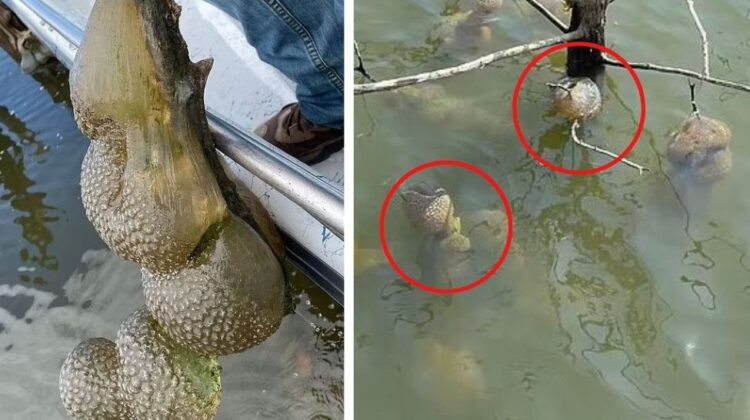
Hasan Jasim – Have you ever encountered something so bizarre that it seems straight out of a science fiction movie? Well, that’s exactly what happened to residents of Oklahoma when they stumbled upon a peculiar sight in a local lake. A series of mysterious, “alien-like” sacks were discovered, sparking widespread curiosity and speculation. But what are these strange objects, and where do they come from?
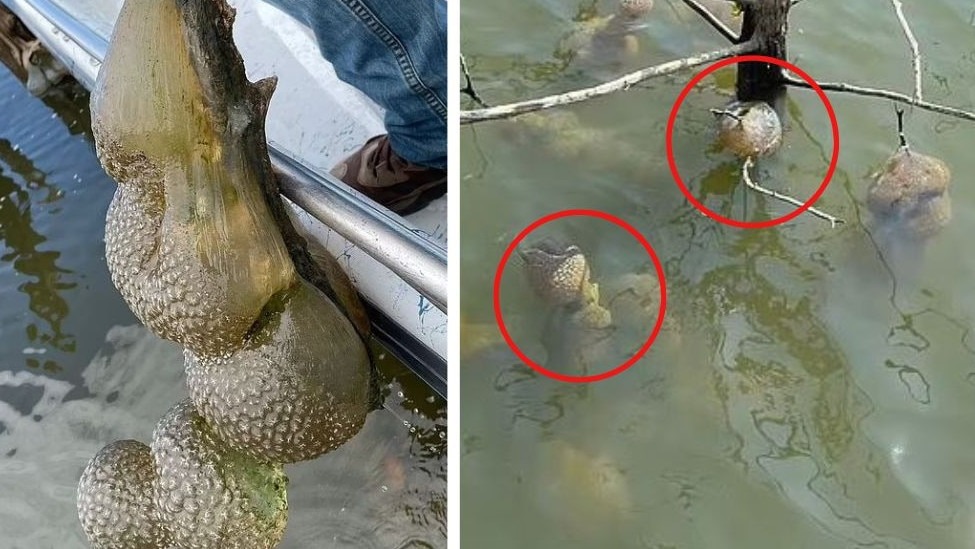
Residents in Oklahoma have been left baffled by these creepy ‘alien-like’ sacks submerged in a popular lake.

The Discovery

The Oklahoma Department of Wildlife Conservation was alerted to the unusual discovery in McGee Creek Reservoir. Upon investigation, officials found large sacks filled with thousands of tiny, jelly-like balls hanging from trees into the murky water below. The appearance of these sacks was undeniably otherworldly, resembling something one might expect to find on a distant planet.
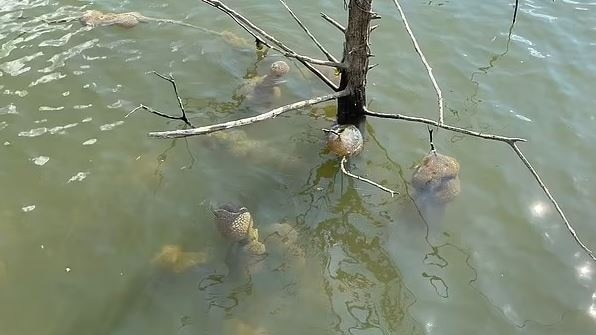
The tiny creatures are actually a sign of good water quality. Picture: Oklahoma Department of Wildlife Conservation.

Expert Explanation

While the initial appearance of these objects may have suggested an extraterrestrial origin, experts were quick to dispel such notions. The Oklahoma Department of Wildlife Conservation explained that the “alien-like” sacks were actually bryozoans, a type of aquatic invertebrate. These microorganisms are native to the area and are entirely harmless to humans and wildlife.
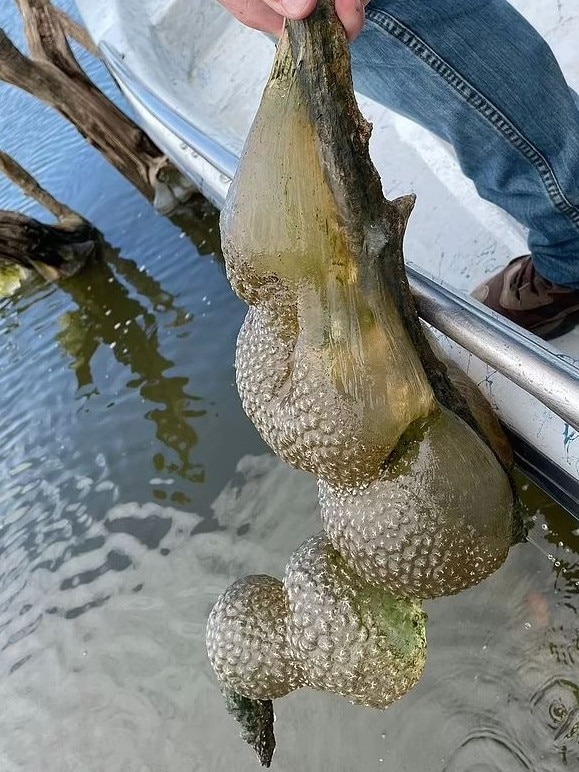
The jelly exterior is a soft shell made of a substance called chitin. Picture: Oklahoma Department of Wildlife Conservation.

What are Bryozoans?

Bryozoans, often referred to as “moss animals,” are colonial organisms that form intricate structures. The individual jelly balls, known as zooids, are capable of cloning themselves, eventually creating a large mass. These masses filter tiny particles from the water, providing food for the colony. The jelly-like exterior is a protective shell made of chitin, a substance that can harden when dried.
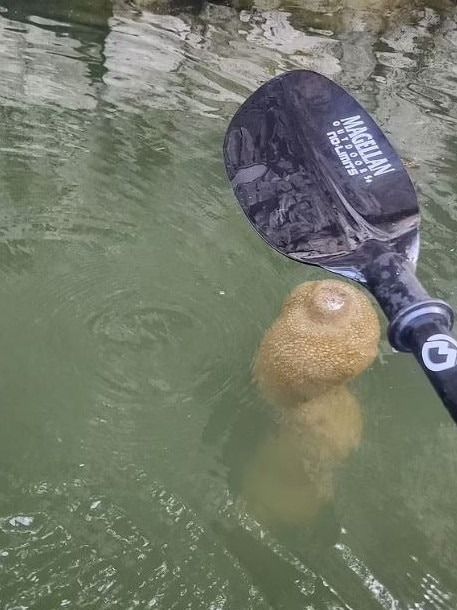
The zooids will multiply as northern hemisphere summer approaches. Picture: Oklahoma Department of Wildlife Conservation.

Ecological Importance

Bryozoans play a crucial role in the ecosystem. By filtering water, they help maintain its quality and clarity. They also serve as a food source for various aquatic organisms, including mussels, snails, and small fish. Despite their appearance, these creatures are essential to the health of the lake’s ecosystem.
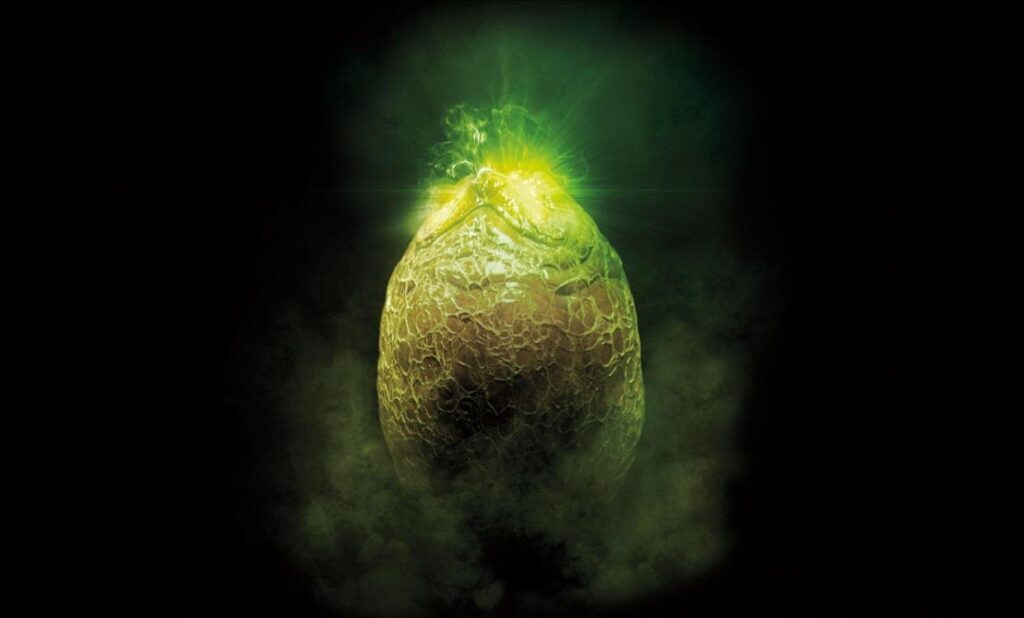
They are very similar to the Alien eggs in the movie Alien (pictured) Credit: Alamy

Public Reaction

Despite the expert explanation, the discovery of these “alien egg pods” sparked a wave of excitement and speculation among the public. Many people were captivated by the bizarre nature of the phenomenon, sharing their thoughts and theories on social media. Some even joked about the possibility of extraterrestrial involvement.

While the initial discovery of the “alien egg pods” may have seemed mysterious and otherworldly, the experts were able to provide a scientific explanation. Bryozoans, though unusual in appearance, are a natural part of the lake’s ecosystem. This fascinating discovery serves as a reminder of the incredible diversity and complexity of the natural world.

Filed Under: Trends Worldwide Tagged With: alien, alien egg pods, bizarre, bizarre discovery, bryozoans, discovery, experts, explain, extraterrestrial life, found,, lake, mysterious, nature's wonders, oklahoma, Oklahoma lake, pods, scientific curiosity, strange phenomenon, trends, unusual creatures, worldwide

Reader Interactions

Leave a Reply Cancel reply

Your email address will not be published. Required fields are marked *

Primary Sidebar

More to See

Young Mockingbird with Fractured Toes Gets Stylish ‘Boots’ at the Hospital

By Hasan Jasim Editorial Team

Disgusting Picture of Fly’s Head Infected with Parasitic Fungus will Fuel Your Nightmares

By Hasan Jasim Editorial Team

No California Super Bloom This Year, But Wildflowers Abound

By Hasan Jasim Editorial Team

Ants’ Seed Storage Secret: A Mystery Solved?

By Hasan Jasim Editorial Team

Alabama Man Convicted of Aggravated Animal Cruelty in Death of Beloved Dog Jack

By Hasan Jasim Editorial Team

Giant dog George given “Dog’s Best Day” after helping girl walk again

By Hasan Jasim Editorial Team

A Waterspout in Florida: Nature’s Spectacular Spiral

By Hasan Jasim Editorial Team

Footer

ABOUT HASANJASIM.ONLINE

Hasanjasim.online is a digital platform dedicated to publishing well-researched articles about the animal kingdom, nature, and the environment. Our editorial team works to source stories from credible outlets, scientific research, and verified reports, aiming to inform as much as we entertain. From wildlife conservation and animal behavior to natural wonders and environmental science, we cover the topics that help readers better understand and appreciate the natural world. Whether you're a lifelong nature lover or simply curious about the planet we share, Hasanjasim.online aims to be a trustworthy destination for stories worth reading — and worth citing.

Recent

  • More Than 40 Parakeets Killed in London Park as Catapult Attacks on Animals Raise Concern
  • Poacher Dies After Elephant Herd Charges During Attempt to Hunt White Rhino
  • Images Showed a Starving, 70-Year-Old Elephant Forced to Walk Miles for a Festival — Here’s What Happened Next
  • Dog Surrendered To Shelter With His Bed And All His Toys
  • Euphorbia Hirta (Asthma-Plant): Traditional Uses, Preparation Methods, and Safety Guide
  • What Gelatin Actually Is — and How It Ends Up in Gummy Bears
  • Two Minnesota Solar Farms Turned the Ground Beneath Their Panels Into Habitat — and Native Bees Increased 20-Fold

Search