• Skip to main content
  • Skip to primary sidebar
  • Skip to footer
  • Home
  • About Us
  • Copyright Report
  • Submit Content
  • Terms
  • Privacy Policy
  • Legal Disclaimer

Hasan Jasim

Hasan Jasim is a place where you may get entertainment, viral videos, trending material, and breaking news. For a social generation, we are the largest community on the planet.

Why the Hoba Meteorite Left No Impact Crater Despite Being Earth’s Biggest Space Rock and Chunk of Iron

by Hasan Jasim Editorial Team Leave a Comment

ShareTweet

The locals call it “Ghantsiis,” the “fallen star,” and believe it possesses supernatural powers. Even if that’s not the case, the Hoba meteorite does have features that make scientists scratch their heads.
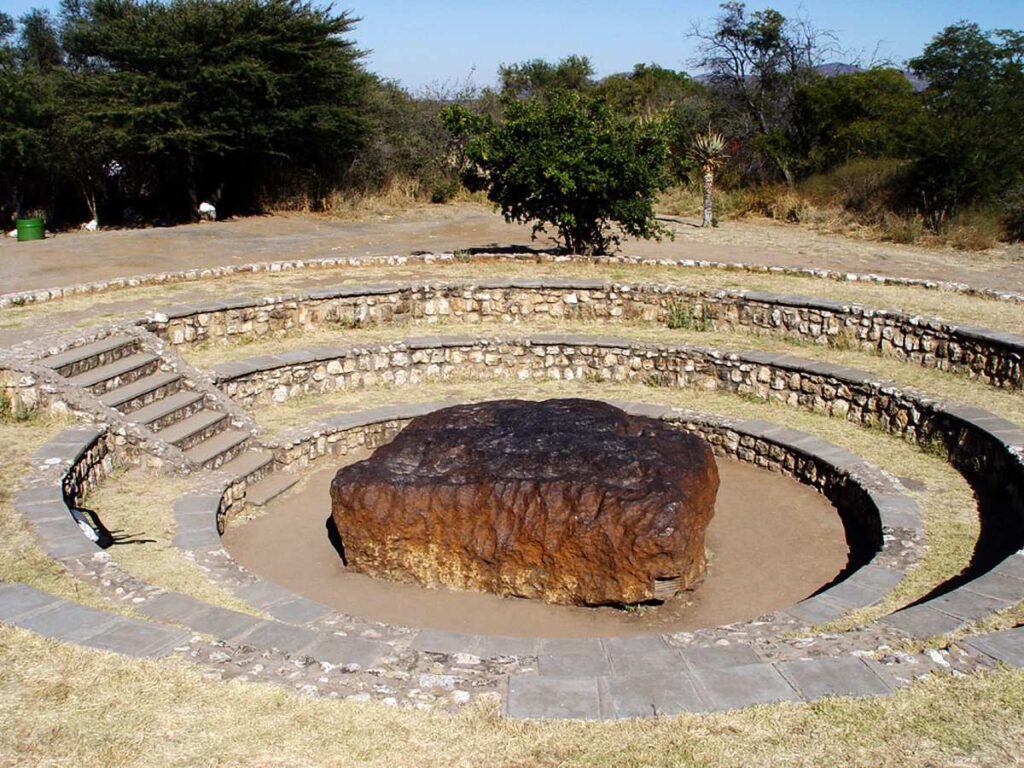
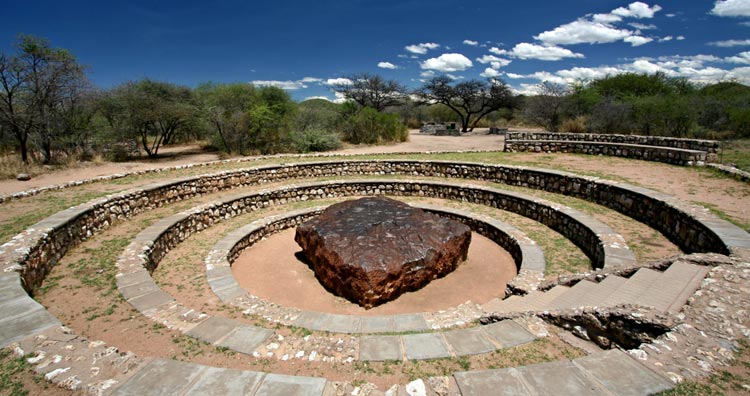
Hoba, the largest meteorite and piece of iron on Earth. Photo: Damien du Toit

Imagine a giant, anvil-shaped rock falling from space. Most of us would expect a colossal crater, a scene straight out of a sci-fi movie. But what if this space rock landed with barely a whisper? That’s the strange story of the Hoba meteorite, the largest naturally occurring piece of iron ever found on Earth.

Discovered by farmers in 1920, the Hoba meteorite rests in Namibia, Africa, and weighs an estimated 60 tonnes, which makes it also the largest known intact (single-piece) meteorite on Earth. Unlike most meteorites that burn up while entering Earth’s atmosphere, the Hoba meteorite’s unusual composition, rich in iron and nickel, allowed it to survive the fiery descent – which also might have had to do with its speed, as we’ll see later.

But the real mystery lies beneath the Hoba meteorite. Despite its immense size, there’s no crater in sight. Space rocks of this size tend to swiftly penetrate the atmosphere and collide with Earth with ample momentum to create a significant crater. But Hoba didn’t leave one, or, to be precise, probably only a small one about 66 feet (20 meters) in diameter and about 16 feet (5 meters) deep, which quickly eroded away.

A woman sitting on the meteorite in 1967. Photo: Paul Venter

While the exact cause of its soft landing remains debated, geologists believe the Hoba meteorite entered the atmosphere at a shallow angle and at a much slower speed compared to most meteorites (less than a thousand feet or several hundred meters per second). This low velocity, combined with its tabular shape (it measures about nine feet – 2.7 meters – long, nine feet wide and about three feet – 1 meter – thick) might explain the lack of a notable impact crater.

Hoba, likely originating from the asteroid belt between Mars and Jupiter, formed from material in the proto-planetary disk around the young Sun over 4.5 billion years ago. Composed mainly of iron (about 84%) and nickel (16%), it was likely dislodged from the asteroid belt by an event like a collision, landing on Earth around 80,000 years ago. Its atypically shallow descent, combined with its preservation, offers scientists a unique opportunity to study the early solar system’s conditions.
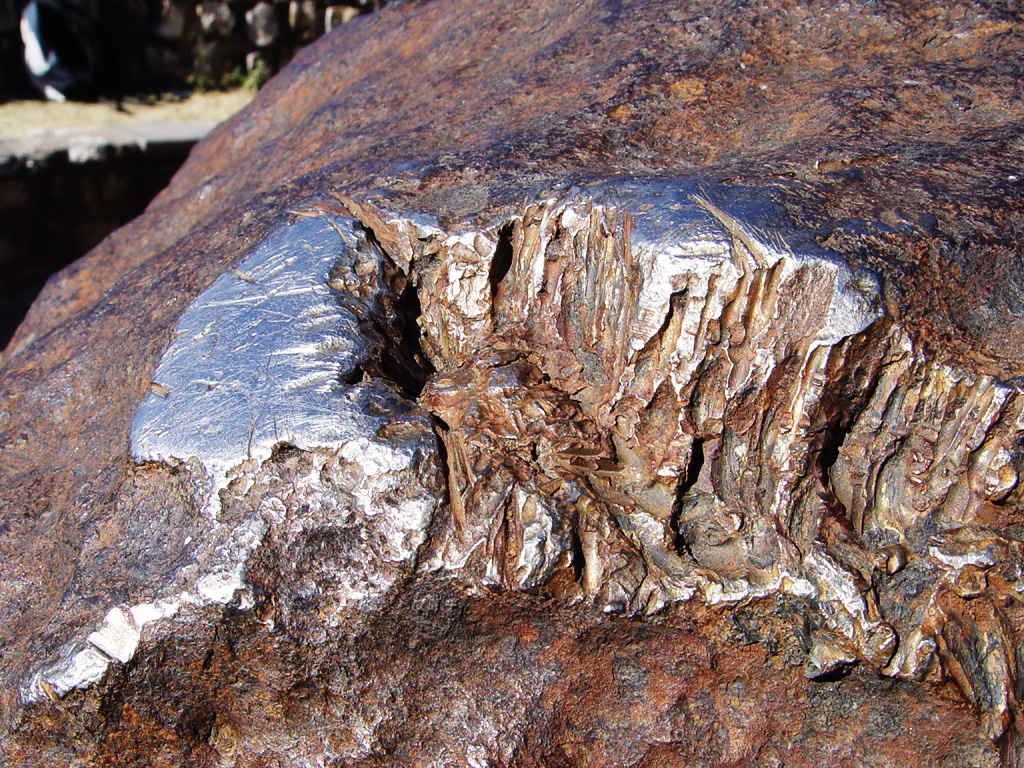
The meteorite is composed mainly of iron (about 84%) and nickel (16%). Photo: Damien du Toit

Located on private farmland 15 miles (24 kilometers) east of Grootfontein, Namibia, the Hoba Meteorite is accessible by car via gravel roads. If you’re familiar with the area and don’t mind a more than 4-hour drive, you can rent a car and self-drive from Windhoek to Grootfontein. Alternatively, regional bus services link Windhoek to Grootfontein and the Hoba Meteorite site if you prefer not to drive.

The landowner charges a small entrance fee, and basic amenities like restrooms and a souvenir kiosk are available. While there’s no on-site accommodation, there is a Meteorite Rest Camp situated just 2 miles (3 km) away, and guesthouses and lodges can be found in Grootfontein.

Filed Under: Trends Worldwide Tagged With: being, biggest, chunk, crater, despite, earth’s, hoba, impact, iron, left, meteorite, rock, Space, trends, worldwide

Reader Interactions

Leave a Reply Cancel reply

Your email address will not be published. Required fields are marked *

Primary Sidebar

More to See

This Breathtaking Canadian Waterfall Creates a Massive Ice Cone During Winter Due to its Powerful Spray Ejection

By Hasan Jasim Editorial Team

Eating tomatoes: an ally for your health and your kitchen

By Hasan Jasim Editorial Team

Sibling Rivalry: These Bear Cubs Are Having the Cutest Argument Ever

By Hasan Jasim Editorial Team

A Shelter Dog Who Refused To Look At Anyone Undergoes The Most Incredible Transformation

By Hasan Jasim Editorial Team

When a Dog is Left in a Walmart Parking Lot, He Won’t Stop Hugging His Saviors

By Hasan Jasim Editorial Team

The Otherworldly Río Tinto: A River of Fire

By Hasan Jasim Editorial Team

Update after tourist who hurled rock at beloved seal in Hawaii was beaten up

By Hasan Jasim Editorial Team

Footer

ABOUT HASANJASIM.ONLINE

Hasanjasim.online is a digital platform dedicated to publishing well-researched articles about the animal kingdom, nature, and the environment. Our editorial team works to source stories from credible outlets, scientific research, and verified reports, aiming to inform as much as we entertain. From wildlife conservation and animal behavior to natural wonders and environmental science, we cover the topics that help readers better understand and appreciate the natural world. Whether you're a lifelong nature lover or simply curious about the planet we share, Hasanjasim.online aims to be a trustworthy destination for stories worth reading — and worth citing.

Recent

  • Euphorbia Hirta (“Asthma-Plant”): What Traditional Use and Real Research Actually Show
  • A Mystery Animal Has Been Randomly Attacking People in New Hampshire — Here’s What We Know
  • A Woman Was Filmed Sharing Her Ice Cream With Her Dog — Here’s What Vets Actually Say About It
  • Dolphin Calf Incident in Ceuta Sparks Outrage After Disturbing Beach Footage Emerges
  • Lactuca Serriola Root: Traditional Uses of Prickly Lettuce (Wild Lettuce) Root
  • The Puppy a Firefighter Couldn’t Leave Behind — and the Story Didn’t End There
  • A Mother Dog Dove Into Floodwater Again and Again — Until All 7 of Her Puppies Were Safe

Search