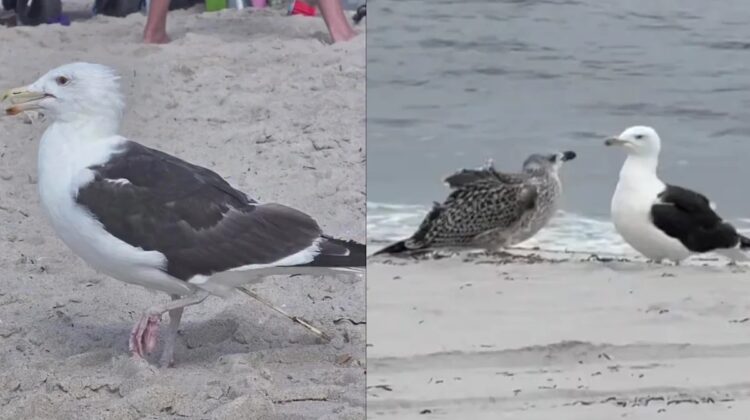
A great black-backed gull spotted on Long Island this past summer was carrying something no bird should have to: a bamboo skewer lodged in her cloaca, the rear opening birds use for both excretion and reproduction. Getting it out safely would take patience, a specialized trap, and more than a week of careful work.
A Difficult Bird To Catch
The gull was first spotted in August at Cedar Beach on Long Island’s southern shore, immediately recognizable by the piece of trash stuck in her body. The problem wasn’t identifying the injury — it was catching her.
“The problem was that this gull was fully flighted, so catching her was going to be extremely difficult,” Janine Bendicksen, Director of Wildlife Rehabilitation at Sweetbriar Nature Center in nearby Smithtown, told Popular Science.
About a week after the initial sighting, the team brought in volunteer wildlife rescuer Nancy Prior to attempt a capture. Prior set up a drop trap at Cedar Beach and spent three days patiently waiting and slowly earning the “seemingly uncatchable gull’s” trust before finally succeeding.
A Careful, Cautious Removal
Once captured, the gull was brought straight to Sweetbriar Nature Center, where staff worked to remove the skewer slowly and carefully, mindful of exactly where it was lodged.
“The skewer was removed gradually to minimize any additional trauma,” Bendicksen explained. “Given the nature and location of the injury, we were extremely concerned about possible internal damage, so we were prepared to stop if there was any sign of resistance or injury.”
Remarkably, the skewer came out cleanly, and the gull had sustained no internal injuries from the ordeal.
An Unexpected Reunion
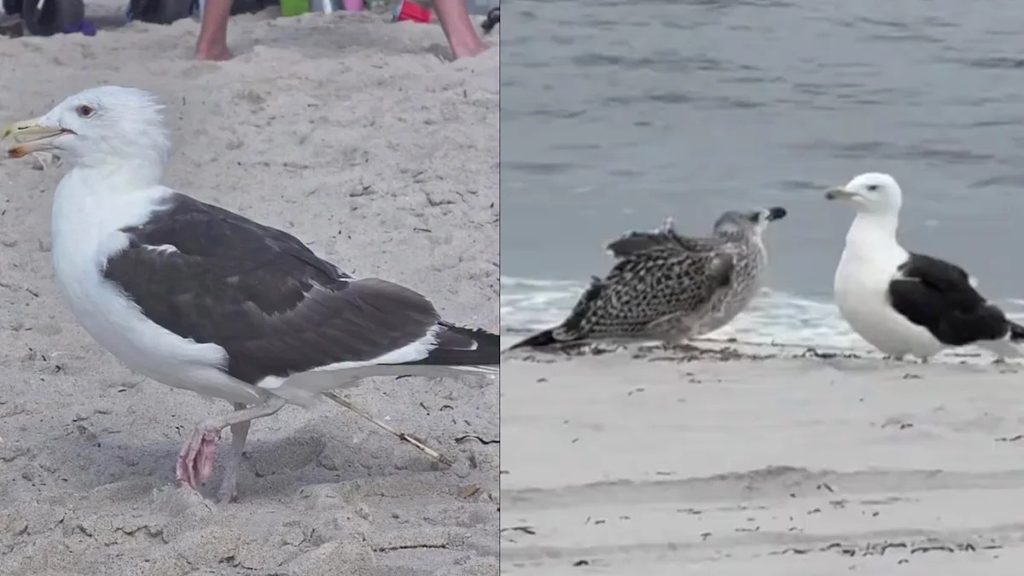
When the team released the rescued gull back into the wild, they got a surprise of their own. Staff had only ever observed her among large mixed flocks of gulls and had no idea she was a mother — until they watched her reunite with her chick on release.
“Watching the two of them find each other and reunite was priceless,” Bendicksen said. “After everything this bird had been through, seeing her return home and immediately reconnect with her baby was an incredibly emotional moment for all of us.”
About The Great Black-Backed Gull
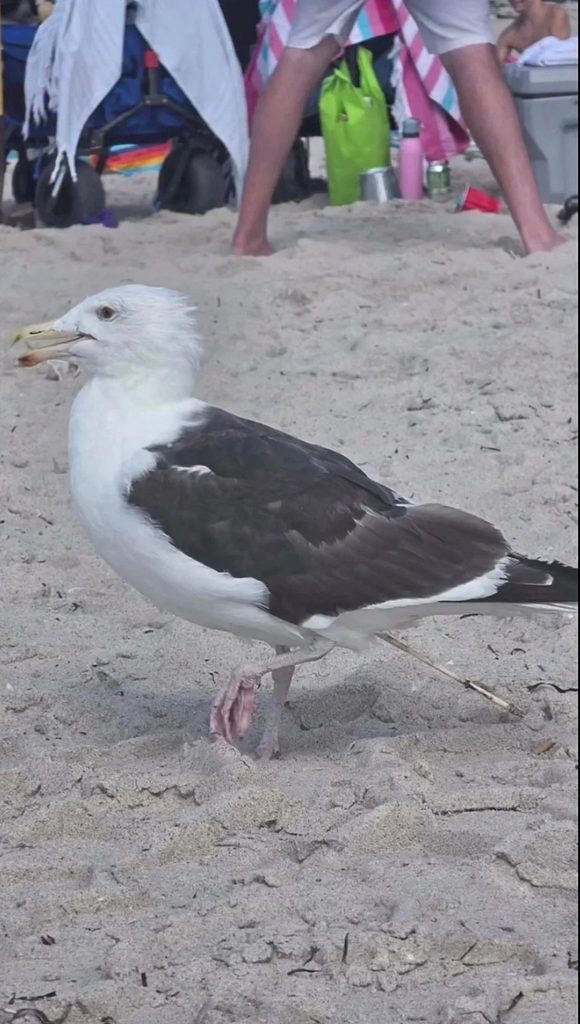
The great black-backed gull is the largest gull species in the world, with a wingspan that can exceed five feet. Adults are easily identified by their dark backs and pink-hued legs, and the species is known for being a powerful, adaptable scavenger and hunter — and, as this gull proved, remarkably tough.
A Reminder About Our Trash
The rescue is another example of how ordinary litter can end up seriously harming wildlife. Reducing single-use items and disposing of trash properly, rescuers say, can go a long way toward preventing injuries like this one in the first place.
Sweetbriar’s team also stressed the importance of reporting injured wildlife promptly, rather than assuming someone else already has. Resources like a state’s department of agriculture website can help people locate a licensed wildlife rehabilitator nearby.
“A simple phone call, a photo, or reaching out to a licensed wildlife rehabilitator can make the difference between life and death,” Bendicksen said.
Rescues like this one, she added, are rarely the work of just one person. “Every successful rescue is often the result of many people working together to give an animal a second chance.”
Frequently Asked Questions
What was stuck in the gull, and how did it get there? A bamboo skewer — a common piece of household or takeout trash — was lodged in the gull’s cloaca. The exact circumstances of how it happened weren’t specified, but it reflects a broader pattern of wildlife being harmed by discarded litter.
Why did it take so long to catch the injured gull? The gull was fully capable of flying, which made a direct capture extremely difficult. Rescuers used a drop trap and spent several days patiently earning the bird’s trust before safely capturing her.
Did the gull survive the injury and rescue? Yes. Despite serious concern about possible internal damage, the skewer was removed successfully and the gull was found to have no internal injuries.
What should someone do if they spot an injured wild bird? Rescuers recommend reporting it as soon as possible rather than assuming someone else already has — a phone call, a photo, or contacting a licensed wildlife rehabilitator can make a critical difference.
How can people help prevent injuries like this one? Reducing the use of single-use items like bamboo skewers and disposing of trash properly are among the simplest ways to help prevent wildlife from being injured by litter.
Sources: Popular Science (interview with Sweetbriar Nature Center), cited above.
Leave a Reply