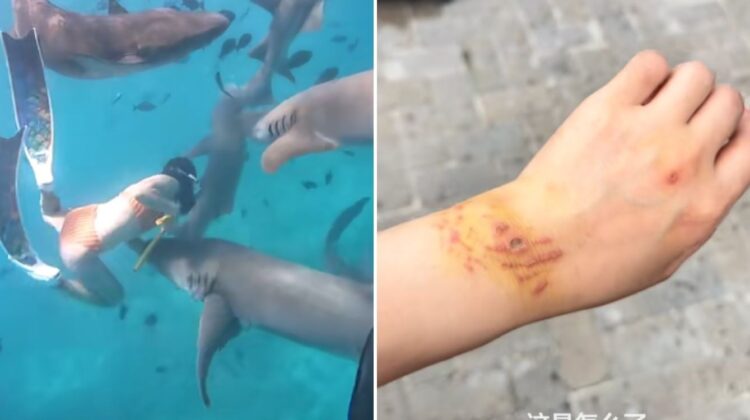
A woman’s diving trip in the Maldives has sparked widespread debate online after she was bitten by a shark while swimming in waters known for their abundant marine life.
According to her account, the incident occurred while she was diving to capture photos and videos for social media. Despite being on her menstrual period, she chose to enter the water, hoping to photograph herself alongside a group of nurse sharks.
As she approached the sharks, one of the animals suddenly bit her on the wrist, leaving her with a painful injury. Although the bite was not life-threatening, the unexpected encounter quickly ended the dive.
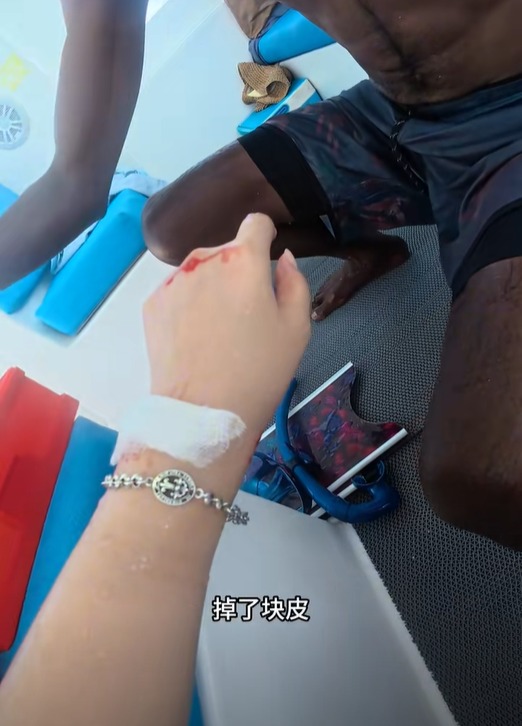
Witnesses reported that the tour guide immediately instructed her to leave the water so her injury could be treated. However, she later admitted that she was more disappointed about missing the opportunity to continue taking photographs than she was concerned about the wound itself.

The injury was bandaged on-site, but according to the woman, it later became infected after the trip. Once she returned to China, doctors examined the wound and advised her to closely monitor the infection to ensure it did not worsen.
The incident quickly spread across social media, with many users criticizing the decision to approach wild sharks so closely for photographs. Others questioned whether entering the water during menstruation increased the risk of attracting sharks.
Marine scientists have long noted that sharks possess an extraordinary sense of smell capable of detecting tiny concentrations of chemicals in the water. However, research has found little evidence that menstruation alone significantly increases the likelihood of a shark attack. Experts generally agree that factors such as splashing, injured fish, bait, murky water, and close interactions with wild sharks play a much greater role in provoking encounters.
Nurse sharks, the species reportedly involved in the incident, are generally considered among the least aggressive shark species. They usually spend much of their time resting on the seabed and rarely attack humans unless they feel threatened, cornered or are deliberately disturbed.
Wildlife experts consistently advise divers and snorkelers to maintain a respectful distance from all marine animals, regardless of how calm or harmless they may appear. Attempting to approach sharks for close-up photographs can increase the risk of defensive behavior, even in species with relatively gentle reputations.
Social media has inspired millions of people to explore the natural world, but it has also encouraged some to take unnecessary risks in pursuit of the perfect photograph. Marine wildlife deserves both admiration and respect, and encounters with sharks—no matter how peaceful they seem—are a reminder that these are powerful wild animals, not props for online content. Sometimes, the safest photo is the one taken from a respectful distance.
Leave a Reply